From time to time I write an ‘extended article’ where it is to explore a theological topic. As part of the ever-so-slow to write on various aspects of eschatology but also as feeding into issues surrounding soteriology (salvation – what does that entail) this latest piece on Israel seemed to be what came next. The full article can be read /downloaded:
It is a bit of a read so now that it is completed here is a summary of the key points.
‘Jew’ and ‘Israel’ are not used synonymously
Consistently from the Exile (597BC) and even from the Assyrian conquest (722BC) the term ‘Israel’ and the term ‘Jew’ were not used synonymously. Jew being the term for the people of the southern kingdom (of the tribe of Judah and Benjamin); Israel never returning to the land (northern 10 tribes) – though Samaritans claimed to be Israelites. This Samaritan claim was debated but never was it debated that they were Jews. Consistently in what is termed Second Temple Judaism the term ‘Israel’ was only applied to the whole nation (or the ‘lost’ tribes), to the people when referring to them in history past, or when expressing a hope in the future of their restoration (hence the question to Jesus by the disciples).
- All Israel will be saved is not referring to the Jews of Paul’s day, but is expressing the hope that has been carried for centuries, such as is expressed in the New Covenant promise of Jer. 31 – a covenant made with both houses (north and south) thus with ‘Israel’.
Paul does not use a temporal phrase such as ‘and then’
The phrase he uses is ‘and in this way’ all Israel will be saved. This is the normal way the phrase is used and the consistent way he uses the phrase in his writings. He could / would have used a totally different phrase should he have wished to convey something that will suddenly occur at the eschaton.
He has been arguing from the opening Romans 9 concerning how God has been and continues to be faithful to his/her promises. He is not outlining a timetable nor even seeking to explain why so many Jews had not welcomed their Messiah.
- God is faithful and Paul argues that there is a process going on that will lead to all Israel being saved. That process is already taking place – and the process involves the Gospel going to the nations (the Gentiles – ta ethne).
- Israel (as in the northern tribes) are among the nations (Josephus goes to great lengths to explain this) so for them to come in the Gospel has to go to them, even though the majority of them have been ‘Gentilised’, such is the faithfulness of God.
Those Gentiles who respond to Jesus are incorporated into Israel
Converted Gentiles do not become Jews but the terms used of Israel are applied to them. Israel’s ancestors are their ancestors; Paul describes converts as ‘when you were Gentiles’ and as ‘chiidren of Abraham’.
- Thus a second strand of ‘all Israel’ is that of Gentiles being incorporated in – or as described in Rom. 11 – grated into the (one) Olive tree.
‘All Israel’ never meant ‘all Jews’ and it also never meant all physical descendants of Abraham, for not all ‘children / offspring of Abraham’ were the ‘seed of Abraham’. Faith meant that those who were of Abraham was (both) smaller than those who were physically descended from Abraham and also that it was bigger than those who were physically descended from Abraham.
- Salvation then is a process that is ongoing as the good news of Jesus comes to the whole world, and in this way the promises will be fulfilled by the faithful God.
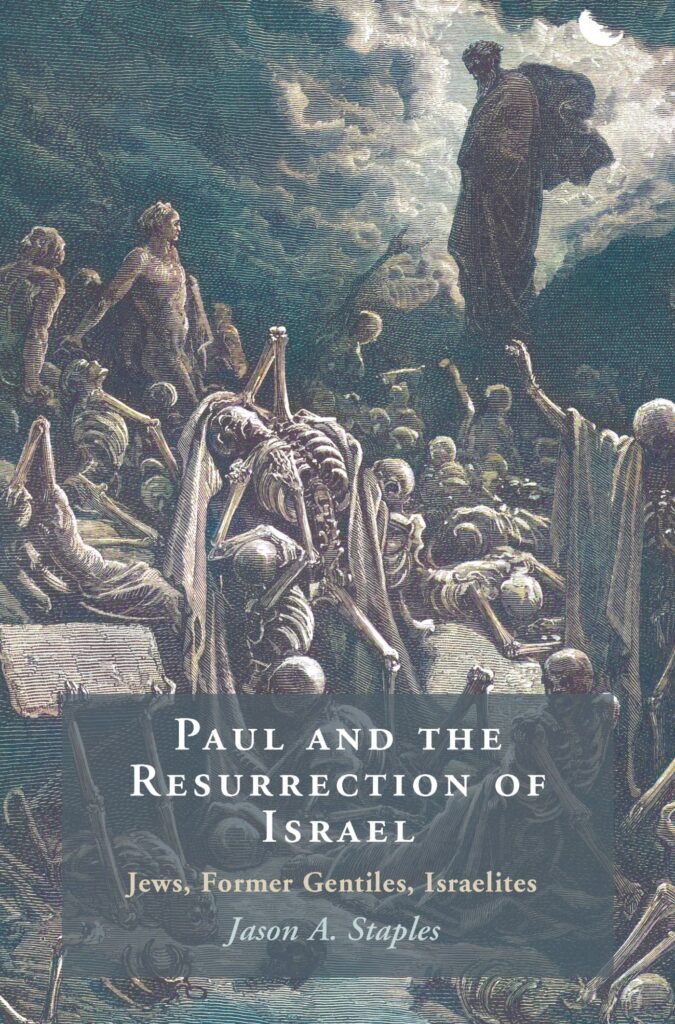
Of course there is much more in what I have written in the article and I acknowledge the recent research and writings of Jason Staples (such as ‘Paul and the Resurrection of Israel’).
A return to the land was always predicated on repentance; nowhere in the New Testament is there indicated that there are two paths to salvation (an using that word we should not reduce it to the binary understanding of ‘heaven’ or ‘hell’).
I do suggest in the article that there is a particular focus on the land we call Israel as a place where reconciliation of differences should be manifested; I do not look to the land as somehow carrying a ‘promise’ in the way that Christian Zionism does – I think Paul gives that hope to the world (kosmos).