‘Ekklesiastical’ perspective

Yes a little odd the spelling above but to make a point as I consider a few reflections on the gentleman named Paul (a ‘gentle’ man???).

There is always a section on ecclesiology in the books that seem to try and systematise everything; Thomas Finger said that of all areas of theology it is the least innovative, and suggests that money, reputation and sustaining what gives careers are the driving factors in this. Paul is a pragmatist – more to come on that in a later post – who is willing to compromise today with a view to compromising redemptively, with the plan that tomorrow will be better than today. On that basis I also try to be pragmatic, but it is helpful to push into what might lie at a more foundational level so that we continually push forward. I also suggest that as I hold to the conviction that in the context (particularly) of Europe we are at the end of a long cycle and can imagine a different tomorrow.

Ekklesia – not a word made up by Paul (and on the lips of Jesus twice in Matthew), but a common word understood within the Graeco-Roman world. (Acts 19:39 in response to the riot in Ephesus the town clerk said that if there was any ongoing complaint that it would have to be settled in the ekklesia – not the ‘church’ but the legal body, maybe we would term local council.) Each of the major Roman cities had an ekklesia, made up from the competent males who were responsible for the framework of the city and to plan for its future. Their goal was to make sure the city was shaped according to Roman principles and vision, in short they were to ensure that the city was as close to resembling Rome as possible.

Paul uses that term (ekklesia) to describe those who had found faith in Jesus and were aligned to heaven’s agenda. He could write, for example, to the ekklesia in Corinth, only the ekklesia he was writing to was the ekklesia in Christ. (This post is too short to go into the use of the term ekklesia in the OT Scriptures – but in short it was applied to the people of Israel when they were actively responding to the voice of God: Stephen uses it that way in Acts 7 also concerning the ekklesia in the wilderness.)

We have become accustomed to adding the word ‘local’ to ekklesia and in doing so have weakened what is in the mind of Paul. He was convinced that every locality needed a group of competent people (females definitely included at all levels) who would take responsibility for the locality and seek for that place to be as close to heaven’s reality as possible. A BIG task! And a big task for a small group of people – maybe less than 100 in cities of 200,000+ people. A big task and big faith.

Of course there are other aspects to ekklesia – particularly that of inner care and nurturing one another, but the overall purpose was a group who prayed and acted so there might be some measure of ‘on earth as in heaven’. (Maybe we fall short as we often represent ‘in ekklesia as in the world’???)

Back to Finger who said all that is written is so predictable and lacks innovation. If we moved away from ‘pure church’ and toward ‘here to change the context / locality’ we might be astounded what things might look like. I put the word ‘context’ in there as we are no longer defined simply by localities.

The ekklesia that Paul helped established did have a significant inward activity – with a focus of when they came together they ‘ate’. Inevitable as the Master they followed was an ‘eater’ and part of his offence was to eat with the wrong people. Also eating was a strong prophetic act in both the Jewish and Graeco-Roman cultures. In those cultures – particularly the ones more aligned to the Imperial rule – who came to meals was a major re-enforcement of hierarchy. Where they were seated was all part of that, and the invitations were sent to those who would reciprocate. So subversive the teachings and practices of Jesus… and Paul.

  • Do not invite those who can invite you back.
  • Do not give the seat of honour to the wealthy.
  • Honour the least honourable.

Those commands can be multiplied for the ekklesia of Jesus was ‘upside-down’. That meal – and Jesus had meals at multiple levels – was to a) remember Jesus, b) proclaim his death and c) until he comes.

It has been reduced to something less than a meal and to focus on his death. Remember him – outrageous, disturbing him! Proclaim his death – a new era is here; the powers are defeated and they (earthly and heavenly) do not have the final word; they are but temporary; a new era is here and one day will be consummated. Maybe that is more in line with the ekklesia in Jesus Christ?

Let the meals – at whatever level – be outrageous!

Vincent Brannick (A Roman Catholic! – exclamation mark in the light of what he says from that background) wrote in response to the council of Laodicea (365AD)

The prohibition of Laodicea completes a critical cycle. The Lord’s Supper had changed from evening meal to stylized (sic) ritual. The assembly had moved from dining room to sacred hall. Leadership had shifted from family members to special clergy. Now the orginal form of church was declared illegal.

The original form of ekklesia declared illegal. I might substitute the word ‘purpose’?

Paul, Jesus crucified, raised

The importance of the cross cannot be overemphasised for Paul.

For the message about the cross is foolishness to those who are perishing, but to us who are being saved it is the power of God…  but we proclaim Christ crucified, a stumbling block to Jews and foolishness to gentiles, but to those who are the called, both Jews and Greeks, Christ the power of God and the wisdom of God (1 Cor. 1:18, 23, 24).
I decided to know nothing among you except Jesus Christ and him crucified (1 Cor. 2:2).
May I never boast of anything except the cross of our Lord Jesus Christ, by which the world has been crucified to me and I to the world (Gal. 6:14).

The life of Jesus was vital for Paul for his life was in contrast to ours (Adam’s); his being one of obedience, of humility and that obedience being even to death, death being death on the cross (Rom. 5:19; Phil 2: 7,8). A call to imitate Paul was a call to imitate Paul as he imitated Christ. ‘Justification by faith’ was not justification by faith alone – we should not simply subsume James under Paul to erase the supposed divide between them. James said we are not justified by faith alone! And I am sure Paul would have agreed. Neither Paul nor James are suggesting ‘salvation by works’ any more than their roots (‘Judaism’) did. Judaism talked of the ‘works of the law’ – behaviour as outlined in the law in response to God’s grace and acceptance; if Israel was ‘saved’ it was by grace; Paul might well have been happy with the term ‘works of faith’ (‘the only thing that counts is faith working through love’ – Gal. 5:6); certainly works (but not to earn salvation) by the Spirit, his helpful term being ‘fruit’. The contrast for Paul between the former way of life and the new way was that of ‘law v. Spirit’. Led by the law as a guardian (his former expression of faith) gave way to being led by the Spirit (Gal. 4:1-6; Rom. 8:14).

The brutal death on the cross. The cross was a political statement to mark those who rebelled against Rome’s rule; the death of Jesus on the Roman cross was fuelled by religious jealousy. He was charged with being a blasphemer and the sentence was carried out by the Imperial powers of the day – that in itself would be tragic and make Jesus a martyr and a hero, but Paul was convinced that something much more was going on. Jesus was a martyr but more; martyrs inspire but Jesus saves. Probably no ‘theory’ of the atonement will suffice though (no surprise) the populist theory of ‘penal substitution’ in order to display God’s righteousness and satisfy his wrath simply does not resonate for there is no divide in the Trinity. The angry God (Father) and loving Jesus is not Pauline, for God was in Christ reconciling the world to himself. It is the ‘powers’ feature highly in Paul. Demonic as in spiritual beings? Earthly powers / systems? Demonic as in ‘beings’ that come into ‘existence’ as a result of corporate power entities? Take your pick! He disarmed all powers:

He disarmed the rulers and authorities and made a public example of them, triumphing over them in it.

Any theory that does not take in this aspect I think falls short of being Pauline. The transfer from one realm to another necessitates the defeat of powers hostile to humanity; the captivity has to be broken.

Paul’s gospel is not just the cross, but the cross and the resurrection. The crucified one is the resurrected one, and he insists if Jesus had not been raised then we are still in our sins. The resurrection is the affirmation that a former age has been ended, or perhaps it might be better put that a new age / era has begun as the two ages now run in parallel.

Freedom, deliverance, and a very real experience is what takes place. Paul’s gospel goes beyond a ‘faith’ response to a reception of the Spirit and that is appealed to in experiential terms.

The only thing I want to learn from you is this: Did you receive the Spirit by doing the works of the law or by believing what you heard? Are you so foolish? Having started with the Spirit, are you now ending with the flesh? Did you experience so much for nothing?—if it really was for nothing. Well then, does God supply you with the Spirit and work miracles among you by your doing the works of the law or by your believing what you heard? (Gal. 3:2-5).

‘Did you experience so much’ could be understood as ‘suffer’ as being something external and unpleasant but given that he goes on with present tense verbs as to the ‘supply of the Spirit’ and working miracles among he makes an experiential appeal. Faith resulted in the receiving of a tangible animating presence, the reception of a life-source that resulted in God-activity.

The cross does much more than show us a way (‘moral influence’ theory of Abelard and in part René Girard’s presentation of the scapegoating narrative that he uses). The cross stands at the end of a doomed pathway; the resurrection stands with the stone rolled away and an invitation to a new path. The possibilities are endless and this is why I like to talk about transformation,

[A]nd through him God was pleased to reconcile to himself all things, whether on earth or in heaven, by making peace through the blood of his cross (Col. 1:20).

I am agnostic (and I think that is the best faith position!) on what transformation will look like because once touched by the Spirit it is the imagination that is ignited to ‘see a new creation’. Paul might have thought there would be an imminent return (in his lifetime) of the Lord (‘we who are alive at his coming’) but he continually worked for the future. That has to be our framework. Agnosticism regarding the future is the framework, but focusing in the present so as to invite the future to manifest.

Once we move away from the narrow framework of ‘saved from hell’ (ticket to heaven) to a Pauline vision for the world (his world and now ours) we do not negate personal salvation but understand it to be a salvation from captivity to the realm of sin and death to participating in the liberation movement of reconciliation. To quote another movement that understands that salvation is to be measured by the extent to which we are liberated and become liberators. (‘[Jesus] who gave himself for our sins to set us free from the present evil age’.)


Paul is silent as to what happens between the two events of crucifixion and resurrection. I am also somewhat curious on that time. Do we choose the rather ‘mythical'(??) descent into hades (harrowing of hell: 1 Peter 4) or do we go for the cleansing of the heavenly tabernacle (Hebrews…and what would that indicate)? Or is there truth in both without either needing to be pressed literally?


The cross ends a domination that had erased all true hope (not erased the possibility of ‘individual’ salvation); the resurrection opened entry to the realm of Spirit inspired imagination. Truly, the era of ‘I have a dream’.

A centre for Paul

Given the title above I have set myself a challenge! What is the centre of Paul’s gospel? Fundamentally it has to be focused on ‘Jesus Christ and him crucified’. He has a conviction that the hoped for Messiah – deliverer of Israel, God’s agent, had come and was to be identified with Jesus of Nazareth, and that he had been crucified; that the death as a criminal (political enemy of Rome?) that he had undergone was the means by which not simply Israel was to be delivered but that the world would be transformed.

His vision was bigger than that of ‘personal sins’ forgiven; it was bigger than a focus on the land known as Palestine; it was bigger than a freedom from an earthly power (Rome); it was bigger than a freedom for an ethnic people who were descended from Abraham. The power of sin (and death) could no longer rule; the power over nations (τὰ στοιχεῖα) could no longer shape (and he seems to suggest that the law functioned in that way for those of Israel – Gal. 4:3, 9); the God of Israel was the God of the cosmos; Israel’s Messiah was the Saviour of the world. Bigger… bigger than a specific people; bigger than a piece of land; bigger than personal. A cosmic vision – a new creation persepctive.

New Creation

Twice Paul uses that phrase – 2 Cor.5:17 and Gal. 6:15.

So if anyone is in Christ, there is a new creation: everything old has passed away; look, new things have come into being! (2 Cor. 5:17).

There is an outside chance at translating it as ‘they are a new creature’ but the abruptness of Paul suggests otherwise… if anyone is in Christ, new creation (καινὴ κτίσις)… old things have passed away, new things are (he uses the neuter adjectives for ‘old’ and ‘new’). The context is of sight / perception (2 Cor. 5:16). The transformation is future but for those in Christ it is present now! Already we have been (Gal. 1:3) delivered from one age to another and the result is that we can no longer use human categories with regard to others. There is a major challenge, but this gospel is not tame and is beyond ‘me and my life’.

In Galatians he uses the term again:

For neither circumcision nor uncircumcision is anything, but a new creation is everything!

Ethnicity (Jew / Gentile = non-Jew) nor adherence to the Torah has value! That is a bold statement from one who was (and continued to be) a Jew… In Christ that fundamental way of dividing the world was gone.It belonged to a former era. He finishes his ‘neither… nor..’ with (again) an abrupt phrase, ‘but new creation’ (ἀλλὰ καινὴ κτίσις)… the ‘but’ being strong.

The cross is central – the central part for Paul – though we must not dislocate it from the resurrection, but the effect of the cross is a major irruption into this world to such a level that there is new creation.

This brings me to a text that goes to the heart of the outworking. Gal. 3:28.

(But now that faith has come…) There is no longer Jew or Greek; there is no longer slave or free; there is no longer male and female, for all of you are one in Christ Jesus.

Ethnicity / ‘chosen nation’ has gone; economic / class divide is no longer legitimate… and as translated above Paul changes the structure in the third part of the verse from no…nor to no… and… (οὐκ ἔνι  Ἰουδαῖος οὐδὲ  Ἕλλην, οὐκ ἔνι δοῦλος οὐδὲ ἐλεύθερος, οὐκ ἔνι ἄρσεν καὶ θῆλυ). He does this to quote Genesis, God creating them, ‘male and female‘, but there is something very deep going on here. Creation is ‘good’ but creation had within it dualisms (not ethically) but binaries such as ‘heaven’ and ‘earth’ and the very fundamental human one of ‘male’ and ‘female’. Binaries that defined the spectrum but the ‘spectrum’ in the new creation is one. No longer ‘male and female’. The most fundamental divide in our world has gone. The implications are enormous.

Paul’s gospel pushes into how we inter-relate. It is not primarily about a community who are more holy than others (if we define ‘holiness’ by we don’t do x,y and z) but a community who relate differently to others because their conviction (and experience) is that a new creation exists now. I added the word ‘experience’ in the previous sentence because we are not there yet. Maybe we can accept the word ‘conviction’ but I think Paul pushes for ‘experience’ far more than we are comfortable.

The cross ends the domination by powers hostile to humanity; it ends binaries that categorise so that hierarchies continue.

Coming to an end… or a beginning?

Our time in Sicily is coming to an end – another 10 days or so to go. When it is over I will try to put something of a summary in here – summarising 5 months, numerous locations, 20+ different beds, response to a few thousand years of history? An inadequate summary, but I will try.

It is hard to say what underlines why we came here but I guess it has something to do with one from the tribe of Benjamin called Saul of Tarsus. I consider him a bit of a friend – pure fantasy on my part and revealing that I think it is easier to relate to someone who won’t kick me up the proverbials than someone alive in my era! But enough of exposing any inadequacies I have, moving on…

Life seems so accidental at one level – who would I have been, what would I have done if I had been born in another era, another culture? And yet if we walk humbly (by that I mean accepting our stupidity) it does seem the Lord guides (when I do summarise Sicily I hope I make that clear as to the journey here). 2001 Hanover and the launch of ‘Target Europe’, which marked some great partnerships and some clear divides, I was asked to address a session. I took as my theme Isaac re-opening the wells of his father Abraham so my theme was to ‘re-dig the wells of revival’. At the end of the session I was met by a handful of Spanish believers who said that there was not the same history in Spain as I had referenced (Wales, Hebrides, Wesleyan etc.) so they asked what were they to do. If not 100% accurate I can substantially remember my response – a response that was not premeditated and one I did not fully understand:

Tell me, what nation on the planet can claim, on the basis of biblical authority, that there are first century unanswered apostolic prayers in the land. You do not need a revival history in Spain, go dig out those prayers.

I left thinking what on earth does that mean but soon concluded that Paul prayed for Spain. He was not looking for a beach holiday, nor a villa with a pool, but for the gospel to finally get to the end of his world – the western edge of the Roman Empire. Prayers for the land were sown deep into the ground. (I don’t think Paul ever got here in spite of the legend that he made it after his imprisonment in Rome, but there are first century apostolic prayers in the land – literally in the land.)

The Pauline Gospel. Bigger, much bigger, than the ‘gospel’ that I grew up on, the one defended as the ‘evangelical gospel’. (I first studied theology at under-graduate level in the 70s – an era when evangelical theology was defensive and still very narrow in scope.)

In the last 40 years or so there have been many shifts in Pauline theology – and I am way from being up to speed. Some still defend the ‘old perspective’, there is the ‘new perspective’ (such as NT Wright, Jimmy Dunn, and pre-them EP Sanders), ‘Paul in Judaism’, ‘Apocalyptic Paul’ and variations of the above and also a host of others. I am deeply impacted by the new perspective and see the NT context as the Imperial world. A well known inscription from 9BC shows the common language from that Imperial world to the world of the New Testament:

It seemed good to the Greeks of Asia, in the opinion of the high priest Apollonius of Menophilus Azanitus: “Since Providence, which has ordered all things and is deeply interested in our life, has set in most perfect order by giving us Augustus, whom she filled with virtue that he might benefit humankind, sending him as a savior, both for us and for our descendants, that he might end war and arrange all things, and since he, Caesar, by his appearance (excelled even our anticipations), surpassing all previous benefactors, and not even leaving to posterity any hope of surpassing what he has done, and since the birthday of the god Augustus was the beginning of the good tidings [εὐαγγέλιον] for the world that came by reason of him,” which Asia resolved in Smyrna.

Saviour, gospel… ‘secular’ words, and we can extend that with other terms used such as ‘lord’, ‘kings of kings’, ‘prince of peace’… Such a crossover of terms alerts us that the good news of Jesus is not primarily about a private response of faith that was to be demonstrated in religious activity. It was deeply ‘political’ and about an alignment that affected the whole of life. The concept that ‘Jesus is Lord’ and ‘declared to be the Son of God by the resurrection’ had (has) profound implications for our world.

The entrance of Jesus – born of a woman, born under the law – as a human and as a Jew was central to Paul as well as the Gospels, with the Gospels recording the ministry of Jesus within the context of an oppressed land; Paul takes all that was presented there and works it out within the context of that oppressive imperial power. This has led some to say he is the founder of ‘Christianity’ and for some the one who distorted the message. My take is he faithfully applied the message.

Anyway I will begin to post inadequately on Paul over the coming days, concerning the few insights I have into the ‘Pauline Gospel’. But back to Hanover and beyond.

The core focus that took Gayle and I to Spain was to dig into the land to play a part in the re-digging of the Pauline gospel. Maybe it has an impact on Spain, but it certainly has brought about shifts in us. Fast forward and in May 2025 we responded to a very generous invitation from two of our heroes and friends (Adrian and Pauline Hawkes) to come to Malta. Aware that Paul was shipwrecked there we thought maybe there will be some stimulus for us regarding Paul. (There is a possibility the shipwreck was not there, though the term used of the people was βάρβαροι – not a term likely to be used of some of the alternative suggested islands… so probably Malta.) We read Acts 28 on numerous occasions and then saw that from Malta he went to Syracuse (Sicily):

We put in at Syracuse and stayed there for three days (Acts 28:12).

We literally live on ‘Island of Sicily street’ in Oliva and have often wondered if there was anything beyond it simply being an address… And, short story long, we left Malta with a conviction that within weeks was firmed up that we should head to Sicily. Two history books later and in November 2025 we left in a van we have always seen as transportation for Europe.

Many aspects have come together for us and we have been convinced that there will be a ‘before’ and an ‘after’ related to our time here.

In short it has brought us to the conviction that the biggest element in our world today is the ending of all abusive uses of power. Could it be possible? Well that takes me back to what I will be posting on – the Pauline gospel.

Why a focus on Europe

Over the next few posts I will intersperse perspectives on Europe with a few comments on our journey… maybe half-way down Italy now with last night, today and tonight to be spent in Terracina. Sleeping under an ancient temple to Jupiter – well not under it literally, it simply sits on the highest point about 1km from where we are. Maybe if we get closer we will feel to give it a kick but seems pretty much without any current influence. We are here as we are within a short distance of the old ‘two Sicilies’ border that cut off the papal states to the north and the so-named kingdom of the two Sicilies to the south – two Sicilies as there was a base in Palermo (Sicily) and Naples/ Napoli (mainland of Italy). That border is our focus today. But this post is about Europe, as also is our journey and interaction with Sicily these months!

We all have perspectives and they are influenced by (in no specific order) our personality, experience, theology – particularly of God and of eschatology. It seems to me the most important thing is we act with authenticity and integrity – true to ourselves and to our convictions. I need to be open to correction, to change but I am not about (nor should I) to change easily. My convictions are mine. Not quite in the same league but before Jesus laid down his life he made the statement that no-one could take his life from him. We are not to be swayed easily. On some areas of theology I am in the minority (historically and currently) but I am not about to count the votes and go with the majority. I write that simply to say should you read these posts there is no need to agree, but they might explain the why’s and what’s of our lives.

There is perhaps a predominant view that Europe is post-Christian and ‘secular’, thus being without any real hope. Mine is that it is the centre of hope!

Two Stories

Nothing exegetical in what follows but for the past 25+ years the interlinked stories in Mark 5:21-43 have been important for me. They are the stories of the woman with the continual haemorrhaging issue and Jairus’ daughter.

In summary a woman who a) has been deteriorating in health for 12 years and b) whatever ‘solution’ the doctor provide do not improve her condition but c) she is getting increasingly ill. And a) a young girl born 12 years before with b) all the hope and joy that a new birth brings but c) one day falls ill and dies.

Maybe you are ahead of me but I see the ‘sick woman’ as a picture of Europe and the young girl as a symbol of where the hope and enthusiasm lies.

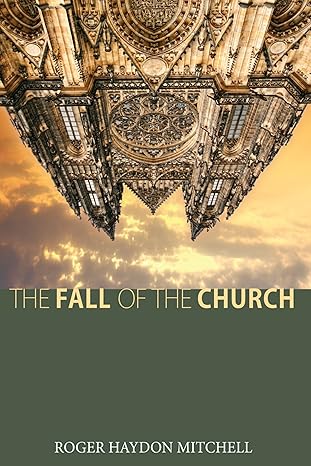
Historically, Europe was the cradle for the gospel, from Jerusalem to the ends of the earth was understood by Paul to be throughout the oikoumene of the Roman Empire (e.g. Col. 1:6). From Europe beyond, but by the time the beyond was happening the ‘clothing’ for the gospel was that of Christendom – the making of ‘Christian nations’ (an oxymoron), with privileged and dominating position given to that form of Christianity. (Maybe this is why ‘Christian’ votes often go to the authoritarian option – perceived as more like God!!!????) My simplistic approach is not-perfect but not privileged pre-Constantine but centralised, institutionalised, dominating and oft-times oppressive post the ‘conversion’ of Constantine. (For a much better insight try Roger Mitchell’s Fall of the Church (Amazon link – will seriously need to repent today… but at least you can see the book there and order elsewhere.)

Thank God for Africa, far East, South America where there is a vibrancy and a rate of conversion to Jesus that should make us envious… that to me is like the young woman. Hope, hope and more hope. The future… But…

Imagine that the Christian faith is like a train on a track. The front carriages are the church in Europe, followed by other later Western filled carriages, followed by the places where faith in Jesus is vibrant. And the train-track has run out and would have needed to cross a bridge to get to the future. The first carriage(s) has fallen over the precipice – but the ‘problem’ is that it is one train… the other carriages are on the track, and go join them and do the charismatic two-step and rejoice but they will also follow suit. The young girl will speak of the future until…

My perspective!

I have (past tense) spent many months in Brazil. Huge the shift that has taken place there with coming to faith. But still huge manifestations of occult power. I have often said that 2% of a population with faith should have long-time ago shifted all of that nonsense. But I have been present inside a secure conference centre where each entrant has to have a pass to enter and voodoo priests have materialised inside with poison for our food! That should not happen… but if our focus is on power we will feed such manifestations. (To be clear I am all for the miraculous, healings and deliverances but the container is ‘presence’ and not simply power – another post another day?)

Europe. We will continue to be enthralled by what is going on elsewhere and I hope we stay deeply impacted by the wonderful transformative power of the gospel, but all of that can be like the doctors coming to the aid of the woman in the story. ‘Rather than getting better… spending all her money…’

OK I have made a start. The woman has to touch the garment of Jesus; the young girl will be discovered to be also carrying a gene that means maturity will not be reached. Work to be done in Europe for the woman is healed when the focus was on getting to the young girl. Hence my hope, my enthusiasm; but not to restore something that has been. No making that form of Christianity great again. Travelling paths we have not trodden before, but ancient paths that will show in spite of understandable despair we carry the same story I wrote of yesterday – in an obscure middle eastern province one person has been raised from the dead. Maybe sleeping under the temple to Jupiter is a good reminder – that was the Pauline world and they had much opposition but the gospel is the power of God to salvation – to the Jew first (religious power losing its hold) and also to the Greek (the sophisticated way of describing the oikoumene of the Roman Empire). The Pauline gospel, not the Martin gospel, nor the Reformed gospel, nor the gospel that is often on offer.

Let Europe be the place of discovery and restoration.

Another Gospel

I am continuing with some Zooms going through the various volumes of ‘Explorations in Theology’, seeking to emphasise that they are no more than that, and hope that they provoke whoever comes on the Zooms to continue in their journey and convictions. I am convinced that the key for us all is to be connected to Jesus not to a set of beliefs. As I state ‘all theology leaks… I just pretend my leaks less than all others!’ Last night I had (at least for me) a very productive Zoom on chapters 5 and 6 of ‘The Lifeline’. Below I copy Chapter 5 of that book… (All available at https://bozpublications.com in hardback or eBook format).


Chapter 5

Another Gospel

Paul is considerably different to the likes of you and me! (I trust I did not hear any dissent to that statement.) The writer of so much of the biblical material that has shaped Christian faith and practice, a person who encountered the Risen Christ in a most dramatic encounter, who spent years fashioning the Gospel and its implications for his society and beyond. We gladly follow his lead. He carried an authority with regard to the Gospel and that authority meant he could describe certain proclamations as being a ‘different gospel’. We have to tread carefully when seeking to make statements of a similar nature, though it seems clear that not all ‘gospels’ can be harmonised one with another. There are different ‘gospels’ and when the differences are extreme those gospels represent different versions of God, or perhaps they even represent different gods. We are to find unity with all who are of faith, but when a person denies the Gospel by deed or presentation it becomes hard to recognise them as a family member. We should be cautious in coming to a decision, but I have to confess that increasingly with some presentations of ‘truth’ that, by design or by default, dehumanise those being addressed, I find it hard to reconcile the ‘god’ they speak of as being the God that I discern through my understanding of Jesus. If the ‘gods’ are different, are the ‘gospels’ not different? And the inevitable question pops up – are we actually brothers and sisters? Perhaps we are more like estranged family members and in that great age to come when we will see clearly we will see that we were both in part wrong, both advocating a ‘different gospel’. Conviction (my beliefs that I hold to in the light of how I read what I read) and humility (I am more self-critical than critical of others) are needed.

In 2001 I was participating in a conference in Hannover, Germany. At the end of the session in which I had shared, a number of believers from Spain came to me and through an interpreter said that in Spain there was not the history of revival such as could be claimed by the UK, and as I had spoken about the re-digging of the wells of historic revival what should they do. This was not a question I was prepared for and surprised myself when my response to them was:

In Spain you do not need a history of revival. What other nation on the face of the earth can, on the basis of biblical authority, claim to have first century unanswered apostolic prayers sown into the land. Go dig them out.

After the session I had to think about the response I had given and quickly came to understand that Paul’s desire to get to Spain was to proclaim in the Western end of the empire (the ends of the earth?) the Gospel. He was not looking for a holiday on the beach but somehow to make a proclamation in the land. Opinion is divided as to whether he made a trip to Spain. I like to think not, but irrespective, the prayers of Paul are in the land. This does not mean that his prayers are only present in Spain, nor that only in Spain can the Pauline Gospel be recovered, but that something can be done in this peninsula in order to help facilitate the recovery of that Gospel. At one level all other gospels are at best a variation of the one he proclaimed, or at worst they are indeed ‘another gospel’.

In Acts we read Scriptures concerning the early apsotolic proclamation and there are often summary statements of what they proclaimed. We read (emphases added):

Then Philip began with that very passage of Scripture and told him the good news about Jesus (Acts 8:35).

Some of them, however, men from Cyprus and Cyrene, went to Antioch and began to speak to Greeks also, telling them the good news about the Lord Jesus (Acts 11:20).

A group of Epicurean and Stoic philosophers began to debate with him. Some of them asked, “What is this babbler trying to say?” Others remarked, “He seems to be advocating foreign gods.” They said this because Paul was preaching the good news about Jesus and the resurrection (Acts 17:18).

When Silas and Timothy came from Macedonia, Paul devoted himself exclusively to preaching, testifying to the Jews that Jesus was the Messiah (Acts 18:5). 

For he vigorously refuted his Jewish opponents in public debate, proving from the Scriptures that Jesus was the Messiah (Acts 18:28).

Some Jews who went around driving out evil spirits tried to invoke the name of the Lord Jesus over those who were demon-possessed. They would say, “In the name of the Jesus whom Paul preaches, I command you to come out.” (Acts 19:13).

You know that I have not hesitated to preach anything that would be helpful to you but have taught you publicly and from house to house. I have declared to both Jewsh and Greeks that they must turn to God in repentance and have faith in our Lord Jesus (Acts 20:20, 21).

They arranged to meet Paul on a certain day, and came in even larger numbers to the place where he was staying. He witnessed to them from morning till evening, explaining about the kingdom of God, and from the Law of Moses and from the Prophets he tried to persuade them about Jesus (Acts 28:23).

He proclaimed the kingdom of Gods and taught about the Lord Jesus Christ—with all boldness and without hindrance! (Acts 28: 31).

In these summary statements of the early Christian proclamation we do not find some of the big salvation words: justification, reconciliation, redemption, substitutionary atonement. What we do find is that the proclamation was about Jesus. When the content is expanded it might include the resurrection (the whole basis on which there is a new world order) or a proclamation that Jesus was the Messiah (when addressing Jews). The summaries are not the totality of what was proclaimed but are a description of what (or who) was at the core of what was being proclaimed. In the context this proclamation of Jesus is best understood as an announcement that the possibility of a different world had opened up through the vindication of Jesus by the resurrection. As outlined in previous volumes this was the true Gospel of which all others, and in particular the Caesar version, were sad parodies.

The Pauline Gospel

In later volumes I plan to look at the biblical perspective on eschatology (or maybe better put ‘my take on it’!) and I have always found it strange the theology that insists on God as creator and also as the one who will destroy it all. As creator he could of course do just that, but the Incarnation (taking on flesh) and the resurrection (of flesh), and the value God places on ‘dust of the earth’ surely indicates that there is a wonderful future for creation. Humanity’s commission for the creation and Israel’s (failed) commission for the world are the reasons for the Incarnation, an intervention in order to get everything back on track.

Everything centred in on Jesus; Paul says ‘For no matter how many promises God has made, they are “Yes” in Christ’ (2 Cor. 2:20). Little wonder Acts presents the summary as ‘they proclaimed Jesus’. In Jesus a new world becomes possible; this new world being the current world brought to maturity, not simply through growth toward, but by a final transformation ‘at his coming’. At the resurrection of Jesus a radical ‘time-warp’ occurred. This is not a great surprise as the Jewish hope for the resurrection of the body was that it would take place at the ‘end’. Jesus was raised before the end, and so we might say, in the middle of time. Matthew’s Gospel records that the event was so eschatologically significant that other saints also obtained resurrection ahead of time.

The time-warp means that this new world, though still future, is now also present. It seems to be this that is behind Paul’s language of ‘new creation’. For those who are in Jesus, there is a change of perspective. The old has gone, the new is here. It appears that Paul is suggesting this is more than a way of thinking but that it points to a reality. Experiencing and believing that reality is to be seen in the lives of those who are in Christ and reflected in how they see others. Paul was not simply looking for decisions based on a gospel message that ended with the appeal verbalised as ‘hands up all those who want their sins forgiven and be born again’. The proclamation of Jesus carried much more weight than that, and a response meant a submission to being discipled in the values and ways of heaven. Thankfully this was more than a call to adhere to the teachings of Jesus as opposed to the ideologies of Rome, for those who committed to the Lordship of Jesus received the Spirit of God that connected them not to a set of values but to the very life-source of the universe.

In the Imperial context of the first century those early disciples were challenged ever so deeply concerning their morals and ethics, and they were often opposed and marginalised. They knew, all too well, that, although there was a ‘new creation’, the old was not simply disappearing. Knowing that the final transformation would take place when the same Jesus who ascended to heaven would descend again, they understood that their (at times) small contributions were in fact like seed in the ground that would bring that final irruption of heaven ever closer.

This expectation of this world being transformed, and the language consistently used in the New Testament within the Imperial context of Rome, inevitably meant there was a political element within the message. Not a message that called for allegiance to a party, but a message that shaped how those who believed the proclamation lived and what they wanted to work toward. If, in our setting, the proclamation of the Gospel becomes nothing but politics we can say that is not the Pauline Gospel; but when the message we adhere to speaks out against all kinds of injustices and carries the creative hope for the flourishing of all we are indeed being faithful to Paul’s Gospel.

On the road to Damascus Paul had had his encounter with the One he was previously opposed to. His previous framework of reference was totally blown away. Prior to this he could genuinely categorise himself as ‘righteous’.

If someone else thinks they have reasons to put confidence in the flesh, I have more: circumcised on the eighth day, of the people of Israel, of the tribe of Benjamin, a Hebrew of Hebrews; in regard to the law, a Pharisee; as for zeal, persecuting the church; as for righteousness based on the law, faultless (Phil. 3: 4-6).

From his post-Damascus perspective he gave no value to what was previously thought as credit-worthy. For Paul, Jesus was not an add on to his previous faith, but the means by which his faith was transformed. That being his experience it is understandable why he was unwilling to shackle any Old Testament stipulation on Gentile converts. Everything was centred on Jesus, and he was the lens through which everything pre-Jesus now had to pass. Righteousness now came through being in him, not through being in ‘Israel’.

Paul, faultless according to the law, but once he was in Christ, ‘the worst of sinners’.

I thank Christ Jesus our Lord, who has given me strength, that he considered me trustworthy, appointing me to his service. Even though I was once a blasphemer and a persecutor and a violent man, I was shown mercy because I acted in ignorance and unbelief. The grace of our Lord was poured out on me abundantly, along with the faith and love that are in Christ Jesus.
Here is a trustworthy saying that deserves full acceptance: Christ Jesus came into the world to save sinners – of whom I am the worst. But for that very reason I was shown mercy so that in me, the worst of sinners, Christ Jesus might display his immense patience as an example for those who would believe in him and receive eternal life. Now to the King eternal, immortal, invisible, the only God, be honor and glory for ever and ever. Amen (1 Tim. 1: 12-17).

Zealousness and righteousness previously were interpreted as requiring a persecuting of those (Jews) who adhered to faith in Jesus. Post-the-Damascus-encounter he no longer understood that his faith demanded he did God’s work by making sure everything was clean and therefore pleasing to God. He now understood to do so was wrong and if he was a sinner then so were his fellow Jews and, of course, the Gentiles. But as chief of sinners he knew that God could save anyone. As a sinner he was a blasphemer, one who took the name of God in vain, claiming to act for God. He now understood he was opposing God as he had misrepresented the God he believed he was serving; speaking and acting for him, he now understood, was acting on behalf of another ‘god’. The ‘conversion’ at the gates of Damascus did not bring about a minor tweak to his beliefs and practice!

He explains that he now understood that formerly he was a blasphemer because in the name of God he was a persecutor and a violent person. Previously he had no need to ask God (as Joshua did), ‘are you for us or for our enemies?’ The answer was clear! However, what wisdom and insight there is in Joshua’s question. Is God for us or for our enemy? If we align with Jesus, understanding the requirement to love our enemy and even death on their behalf will be sufficient to bring us to a place of humble silence. God is for our enemy!

The Pauline Gospel opens the door to all. Without doubt the whole world is locked in the prison of sin, but God is rich in mercy. Failing to be human might bring about condemnation, but God saw Paul’s activity as due to ignorance and unbelief. Understandably Paul had a desire to proclaim Jesus and present the call to believe in him.

Belief in Jesus is not an automatic response to hearing about him. There is a huge resistance to this taking place.

The god of this age has blinded the minds of unbelievers, so that they cannot see the light of the gospel that displays the glory of Christ, who is the image of God (2 Cor. 4:4).

Ignorance about God, for the work of the god of this age is to keep God as the ‘unknown god’, and the one who cannot be known, is something that the Gospel addresses. The God that Paul proclaimed was the God who saves sinners. No one beyond the scope of salvation (not Judas who betrayed Christ, nor Peter who denied him, nor Paul who blasphemed him). God, though not human, has a human face, for it was Jesus who met Paul and addressed him personally. God, though in heaven, comes close, so close that the Spirit enters a person. Signs, wonders, miracles all being evidence of the relative ease and frequency of heaven spilling out into this world, of the future invading the present. Exorcisms breaking bondages to the god of this age, for there is only one God present in the ‘new creation’ age.

The Gospel Paul was gripped by started with an explanation of who this God was. Not a God that could be invented, not even one who could be found through the pages of a book, but had to be ultimately discovered through an encounter with the Person who was the ‘image of God’ who truly carried glory. The response to this Gospel was one of faith. The good news had to be believed for transformation to take place.

‘Ignorance and unbelief’ was the soil from which all manner of anti-God behaviour sprang forth. True enlightened knowledge and faith became the soil that would produce fruit that resonated with heaven’s values.

The Gospel was a leveller. What Paul counted as something that he could chalk up on the credit side of his life was eventually valueless. The Gospel did not come with a respect of status and once responded to any such status did not position someone hierarchically in the community of faith, hence the total resistance to Peter, and the freedom with which Paul felt to label him a hypocrite.

The mountains were levelled, the valleys raised. All (Jew and Gentile) sinners alike; all called to repentance, to believe the Gospel that was the power of God to salvation (to the Jew first, and to the Gentile). All of humanity having failed to attain and reveal the glory of God; and all of humanity invited to come through the door to a new creation reality, and to be engaged in a co-operative work with God within the new creation developing. To reduce the Gospel to a set of laws; to fail to understand how it carried a vision for transformation through challenging the status quo; to use the Bible as a set of timeless truth texts; to fail to err on the side of including the formerly defined as ‘unclean’; to consider that we are doing God’s work for him; the list can probably go on. We might never be able to stand alongside Paul and say, ‘we too understand the Gospel as you did’, but the more we align to one or more of the above phrases the more likely it is that we have deviated from the Pauline Gospel, the more likely we have embraced ‘another gospel’, and the more open we will be to be defined (as Paul self-defined his previous righteous life) as a blasphemer.

Zoom – a new world opens

I have just come off a Zoom call to Singapore… (have you noticed how ‘zoom’ is now a word in our language to sit alongside others like ‘google’?). It was very enriching and I was paid one of the highest compliments, that being that I was apparently ‘so futuristic’. If only!! But it is something to live up to for sure. Coming off the zoom I thought again about Paul’s words in 2 Corinthians. I will quote first in a new translation (ESV, a new but ‘old’ translation, with a tendency to overdo the (overdone) masculine pronouns when not necessary, nor accurate in today’s context, and ‘old’ because of the tendency to lean on comfortable concepts):

From now on, therefore, we regard no one according to the flesh. Even though we once regarded Christ according to the flesh, we regard him thus no longer. Therefore, if anyone is in Christ, he is a new creation. The old has passed away; behold, the new has come. All this is from God, who through Christ reconciled us to himself and gave us the ministry of reconciliation; that is, in Christ God was reconciling the world to himself, not counting their trespasses against them, and entrusting to us the message of reconciliation (2 Corinthians 5: 16-19 ESV, emphasis added).

‘He (sic) is a new creation’.

The NIV reads:

So from now on we regard no one from a worldly point of view. Though we once regarded Christ in this way, we do so no longer. Therefore, if anyone is in Christ, the new creation has come: The old has gone, the new is here! All this is from God, who reconciled us to himself through Christ and gave us the ministry of reconciliation: that God was reconciling the world to himself in Christ, not counting people’s sins against them. And he has committed to us the message of reconciliation (2 Corinthians 5: 16-19 NIV, emphasis added).

‘The new creation has come’.

Or to really impress the SBL Greek text:

ὥστε εἴ τις ἐν Χριστῷ, καινὴ κτίσις. τὰ ἀρχαῖα παρῆλθεν, ἰδοὺ γέγονεν καινά.

So that if anyone is in Christ, (a) new creation. The old (things) have passed away, behold the new (things) have come.

The passage is about sight and how we view people, starting with Christ himself. If we see him from a worldly point of view (for Paul the Jewish world view and ‘messiahship’, for us maybe the ‘king of our empire’) we can only go wrong from there. We can never see the world and certainly not others rightly. Hence seeing Jesus rightly means we can never see anyone (and anyone cannot be reduced to ‘believers’) through the fallen-human lens that categorises them. If however, we are seeing Jesus differently, and that is an evolving experience, then everything has changed. Crazily Paul suggests for such people the world as we think of it as existing has passed away. At the cross, God is not reconciled to the world, but vice versa. There was an alignment of the world back to God, to his way of doing things. This is so far out there that it is not surprising that translations make the verse personal, implying the extent of the conversion is that of becoming a new ‘creature’. If the whole world was being reconciled I am reconciled; if the whole world was being made new then I am made new. My personal experience is within the global.

What do we see at this time? In the days of a total antiChrist one-world government system Paul had crazy sight. Maybe we have thought of the great new things that God was doing when we fell to the floor, and the glory was being manifest… but the biblical assessment on that would be ‘ouch that is such small sight’. The Covid-19 virus might just help be a provocation to us to come to an awareness of what we see.

The universal work of God must have a global outworking. These next two years are enormous years for the alignments God is bringing about. There has to be reconciliations because that was the reconciling work of God on the cross that birthed (then) a whole new world. This morning in the zoom call there were some great resonances (though I am sure that they would not endorse all my perspectives… I hope they don’t as I am convinced that God doesn’t endorse all of them!); they reflected back to me in their words something so strong. ‘There are kingdom friendly people who are not believers; and there are Christians who are not kingdom friendly.’

It is time to see, and to see anew. If anyone is in Christ, not simply ‘in Christ’ through ticking the box, but in Christ experientially.

Oh yes… the gospel offends not because of who it excludes, but because of who it includes.

A final (or further) piece

It is great being the author of a blog as one always has the final word to say, although I cannot quite claim to have ‘great and unmatched wisdom’, though I am obviously working on that. Yes the gentleman who suggested that was one of his many attributes has set the bar high. So pulling back, momentarily, from self-inflated opinion I will modify the title to be a ‘further’ (and certainly not a ‘final’) piece on the ekklesia.

I appreciated the comments on the two articles and of course I am coming strongly from a perspective, hopefully not denying the validity of other perspectives. There are two ways in which sociology approaches healthy groups. They are either at the ‘community’ end of the spectrum or at the ‘movement’ end. Community is centred in on being there for each other, to enable one another, movement is focused on purpose beyond the community. Both are visible in Scripture. There are enough ‘one another’ Scriptures related to followers of Christ to see that perspective is a strong one. (‘Love one another’; ‘admonish one another’; encourage one another’; etc.) Most Christian communities that I know that carry this emphasis also strongly desire to change their environment. Movements have something in common among themselves – they hold to a common world-view that is not shared by the wider world and are seeking to change the wider world based on their world-view. The Civil Rights movement can act as an example. Martin Luther King’s speech ‘I have a dream’ is one example of what they shared in common that was not realised in the wider world that they were a part of. Their aim was to change the world-view and practise of the wider society.

Writing about ekklesia with its background both as the Hebrew of being called to listen to God then act in the light of that instruction, and the Graeco-Roman background of the legislative assembly I was pushing the ‘movement’ understanding of being together. That is my bias. I was also pushing that as a push back against a common approach that only accepts one expression (‘local’) as church. I am not advocating independence nor that another form is how it should be done. We need one another, one size does not fit all, and most of us recognise that many others who are followers of Christ are responding to the claims of the Gospel better and more faithfully than we are.

The challenge that we all face is being faithful in our context. Maybe we all find ourselves in settings that are ‘sub-church’! Now there is an adjective that might be very applicable. I find the thought of what on earth was Paul up to in planting and nurturing ekklesias within the one-world government system of Rome fascinating.

I suggest Jesus, and no one else could have done this, opened the door for Peter (as representative not in his unique right) to give shape to what an ekklesia would be within the Jewish world. That is one window on ekklesia but it is the world of pre-70AD and also of pre-Gentile mission. It is really the expression of ekklesia beyond that that should provoke our thinking deeper. Peter opened the door to Paul, in that he was the first, and reluctantly at that, to go beyond the Jewish world to the Gentiles. The Gentiles (us lot) was Paul’s first century mission field. The context was not of a covenant-people but of the world, and as already mentioned an all-but one-world government world.

It is interesting that the term ‘synagogue’ is rarely used for the Christian communities of the New Testament. That expression was developed in Babylon, and I wonder if it was something of a compromise in order to survive that then became the accepted norm. Paul uses the term ekklesia which would have been strongly understood to be political, and confrontational to the system.

There is good research that shows that many forms of church enable people to grow to a level of faith, but then by default place a ceiling over people going further. We also know of many lone-rangers who seem to get detached from the core of the faith.

As I look at the wider world we are in crisis. We could see the collapse of so much, or the coming together in alliances that provide the platform for dictators. Into that context I cannot help but believe Paul’s Gospel is so relevant. And yes, I do think he is pushing the movement end of the spectrum, while strongly recognising how much we need one another.

So thanks for the comments – provocative and clarifying. But not quite ready to suggest the photo I have attached is the image of the church. It is a photo of a very impressive building in Rome and worth a visit!

Perspectives