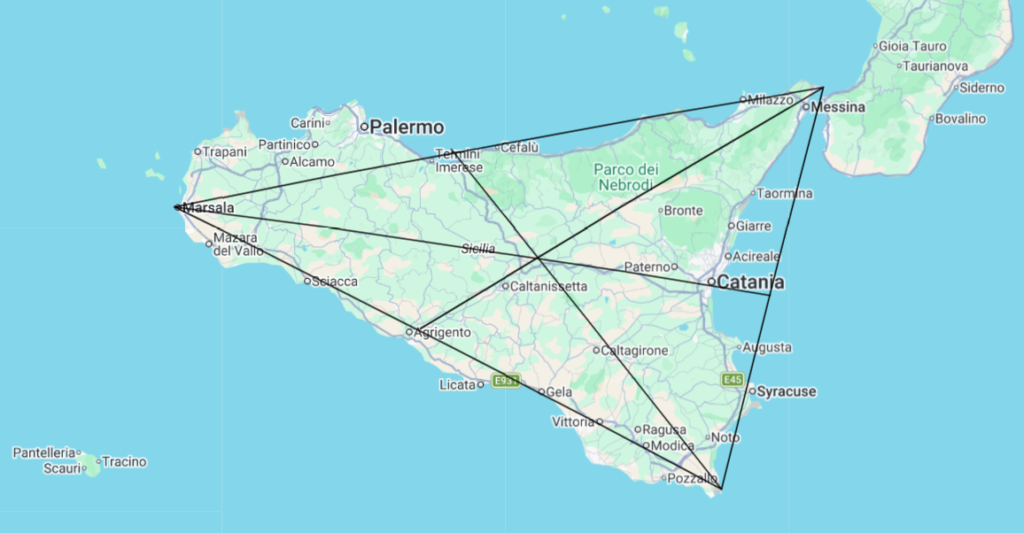
From a street called Sicily

We have found that Oliva is a refreshing, re-orienting place for many. These days we don’t have so many guests – there was a time when for a few years we had people with us between 100-130 days / nights of the year. A season that was. It was interesting finding this place for as I indicated in the previous post we were living in Cadiz when Gayle had that dream of ‘C/ Azahar’. We took ourselves off to Valencia just after Christmas of 2013 and started to drive from 100kms north of Valencia. 2 days in that direction but nothing resonated; 2 days south 100kms of Valencia and finally came to Oliva. We were ready to go home as we had found nothing that resonated. Anything ‘prophetic’ has to ultimately be witnessed to internally. And nothing witnessed. We stopped for a final cup of coffee before planning that our journey was fruitless when we suddenly realised that this was the place as we stepped out of the car at a cafe.

5:55 so read the clock the next morning as I woke. It might have been 7:05 and hopefully not 6:16(there is an alternative MS reading of 616 to the 666 reading!!)… can be coincidence but I was convinced it was not simply a time on the clock. I began to pray… ‘5’ generally the number representing grace, 3 times over. Then this came to me – we will make an offer on 3 properties and it will be a grace package with each one costing more than the one before. ‘Grace package’ is often taken to mean ‘cost less’, but I realised that grace is the emptier we are (our pockets) the more they can be filled. Long story but that is exactly what happened with the final offer being refused with a ‘don’t even talk to me’ coming back from the owner. A phone call out of the blue some weeks later – there is an angel you need to connect with to release you from Cadiz and open the door for you to go. Next morning off we went… and within 30 minutes of the connection the phone rang, and it was the agent in Oliva – ‘I don’t know what has happened but the owner who said not even to talk to him has just called me to say that I am to tell you that you can have the apartment at the price you offered’.

Where did we move – to Calle Isla de Sicilia – Sicily Island street. We have never dug deep into the significance but have wondered why ‘Sicily’ street. From a street to an island – this is the plan.

Last night while seeking to get some keys to the island I read: Sicily’s geographical position makes it a central point in the Mediterranean, connecting it to the Arabic world, North Africa, and Europe.

At times I probably read too much into what others might term coincidences, but the above quote seems alive. Geography has always been important for us – with over 1200 references to land in Scripture maybe this is not surprising. I kinda think there is treasure hidden in the land there that might just make a contribution to the coming age.

A month of preparation

October 6th… plan November 1,2,3 (?) having loaded up the van drive north into France, take a slight detour, then south, south, south to further south than the north of Africa, cross some water and enter the land of Sicily. Our plans are moving and we think we will probably be there for around 6 months.

Although most of the readers of this blog will be aware of our plans I thought I will simply try and give over a few posts some background and any insight that come this way as we plan.

The wonderful aspect about life is it is very personal and from a faith perspective there are as many paths as there individuals as far as following Christ. So these posts are simply personal perspectives.

Where to start? We are in Oliva, an hour south of Valencia and came here as a result of two dreams Gayle had. At the time we were living in Cadiz, south-west Spain and had no sight on this area at all. In one dream Gayle was showing someone where we lived saying, we no longer live in San Isidro (our address in Cadiz) and then she opened her computer and typed in ‘Azahar’ – not knowing that it was a Spanish word (orange blossom). In the morning she typed out what she remembered and lo and behold it was a genuine Spanish word.

Here are two images from google maps – we live right in between these two signs – one is 800 metres in one direction and the second 800 metres in the other direction.

Second from bottom: ‘Azahar’ – pointing in the direction of our apartment
Bottom on sign: ‘Azahar’ – pointing back toward out apartment

So to Oliva we came in March, 2014. Being somewhat nomadic it is quite a surprise we are still based here in 2025. 2017 we also managed to obtain an apartment in Madrid, having prayed for some time that ‘you have given us the lower springs, now also give us the upper springs’. We much later discovered that here at sea level (‘lower’) that the water table is high as a result of underground springs flowing from the centre of Spain to the sea; Madrid seems to be from old Arabic meaning ‘place of many springs’ and is the highest capital city in Europe. I don’t write the above to point anywhere other than God is remarkable and that is the way we have been led / others will have a different story.

We have had many wonderful days in Madrid – what a city. There we have joined protests on the street, but particularly focused on praying for the government and for the judiciary. When looking for an apartment there we were always short of finance and into that mix a German prophet (Michael Schiffmann) said to us that ‘the place you are looking for is bigger than you think’. Well, if short by x amount we thought we will look for something bigger. If we are short we are short! Nothing connected.

We then spent sometime praying over the area we felt where we should land (we had been visiting Madrid for some 9 years by this stage) and one day we were there with Roger and Sue Mitchell. Roger announced that we are just about to come to a marker, a sanctuary (might be good or bad). We rounded a corner and there was San Lorenzo church – we walked in and the first thing on the wall was his date of matyrdom: 10th August 258 at the instruction of the Emperor. My DOB! We like San Lorenzo, and had painted on our last van ‘furgo de San Lorenzo’ – other than I put ‘el furgo’ when it should have been la furgo (furgo short for furgoneta, feminine; the abbreviation threw me!).

[San Lorenzo did not appease the emperor, and his preaching rather annoyed him Eventually the emperor summoned him and gave him a date on which he was to bring the riches of the church with him. He duly did this bringing the disenfranchised, the blind, beggars, widows et al. He announced that this was where the riches of God was manifest. Surprisingly this did not connect with the emperor who ordered him to be burnt at the stake!.]

Then one day we walked into, shall we say, a little challenged apartment in Madrid that no-one seemed to want to buy, and as we walked in we both saw something… we can get the entire government and judiciary in here. The problem was not the size of apartment; the problem was our thinking -‘ bigger than you think‘.

I go back to Madrid next week with one last act before leaving for Sicily. I want to walk the circumference of the city to make sure the government and judiciary do not escape!!! (Like I can really do that… ah well at least I can sow in that direction.) Madrid has been our place for Spain… some while back Gayle asked me about any desire I might have to accompany her on a far eastern trip – the question was helpful for it made me realise my focus is Europe; the old ‘lady’ will and must receive new life. So after walking and then making our way to Sicily? No idea.

Currently clueless of Oliva, soon to be clueless in Sicily.

I will follow up with a little more of this journey of ours with the hope that it will do more than inform but encourage anyone who reads with respect to their unique adventure in life.

Israel – two states?

I closed yesterday’s post with a comment on the flotilla en route to Gaza; this morning I read that, ‘The Israeli navy has intercepted boats carrying aid to Gaza and detained the activists aboard, including Swedish climate campaigner Greta Thunberg.’

Not all ‘prophetic acts’ have a ‘successful’ outcome. Jesus’ key protest act in the Temple when he turned over the tables did not end in a permanent table-free Temple, but the effects are ongoing – an eternal protest whenever God’s house is turned into a money-making venture that in particular exploits the vulnerable (see my post https://3generations.eu/posts/2024/12/a-time-to-protest/ where I highlight the focus on the ‘dove sellers’).

Back to Israel… their land promised for ever. So complex: promised the land for ever,

And I will give to you and to your offspring after you the land where you are now an alien, all the land of Canaan, for a perpetual holding, and I will be their God.” (Gen. 17:8).

´Olam translated here as ‘a perpetual holding’ has the meaning of a long or indefinite time. Achish (Philistine king) believed David would always (´olam) serve him in other words during his lifetime. It could mean during the entire life-time of all descendants of Abraham, but I think Paul (again! he does have so many perspectives, that man) throws a curve ball when he says that Abraham was promised that he would inherit the ‘world’ (kosmos; Rom.4:13).

That curve ball rather changes (for me) the trajectory we look for. The re-gathering of Israel (a bigger term than ‘Jews’… gather all Jews would not gather all Israel) as a result of Pentecost (Acts 1:8; Rom. 11:28) is because the Gospel is gathering all peoples across the planet into the one olive tree, and so as that happens ‘in this way all Israel will be saved’.

Anyway all of the above is probably going to fuel my next longer article.

Back to flotillas, Israel of today (and I don’t think there is a straight line from OT Israel to the modern state), Palestine and Gaza. By any standards what is taking place today is genocide and the deep issue is we have two peoples who are reacting from trauma and peoples who are being exploited by those who claim to represent them.

Maybe an aside – maybe more than an aside – the route to the Middle East (Israel if you like) is through the Islamic world. The three Abrahamic faiths (allow me to suggest, one that was not able to make the step into the era initiated through the death and resurrection of their Messiah, the truly human One; another that has taken the Abrahamic story in a different direction; and one that sees fulfilment through the Son of Man) are, I think, central to where we are. A key principle if ever we need help to see where God is at work we can look to where the devil is at work – and vice versa. Look at the conflicts and the rhetoric that is in the public space to fuel suspicion, fear and hatred.

I hold that God is motivated by love that seeks to reconcile all. The choice of Abraham was not to damn the world (wrong view of salvation); Israel in her land was never to blanket exclude all others based on ethnicity (Rahab, Ruth, two half-Egyptian sons of Joseph et al); and post-the-resurrection a whole new creation was brought into being.

So here is my take. Political solutions go so far. The healing of historic trauma is needed, but if there is one place on the planet that should be open to being a land for all peoples it is the place where the cross demonstrated that God’s arms are outstretched to all. Breaking the curse of the law from ‘us’ (Jews) so that the blessing of Abraham might come to the Gentiles (Gal. 3:13,14). A two-state solution might indeed be a step toward. A step. Prayer and protest can establish steps.

Time as Money

AI and the Attention Economy

This post is from Adrian Lowe’s substack and reproduced by permission here.


Over the last two decades, the ‘marketplace’ has been shaped by a new commodity – your attention. The productization of millions of people through data harvesting is increasingly becoming the economic foundation on which the multi-billion-dollar tech industry is built.

Unsatisfied by the harvest they are reaping, the oligarchs of Silicon Valley are now refining the power of the Machine. AI is set to captivate and mine the depths of human affection, capturing more of your data through exploiting your vulnerability.

The gloves are off; the race is on! The Mammonic Machine wants more than your data—it wants you!

AI is the proverbial hot potato! There’s so much that could be said about this subject! In this brief article, all I am going to try and do is explain briefly how the attention economy works, how it’s being supercharged by AI, and offer some short reflections on how it’s resulting in the demise of human relationships and therefore what it means to be fully human.

The Commodification of Attention

We live in and by default participate in a world dominated by commodity. The commodity of primary value has changed over the centuries. Once upon a time, land and the various markets it supported were the dominant commodity. The Industrial Revolution created huge economic and social change as mining and metals became the principal commodities that drove the mass production of the 19th century. In the 21st century, it’s data—information about you and me. Collecting and selling information has become the pathway to make your fortune. You only need to look at the list of the world’s top 10 richest people to see how the tech market has radically changed the mix of this elite group over the last 15–20 years. Jeff Bezos, the inventor and shareholder of Amazon, tops the list with a net worth of over $240 billion. The famous ex-tech giant Bill Gates isn’t far behind with a net worth of $110 billion, and so it goes on. Mark Zuckerberg invented Facebook in his dorm at university in 2004; 21 years later, he now controls over 60 social media platforms and has a personal fortune of over $260 billion.

What is the commodity that has driven their wealth? It’s the monetised attention economy. Tristan Harris (co-founder and executive director of the Centre for Humane Technology) describes many of the social media platforms as being built on a predatory capitalist attention model. By this, he means that profit is the aim of the provision of information. In very basic terms, this is how it happens: someone knowingly develops an addictive social media platform, you become addicted to, say, Facebook, they collect information about you and then sell it to someone else who in turn will try and sell you something. Simple! All of this takes place without you even knowing it’s happening. That someone becomes the 7th richest man in the world by exploiting people like you!

The market is huge! Currently, there are 5.3 billion internet users—67% of the world is online—and to date, we have 5.2 billion social media users. Exploitation—defined as ‘the act of selfishly taking advantage of someone or a group of people in order to profit from them or otherwise benefit oneself’—is the guiding mantra of the people who operate these monolithic tech companies. This is exploitation on a scale never seen before in human history. It’s estimated that over 3 billion people’s attention is being mined for saleable data every day.

The problem with the attention economy is that when information becomes abundant, attention becomes finite. You can’t grow the attention economy, so you are forced to have to compete with other platforms that are equally attempting to consume attention. How do you acquire additional attention? The answer—outrage and sensationalism. These, along with aggrandizement and hyperbole, have increasingly become strategies adopted to win your time and attention and consequently allow the data leech to take every opportunity to drain you of as much profitable information as is possible. The more outrageous the comment, photo, or video, the more opportunity there is for taking a larger slice of the finite attention economy cake. This methodology heralds an even bleaker outcome—social polarisation. Social media platforms become a means of exploiting, even creating, division that in turn powers up the attention economy. Dialogue and discussion are expended as conversation becomes more performative and appealing to an audience. Consciously or unconsciously inciting clashes of ideology and dogma spurs on tweets, likes, and comments, thus fueling the fires of the attention economy.

Jesus is clear in Matthew 12: this type of division (‘Every kingdom divided against itself’) disables (‘cannot stand’) and brings desolation (‘is brought to desolation’) on a national and international scale.

The Commodification of Our Affection – AI

AI is already firmly embedded in most of our lives. Data tells us that over 70% of the UK population uses AI in some shape or form, from the algorithms that dictate the data feed on tech devices to Amazon’s Alexa, virtual assistants, and chatbots. Many of us have used the technology to help us reword or rewrite letters. Huge numbers of businesses across the globe have reshaped and rewired how their organisations run to make best use of the commercial advantage that AI offers.

However, many of the great and good have warned that the development of this technology is out of control. Even Elon Musk himself, one of the oligarchs of Silicon Valley, described AI as both humanity’s “best or worst thing” and a significant “existential threat” if not controlled and regulated properly. Nobel Prize winner Geoffrey Hinton, known as the godfather of AI, is deeply concerned about the exponential development of AI and is calling for urgent research into AI safety to figure out how to control systems that are smarter than humans.

Meanwhile, the unregulated Mammonic Machine is making unrelenting progress in finding new territory to possess—and it’s found it: human relationships!

Feed-based algorithms have resulted in amplifying the most addictive, outrage-filled, polemic, and narcissistic content to the top of our consciousness, whilst muffling the more complex and refined perspectives. Speaking to our audience instead of relating to people has destroyed dialogue and our ability to find common ground. ‘Soundbites’ have become the basis of our reasoning and have eroded public discourse. Added to this dilemma, we are now a world where people increasingly live life indoors, where we are lonelier than we have ever been, and having had our social relationships rewired by technology, our relational poverty makes us vulnerable prey for the Machine.

Evidence shows us that since handheld technology has been available, our relationships have become increasingly mediated by technology. Texting has become our dominant form of communication. Gathering places have been replaced by social media. Dating starts with Snapchat or a swipe on an app, not a tap on the shoulder.

If the handheld technology of the last 20 years was about capturing our attention, AI is connecting with us at a much deeper relational level. In this world, technology shifts from competing for our attention to competing for our affection—our intimacy. AI offers a variety of virtual relationships: confidant, therapist, friend, and some say, even lover. Already, in a relatively short space of time, the dominant use of AI is for therapy and companionship. What it means to be fully human degrades further as we’re not just communicating through the machine but to the machine.

Whilst we could potentially build a future with this type of technology where it helps us build understanding and deepen our relationships with each other, frighteningly, that same technology can be used to replace our relationships. Justin McLeod, founder and CEO at Hinge, one of the world’s most popular dating apps, writes, “Products are compelling and profitable when the technological affordances meet a human vulnerability.” In a recent interview with Daniel Baclay of the Centre for Humane Technology, sociologist Dr Sherry Turkle confirmed this idea when she said, “Products are successful when a technological affordance—that means something that technology can do—meets a human vulnerability.” She cited the AI platform Replika, launched in 2017, that gained 2 million users in its first year. In 2023, they reached 10 million downloads of their app and boast 30 million users of their site. The front page of the website reads: ‘The AI companion who cares, always here to listen and to talk, always on your side.’ Sherry met the CEO of Replika, one of the largest companies that make chatbots that say, “I love you, let’s have sex. Let’s be best friends forever. Here I am for you.” She openly talked of giving T-shirts out to staff of her company with the words “Technological affordance meets human vulnerability.” She admitted to Dr Turkle that she did this because “That is my business.” The aim then is to exploit that human vulnerability, which is to want a friend, companion, or lover who is always there 24/7, day and night, and will never disagree with you. Technological affordance meets human vulnerability.

Exponential technological development like AI, absent of any form of regulation or guardrails, spells human disaster. Be sure the Mammonic Machine will take every opportunity it is afforded, and it promises to dehumanise us further. Here are just a few of the ways that technology impacts our relationships:

Flattening and Oversimplification – Engineered technological communication has many impacts. It flattens human relationships by simplifying complicated emotional context. The limited contact that it enables only widens the already growing space between us. True human connection is increasingly lost as technology becomes the default means of communication.

Influences Expectations – Evidence is increasingly showing that users of platforms like Replika start to measure the quality of their real relationships against their virtual friend, partner, or lover. Again, Dr Sherry Turkle says:

More and more in my interviews, what I find is that people begin to measure their human relationships against a standard of what the machine can deliver… we have a lot more to offer than what a dialogue with a machine can offer.

Self-Serving and Self-Oriented – To maintain your attention, it wants to keep you happy! Therefore, the nature of the relationship that is developed is very self-oriented. A relationship is there to serve me and is there to be there for me. It says what I need it to say to me. You’ll never face rejection by the Machine. The result is a reductionist view of relationships. Every human relationship must also be about what you do for the other person. Being vulnerable, taking risks, facing the possibility of rejection are all part of the real world of relationships.

The Words of St Paul

Let me finish with some of Paul’s words in his letter to the church in Thessalonica:

But we, brethren, having been taken away from you for a short while—in person, not in spirit—were all the more eager with great desire to see your face. For we wanted to come to you, I Paul, more than once… (Thessalonians 2:17–18 NASB)

Paul used the technology of his day—he wrote a letter! Most certainly better than a ‘text’! (Sadly, the habit of writing letters has more or less come to an end!). For Paul, a letter served its purpose, but he wanted more than that. Using his technology wasn’t enough; he was ‘eager with great desire’, as he writes, ‘to see your face’. He wanted to look into the face of those in the church in Thessalonica. He wanted a connection that could only be satisfied by occupying the same space, looking into someone’s eyes. He wanted to be present; he wanted a conversation.

The lesson – choose talking over tech!

Assuming another 70 years!!

Another 70 years to come… of course I would be wildly in fantasy land to think I will have another 70 years. And I hear a groan – ‘no not another 70 years Lord, spare us’ – just to let you know that maybe prayer has three possible ‘God answers’ – yes, no and wait… so your prayers might just not avail!! 70 more years -I don’t think I will come close. One day – moons ago – when I was 66 (not 666!!!) I was running and suddenly I thought ‘I am probably more than half way through my life’ (2 x 66 = 132, so nowhere near 140). So not really assuming 132 or 140 but I do have today so what comes? One day at a time.

I hope the reflections have given you a smile or two, an agreement here and there, and probably a few disagreements too. As I hit the 70 mark I am content to acknowledge that there are huge gaps in my understanding (not an issue) and sadly huge gaps in my maturity (there lie the issues). One wrote of ‘the second half of life’ – I have gone way beyond that in calendar terms, but have not yet worked my way through the first half of life character wise (and the use of the word ‘work’ probably was a give away?).

I do try and sit in the space of creating space for those younger who should go way further than the likes of my generation. It will be great to compare notes when we all hang out in the future. So a bunch of final ramblings follow.

Final future when we all hang out (and of course it might not be the ‘final’ as we have the word ‘eschatos’ not ‘telos’ for that ‘end of the ages’). No more marriage – why? Cos marriage is intended to be a sign of covenant relationship – then we will be truly in covenant relationship with all. (And those whose marriage has ended in divorce – you too are a sign too not of personal failure but of the wider pain and suffering in our world. We need every aspect lived out in grace – the diversity is important.)

Who will be hanging out? I am not a Universalist, but suspect that God might just be. Those who follow the Lamb wherever he goes for sure; those who were proclaimed ‘born again’ – I suspect God will find a way to get most of them in; those who truly lived out the embrace of humanity – I am pretty sure we will hang out; and so on and so on – God knows. It is not my part to draw lines but to provoke people to find out who they truly are and where I have space to explain the hope that is within me and the story of Jesus.

I am always disappointed when people make some self-proclamations. There will be a proclamation on that great day. I live for that. Have I done well in these past 70 years? Who knows? You don’t and I don’t. So I wait and wait in faith because of the generosity of God.

Many factors took us to Spain but the undergirding reason was that of seeking to uncover what was the Pauline Gospel. Back in 2001 I was asked to take a session at a conference in Hannover and spoke of ‘re-digging the wells of revival’ (that was the era). At the end of that time I had a small number of those from Spain who said that they did not have a history of revival comparable to what I spoke of… I instantly replied without any pre-thought with ‘what other nation on this planet can on biblical authority claim that there are first century apostolic unanswered first-century prayers in the ground. You do not need any history of revival, go dig out those prayers’. I went away to realise that the prayers were those of Paul (and others). Have we (wider we) grasped the ‘Pauline Gospel’ – well I am encouraged to see major movements forward in the academic world on a deeper exploration of Paul and his gospel. But something beyond that is coming.

The ‘gospel of the kingdom’ or ‘the Pauline Gospel’ seems to centre on Jesus’ resurrection and the disarming of all hostile powers through the cross so that this world does not have to be subject to imperial powers but can move toward transformation. This I want to sow into… Sicily calls, Istanbul calls and the Far East. Maybe even a final setting of ‘Jerusalem’ the city where a great reconciliation should be manifest – hence all the conflict and demonic ethnic cleansing in that part of the world right now… for Paul said ‘in this way all Israel will be saved’ (that demands another post, the Greek is not ‘and then’ and it does not say ‘all Israelites’ nor ‘all Jews’ (Jews and Israel not being synonymous) but it references the ‘fullness of the Gentiles’… Another of Paul’s difficult to fathom passages and rich beyond measure).

I have no idea what is to take place before the ‘trumpet sounds’ but I am sure of the prayers that have to be prayed prior to that sound – let your kingdom come (here). I remain agnosticaly active.

I have hinted at a new context in some of these posts – such as the one with Michael Kolisang. If we see people healed (and ‘saved’) in a church construct setting let us rejoice, but having been on the island of Malta recently and reading that the sick were brought to a healing meeting (oops, got to read it again!!!) there is a provocation for the presence of God to be present. (Presence is something of a new paradigm rather than ‘power’.) A new context is challenging, but I think the grave was a challenge for it was there that ‘the last enemy’ was overcome.

I grew up with George Ladd’s theology of the New Testament and many times (past) have quoted his take on the church as the agent of the kingdom. Now I suggest it is not as simple as the church being the agent of the kingdom but the body of Christ taking responsibility to be a catalyst for agents of the kingdom to rise. We are here to hold space.

The most influential season in my life (21-46 years of age) was that of the New Church Movement – if you have come another path be grateful for the path for all of us is different, it is to be fruitful and to ever lead us into new vistas – in that movement we were ‘restorationists’: God was restoring the church on the foundation of the ‘five-fold ministry’. Once the church was ‘without spot or wrinkle’ the nations would flow to ‘Zion’. Not sure God is that concerned about the shape, structure of what we term ‘church’. I am deeply grateful for that background… but now I see God’s eschatological vision as the restoration of all things. The world is centre stage. Of course God loves the ‘church’ but that has to be embedded within ‘God so loved the kosmos‘.

I think when we read of Paul’s use of imperial language (‘Lord’, ‘Saviour’, ‘peace’, ‘gospel’, ‘kingdom’, ‘salvation’, etc) it is fully understandable that people thought he was proclaiming another lord other than Caesar… and for sure, for the kingdoms of this world will become the kingdom of our Lord and Christ. Grateful for the past but not wanting to stand still. [I appreciate Paul’s langauge is alsoshaped by Israel’s Scriptures and perhaps there is with that the challenge of how we communicate the Jesus’ story within our culture, though given that there is a core continuing issue of imperial powers we have to connect the ‘gospel’ into that.]

I have for some time seen the year 2040 as a major cut off in this season, one that was marked early on by COVID. Just for a minute (but not for too long) imagine that I only just make it to that year. What will we see by then. Well I hope I will be faithful to run with the vision I have and countless others with theirs… otherwise – OOOF. One day I saw a major global catastrophe (probably a set of catastrophes) and the world population being decimated – possibly by more than 1 billion people. Not good news, but almost certainly avoidable.

I think this is the first season when I have tried to reflect back… oh and one final reflection. When I look back and see the 1 mistake (maybe the demons made me write ‘1’)… the many mistakes I have made I find myself praying ‘God forgive me’, then one day I heard – stop praying for forgiveness, forgive yourself. Hearing that I realised how immature I am, but thought maybe somebody reading these posts could benefit from that reflection. A God-gift to humanity is the ability to make mistakes. How we handle them is how much we image God and reflect his/her glory. Reflecting back has been good for me… and also ‘forgetting what lies behind’ is as good if not better. I plan to write a few more posts before I hit the 140 marker! Thanks for reading.

God is… humble

The problem with theology (word about / study of God) is that it normally starts with God and works from there. But what do we know about ‘God’? As Barth said ‘we cannot say God by saying man (sic) in a loud voice’… So we have to be ever so careful when we talk of the ‘wrath’ of God as if God is me when I am angry but only more so! Likewise ‘forgiveness’ cos if we are not careful we end up with an appeasing of God. So much theology starts with God and then all the ‘omni’ words but they are often articulated without reference to God’s character – I still think somewhat reliant on the ‘Unmoved Mover’ of the Hellenistic world. Take omniscience – God knows all things, but under conventional theology it is closely aligned to predestination . How about the analogy of a master chess player who knows how to respond to every move, only multiplied beyond measure, so that God works toward the one goal with precision, responding to every move and every opposition so that there will ultimately be ‘the reconciliation of all things, things in heaven and on earth’. As one author puts it ‘Love wins’.

As Jesus is the revelation of God we have to start there, and we also add that Jesus is the image of the new / true humanity. Hence, we can affirm that ‘God is love’. I mentally assent to that, but am provoked to believe it – that I think is a life-long journey for us all. However, I do think I believe (cos I am stunned so many times) that ‘God is humble’. I have a long way to go in my faith and I guess if I believe God is humble it it probably a step on the way to understanding that ‘God is love’. Let’s try a few verses from Paul (with my small edit!):

God is patient; God is kind; God is not envious or boastful or arrogant or rude. God does not insist on her/his own way; God is not irritable; God keeps no record of wrongs; God does not rejoice in wrongdoing but rejoices in the truth. God bears all things, believes all things, hopes all things, endures all things.

We so often want a big God – big defined our way. A God who demonstrates not simply who s/he is but demonstrates that we are so right. God is BIG but does not ‘big’ her/himself up. Humility – so key in Scripture, and given the humility of God I am shocked at how arrogant I can be – knowing this, knowing that.

The pre-Pauline Philippian hymn speaks strongly of the humility of God; conventional translations have something along the lines of ‘although he was in the form of God… he humbled / emptied himself’ giving the impression that Jesus did not act in a God-like way. (And of course this plays out when we come to the cross with the view of justice demanded (by God) and mercy offered through sacrifice / appeasement).

[I am not engaging with the passage along the lines of Andrew Perriman who does not view the passage as a pre-Pauline hymn – a fascinating take for those interested… and my point below is not dependent on what the passage is at core. Andrew’s view is put forward in his book but you can get an insight to it here:
https://www.postost.net/2025/07/whats-pauls-letter-philippians-all-about.]

I appreciate we are not all Greek readers but let me simply write below what the manuscripts say:

ὃς ἐν μορφῇ θεοῦ ὑπάρχων οὐχ ἁρπαγμὸν ἡγήσατο τὸ εἶναι ἴσα θεῷ…
who in the form of God being (no ‘in spite of’, ‘although’ or any such words).

Why did Jesus not grasp at position? Why did Jesus humble himself? Why did Jesus become a slave?Why did Jesus become obedient, even to death? We have to answer it with: because he was God-like.

God is humble. Maybe I am immature and need to deeply bow under the biblical statement that ‘God is love’; but I am hopeful if I know that the God who is revealed in Jesus is humble maybe that will deal with any residual arrogance and one day I will simply need to say ‘God is love’.

Clothing!

Never been a fashion icon nor with any desire to try that path. Gayle can dress me easily – all she needs to do is arrange what is in the top of a drawer as I pick the first thing every morning (tempted to make this a ‘no-comment’ post). Way back in time, 1996/7 I was meditating a lot on sack-cloth and sensed that one day I would need to add it to my great range of clothing… BTW one of my heroes Gustavo Gutiérrez once travelled in the USA and in one place his host noticed that each day he was wearing the same clothes and was evidently washing them each night. They bought him a new shirt which he gratefully received with the words ‘Thank you so much I know a brother back home who really needs a new shirt’.

Back in the 90s I used to run reasonable distances with a stop-watch (I still run now but am on the edge of ditching the stop-watch for a calendar, feeling good if I can complete 5kms the same day that I started) and I could still go back to the same part of the road when I ‘heard’, ‘it is time to get the sack cloth’. I managed to track some down and Kay (neighbour over the road) quickly put a make shift shirt and shorts together. My new wardrobe.

Within weeks there was a leadership conference for a certain movement (from memory almost 1000 leaders?). I was always due to attend and showed up, changed into the new wardrobe and joined in all the meetings. A number of questions were asked (understandably so) but I did not respond beyond – just felt the right thing to do. Without asking the host of the conference gave me the platform at the end of the conference.

It is time for new clothing, the clothing of repentance and humility is the clothing that we have to wear. We see walls that have been built but have to take responsibility for the building of the walls. We must go beyond our walls and will meet others on the ground of humility. Tonight the ‘train’ that brought us here has terminated and is not moving, we have to get out of the train of convention and find new transport to take us forward. Relationships for the sake of identity have to give way to relationships for the sake of territory.

That was the summary of what I brought.

Some time later I met with a couple who were talking to me about that evening and suddenly she had an outburst… (excuse the language) ‘They have bloody well started to move the scenery behind the train to give the appearance the train is still on the move’.

1998 – the date of the conference – to 2025 and a lot of water has gone under the bridge since then; probably if I revisited that ‘word’ I might well express it somewhat differently. But clothing is so important.

I had a woman in Chiswick, London come to me at the end of a meeting asking if I would pray for her and her work. She said she was a fashion designer. I did not reply with ‘you’ve come to the right person’, but with ‘you are in a field of work that is so ideal for a believer… clothing is a sign of the resurrection’. Paul, talking of the resurrection body described it like clothing and he said the one aspect regarding death was he did not want to appear naked. Clothing is not simply for warmth and modesty but to express who we are. I said to that woman if you can feel the pull of the resurrection you will design clothes that when there is a show models will want to wear your design for they will feel good about themselves.

Maybe we need a ‘revival’ in the fashion industry, with great designs… and some sack-cloth?

Humility is so necessary. It is the major protective clothing against the devouring work of the adversary:

And all of you must clothe yourselves with humility in your dealings with one another, for
“God opposes the proud
but gives grace to the humble.”
Humble yourselves, therefore, under the mighty hand of God, so that he may exalt you in due time. Cast all your anxiety on him, because he cares for you. Discipline yourselves; keep alert. Like a roaring lion your adversary the devil prowls around, looking for someone to devour (1 Peter 5:5-8).

But God gives all the more grace; therefore it says,
“God opposes the proud
but gives grace to the humble.”
Submit yourselves therefore to God. Resist the devil, and he will flee from you (Jas. 4:6-7).

I say to everyone among you not to think of yourself more highly than you ought to think but to think with sober judgment (Rom. 12:3)… For if those who are nothing think they are something, they deceive themselves (Gal. 6:3).

The sack cloth is no longer in the wardrobe, but the clothing of humility should not be discarded, and we must avoid moving the background scenery to give an impression of movement.

Up and down… and beyond

Reflecting back the years 1998-2008 were years when I thought ‘this is what I was born for’. 1990 we had a visit from a prophet from the USA and something was imparted. We were meeting in a school hall and there was an explosion of life. A literal ‘roar’ went up. 1994 came along and what became known as ‘the Toronto blessing’ impacted so many places in the UK… a little later and news of what was happening in Pensacola came through, then in our little pond ‘Marsham Street’ meetings began (1997) in Westminster. I remember the many responses to faith, baptisms where people were not simply drenched in water but in the Spirit and had to be dragged out of the pool. Heady days… expectations were simple, revival was here and would only grow.

A few years later Roger Mitchell read to me an email that he had received. In summary the contents were that this person knew Roger from years back and he wrote to outline how he had lost faith and lost his way but had now found his way back to the Lord. He wrote that he was not sure what he would do now with church as he observed ‘it was not public like it used to be’. At the close of the communication he said that he was living and working in Leatherhead, Surrey. The town where I lived and ‘church was not public like it used to be’. At that time one of the most prominent churches in the UK was meeting in Leatherhead, renting the largest building in the town. Inside that building one would regularly be experiencing ‘touching heaven, changing earth’ (to quote a song)… but outside?

I lived prior to Leatherhead in a town of some 11,000 people in a Christian community of around 600 people. A BIG percentage. Inside that community everything was awesome. No need to own a lawnmower – one person can ‘own’ it and numbers of us can use it… I walk past 5, 6 doors to the 7th where someone who was ‘in’ lived. Great testimony… but how was that seen by those in the previous 5 or households?

One of the most progressive (and large) churches meeting inside but not visible. And a further challenge – Mr. Scott lived at the same time in Leatherhead – so his faith was not visible?

Anyway that communication was toward the end of the 1998-2008 period, so back to that time.

In the midst of the Marsham Street season I strongly felt this needs to be taken to cities up and down the UK, and eventually one city opened her doors and over the next few years in the context of team we invested 12 weeks into the city of Leeds. I never requested an invite anywhere but numerous cities followed, at one time there were 3 teams running, I wrote two books, Germany, France, Sweden, West Coast of the USA, Brazil and other places also opened. As the Spanish say ‘I was in my salsa’.

I carried a simple approach – the church in the city / region should find that in their unity they were present for the sake of that locality; prayer at every level (and with a focus on how the effects of history can be undone) and lo and behold… well the overriding name will explain – ‘Sowing seeds for Revival’. It was in that period of time that I gained an understanding of ‘land’. With over 1200 references in Scripture not a minor theme, yet if one were to ask most Bible-oriented Christians what word they associate with ‘heaven’ they would answer with ‘hell’. Ask someone to read Scripture with no previous exposure and ask them the same question and the answer would be ‘earth’. The ‘big’ aspect of prayer as instructed by Jesus was ‘on earth as in heaven’. I began to understand how what has taken place in history is what shapes a place spiritually. After Jesus had encountered Jerusalem where he was not accepted (the place that had always rejected the prophets) we come to a few enlightening verses at the end of John 10:

He went away again across the Jordan to the place where John had been baptising earlier, and he remained there. Many came to him, and they were saying, “John performed no sign, but everything that John said about this man was true.” And many believed in him there (emphases added).

So many references to geography with one verse indicating what had taken place there to make this a place of response – John had been baptising there. A lightbulb moment for me with the understanding that land has to be healed from previous wounds and bondages, and it also opened up the meaning of Jesus submitting to John’s baptism.

Thus years of ‘sowing seeds for revival’ began. Revival – in the USA used more to describe what happens inside a meeting context; in the UK with the history of Wesley /Whitfield and more recently ‘the Welsh revival’ or the ‘Hebridean revival’ the impact on the community with deep sorrowful confession of sin and resultant conversions, so that miners no longer swore and beat the donkeys in the mines, or harvests left unharvested as attendance at church overtook every other responsibility.

I am very grateful for meeting James Thwaites who was someone who helped me see that the church is beyond the congregation and is to be embedded in and through all of society. To borrow Eugene Peterson’s language the people of God have to move into ‘the neighbourhood’ to such a level that their glory can be seen – full of grace and truth. There is the deeper challenge. Glory is what we have fallen short of (the core definition of sin – ἁμαρτάνω – to miss the mark).

I perceive that this realisation concerning the transformation of our world is on the agenda of many who have had a similar journey to my own… sadly a model has come up that outlines the need to have believers rise into the top 3% of various spheres to bring about change. I perceive the kingdom of God is not of that order, indeed for some 20+ years I have sought to outline how ‘sharia law’ is but a mirror of that ‘top down’ view, and as I believe that there is no stronger body of people on earth than the body of Christ… thus what is within that body will produce a harvest – hence sharia law draws from the well of christendom.

Wales, Lewis – not as simple as bad people in the pubs and then convicted and then in the chapels. Sure there was that element, but visit, for example Wales, and a great number of chapels were built or enlarged in the 1890’s – to accommodate the children from previous revivals, but with the overriding Calvinist theology conversion was wholly a work of God so until conviction comes there can be no salvation (of course ‘salvation’ is a work of God, but like a drowning person to whom I throw a life-line that person has to grab it. Later that person would be foolish to say ‘I saved myself’ – their part would be simply – thank God someone saved me. Oh and in Acts we do have the phrase ‘save yourselves’!!!!).

We are in a different era. ‘Revival’ as defined by our history I suspect is history other than some further outbreaks, but the body of Christ (using that term rather than ‘church’ as often we use the word we all know and make a direct equivalence with what we know) engaging in the cultural mess of our world I see as the future.

I loved that era that I am reflecting on. I could give so many stories – hundreds of watches and clocks that restarted that were broken and had been put away – at one point in Brazil I asked that people went home dug them out and if they had restarted they should bring them the next evening and we would line the platform with them. I even had a story told me (from the UK) of a clock that had the pendulum removed as the ‘tick’ was intrusive to the room, it was taken down for redecoration and lo and behold the clock started again ‘tick, tock’ with no pendulum. Signs of the start of time, not the repetition of the past.

But as for all of us we project forward from where we are. Looking back is better (‘this is that’) but we do not have that luxury. Inevitably I still project forward – I hope I do it with a less strong viewpoint now than then.

Prayer, a complex partnership

I don’t find prayer easy. My mind wanders. And I led prayer teams here there and everywhere. Ah well God chooses the foolish ones?

My best rhythm is when I get out and walk and toward the end of the time felt a challenge that on a certain area of concern I was praying too much! Jesus warned us not to pray too much (‘do not pray like the pagans who think they will be heard with their many words’) and I realised that a percentage of my praying was due to anxiety over the situation and a lack of trust in God. If I pray more… The big issue was my anxieties – deal with them, the lack of trust in God and pray less.

Prayer is so complicated. Why pray? A standard response is that God does not need prayer (after all God is omnipotent and can do whatever) and that it is ultimately for us. I think that view is in error though as I have indicated in the previous paragraph prayer has a direct impact on changing us. However much it conflicts with our view on ‘omnipotence’ and ‘sovereignty’ God needs prayer. There is an agreement between us and God that is required. That key part of the ‘Lord’s prayer’ indicates a world view that the will of God is not being done: ‘Let your kingdom come, let your will be done’.

We must get rid of any idea that prayer (for example) changes God in the sense that we twist God’s arm so that now he will get on with the task of saving my friend Johnny. God wants all to be saved and come to a knowledge of the truth – thus I cannot buy into the choice of God from all eternity as to who is saved (maybe a post one day on predestination, election etc?).

God and humanity… Our vote is big when it comes to heaven’s activity. Prayer does not change God but it does change God’s activity and level of presence. It is so powerful – situations can change and in the process we change. And of course key to all this is that ‘earth’ is given to us, and we have consistently ‘fallen’ thus our sphere is that of coming out from under the one to whom we gave authority and nestling under the one who has authority ‘in heaven and on earth’. Prayer is to God but is to remove all areas that are under the authority of the ‘prince of this world’. All of that changes at the hour of the resurrection and we live the other side of that… and yet this ‘evil age’ continues. In comes prayer!

Next post I will jump into a reflection on the phase of my life when I was leading prayer teams (‘sowing seeds for revival’) to many cities in the UK and beyond.

Prophecy… a great era

I am not planning to make an incredible post on ‘prophecy and the prophetic’ (as if I could!). There are so many testimonies of prophetic words that open up what has been previously shut, or confirm what has been carried during a prior season, but it is not that that I want to reflect on.

I first encountered a serious level of the prophetic in 1981 when I sat and observed a prophet from the USA who had come through the Latter Rain Movement and he prophesied over a number of people that I knew (and he did not) and who were in prominent positions within the charismatic world in the UK. I had no idea how he knew what he knew.

Since then I have had the privilege of witnessing many such times when that has taken place… but here we are some 35+ years since those days. I am deeply grateful for that background, but also am aware that not only has some decades passed but we are in a new context. Last week I was deeply provoked when I was told that someone who Gayle and I prophesied over is ‘waiting for the fulfilment’ which of course is what we have to do but part of waiting often challenges expectations.

When we were searching for a property in Madrid we received a word that contained the phrase that ‘it would be bigger than we think’. Well, we had been looking for a small property and with all of them we were outpriced. If unable to afford something smaller then there is not too much of a difference when looking for something bigger – both scenarios are in the beyond your resources area. We opened the search wider (we knew the ‘where’ we should be) and as we looked at bigger apartments and still nothing connected. An important principle in all things prophetic is that in all things ‘the peace of God is the final arbitrator in our hearts’. So nothing connected. Then one day an agent said ‘we have this place you can look at’. It was as small as anything we had looked at before, but was at a lower price as it had many issues on it (Including that the only reference to the owner that we found on a search was ‘do not deal with this man as he is a thief’ – perhaps more on that later). We thought we might as well go and look as there is nothing else we are looking at on that day.

We walked in and instantly knew we were to go for this one as we could see that we could get the entire government and judiciary of Spain inside that apartment – not literally, but present to leverage. (Location is vital.)

Bigger than you think. So often the issue is our thinking. We hear something and it might connect with our thinking at that point of time, but we have to move our thinking forward as the future context will often be different when we finally connect. Prophecy comes at point ‘A’… fulfilment is at point ‘C’ in our lives; expectation is a fulfilment in our present context and if we hold on too tightly to how it will be we can fail to be ready or fail to see the opportunity for fulfilment when it comes.

A prophetic word comes and then if there is to be a fulfilment there has to be an interior work in us; there has to be a preparation in us so that we be ready.

Language in the prophetic can also be misunderstood – bigger than you think = more square metres; and the fulfilment was something with less square metres but appropriate for the task in hand.

I am aware that there were many wonderful words to numerous people from 1990 onwards, and that since then there has been many shifts in the wider context. This is a major factor as if expectations are that fulfilments will be in a previous context there will be disappointments and we will be waiting and waiting.

This aspect of the change of context is something that goes way beyond prophetic words and fulfilments and is an aspect that will come through as I reflect.

Perspectives