Barcelona – a back story

I write the morning after the Barcelona attack, taking a brief pause in writing up our recent trip. (we have been this morning planning our next trip which we think will take us into Portugal en route to Gibraltar… another story.) A while back I watched a TED talk by Bren Brown (her web site here) on her own journey and research. Into the current violence she makes a very profound case for – if we do not own our story it will eventually own us, but if we can own it then we write the ending of the story. True personally and also corporately.

She recently reflected on Charlottesville – I make no comment on that as I do not live that side of the Atlantic, although if there is sin in the land it came from this continent here. I am also no great authority on Spain, its history and story. I simply suggest that maybe the ‘brother against brother’ might be a recurrent theme with a deep wound in the Priscillian incident being the first Christian to be killed by fellow Christians pulling on Imperial power.

To own one’s story we have to get perspectives from others (the other?). If we are part of the dominant side, the ones who write the history, then it is very difficult to hear the story from the underside. It is easy to see that the Civil War ends in Spain and the Valley of the Fallen is proclaimed to be a sign of reconciliation with people from both sides buried there. However, from the underside it would be like burying Auschwitz victims alongside Nazi persecutors, then proclaiming the past has been dealt with.

In travelling Spain it has been interesting to research using both English and Spanish sites. Often the big sweep of the Spanish sites will gloss over what went on. Thankfully in the years we have been in Spain issues surrounding the Civil War, the Inquisition, and even to some extent the Muslim expulsion have been covered with increasing honesty. This is vital for any forward movement.

We don’t know the stories of the terrorists who were involved in Barcelona, nor do we know the story they bought into but, for sure, some of what we are seeking to pray into will be a contributing element. It leaves us with a deep conviction that we have to continue, and also asking the question whether we began on this journey too late and have done too little thus far. We are not asking that from a guilt perspective, just a sobering one as there are responsibilities that we all carry.

Our prayers last night were for the police as well as the families involved. Sad today that so many have lost their lives, including the terrorists who departed this planet never having discovered the reason for which they were born. Yes, we need law and enforcement, but their job should be much easier if we can hold the space where true reconciliation can take place. We knew that if we did not do this journey of prayer that there would be terrorist attacks this year in Spain. The news has reflected these past months more arrests than before… but last night was yet again a sobering call.”,”post_title”: “Own our story”,”post_category”: 0,”post_excerpt”: “”,”post_status”: “publish”,”comment_status”: “open”,”ping_status”: “open”,”post_password”: “”,”post_name”: “own-our-story”,”to_ping”: “”,”pinged”: “”,”post_modified”: “2017-08-18 12:42:52″,”post_modified_gmt”: “2017-08-18 10:42:52″,”post_content_filtered”: “”,”post_parent”: 0,”guid”: “http://3generations.eu/blog/?p=9622″,”menu_order”: 0,”post_type”: “post”,”post_mime_type”: “”,”comment_count”: 2}, {“ID”: 9624,”post_author”: 2,”post_date”: “2017-08-19 04:59:57″,”post_date_gmt”: “2017-08-19 02:59:57″,”post_content”: “A thank you to all who have written to us about Barcelona. We were provoked to start an extensive set of travels through Spain this year of 2017 as we knew due to the history Spain was rife for terrorist attacks. Even without that threat the history had to be addressed. We cannot say, ‘It was a long time ago’, or ‘they were not real Christians’. We have to take the responsibility that the Lord shows us. We of course ask, and will continue to ask questions – are we pulling strong enough, are there elements we are missing etc. We do not ask them from a guilt perspective, but from a responsibility angle.

Our first foray was to the north and one of the key places was San Toribio de Liebana. This Noe considers is the real source for the ReConquista, the place where civic and church powers came together and some 700 years later the final kingdom of Granada falls. Noe wrote to us yesterday, I include his notes below, pointing out so much – what struck him is the attack came from Don Pelayo street, the king who was behind that agreement in San Toribio. Note also his comment on the place of the attack – the same place where there was a battle ground in the Civil War. We are finding a lot of overlay from the ReConquista and the Civil War.

Noe & Loli are from a Spanish church down the road from us. We have worked with them in the prayer journey, and they have been absolutely invaluable to us. As those of the land we value them enormously. They have been in Barcelona. With Samuel Rhein, Noe and Loli took us to the place where the ReConquista started – the agreement of church and civil powers. We are grateful for what did not take place as Noe outlines.

Noe’s email:

What Can I say? My family and myself arrived to Barcelona last Sunday for short holidays. We came last year and my daughter wanted to come again. We are in love with Barcelona!

We wanted to visit La Sagrada Familia (Gaudí cathedral) and Downtown (Barrio Gótico, Ramblas, Raval). We have been walking by La Rambla for the last 3 days. Just 1 day before the attack we were at the very place at the same time.

We live 480 km from Barcelona.

It is evident that Barcelona is a multi-ethnic tourism hosting international city with the biggest percentage Muslim community in Spain.

We stayed at a friends house in Tarragona, next to the second attack place, Cambrils.

FEELINGS: Just arriving I felt something weird. I felt it gonna be an attack 2 days before but I rejected it in my mind. Just a thought cross my mind. At the same time Loli was feeling that Barcelona will be a place of visitation and revival, all these days.

I shared with Martin & Gayle about the oppressive atmosphere I was feeling for the first time in Barcelona. (Note: Noe sent us a photo of a St. George statue – his presence is so often an issue where there is racism and division.)

THE FACTS: 2 days ago there was an explosion in a little town called Alcanar. It’s the first town of Catalunya after Castellon province of Valencia.

I saw a TV program years ago because it just the border between Catalunya and Valencia and they were demanding to change to Valencia because Vinaros is a big city next to them but is in Castellon. They wanted to change for health and other services.

When I was driving back we went by national road instead AP7 and went by Alcanar. That name came to my mind strongly and I remembered the TV program.

Recently Police has discovered the terrorists has come from Alcanar (210 km far From Barcelona) and the explosion it was because they were manipulating 20 gas butano cannisters to create large bombs inside the vans for Barcelona!!!

If the explosion did not happen Alcanar explosion maybe today we would have so far more than 14 dead people!

That explosion killed 2 of the terrorists and originated the quick attack in Barcelona. They rented 3 vans and due the explosion they just used one. The terrorist attack were planned to be huge.

Thanks God it has been “nothing” compare with they wanted to be.

THE PLACE: The first terrorist attack happened in La Rambla. Maybe the most touristic place in Barcelona. An ancient Avenue with a central promenade packed with tourists from all around the world.

Something that got my attention is that the attack came “from” Don PELAYO street!! Is from where the vehicle entered the Rambla.

Don PELAYO is the King who originated the Reconquista. He was a key character in our prayer trip to Santo Toribio (North Spain).

Pelai in Catalán.
Pelayo in Spanish
Pelagic in English:

https://en.m.wikipedia.org/wiki/Pelagius_of_Asturias

The attack happened in the same place of the battle inside Red Front in the Civil War. Anarchist against communist. That’s was the battle ground.

THE ANSWER: As I guess in places where happened other attacks some people blow the hate flame but most of the society has answered properly, even with a cry: WE HAVE NO FEAR

HOPE: On Wednesday we visited the Sagrada Familia (Gaudí cathedral). Something got my attention in addition to the beauty of the place. Suddenly a whole bus with Islamic women came into the cathedral. They look wealthy, I guess from some Emirates or another Arabic nation. But just the picture of a bunch of Islamic women coming in from the ‘Pasion’s door’ (name of the gate) with the sun rays (at that time), gave me a sense of redemption. After this, a Muslim women with veil came to the prayer seats, prayed and cried. Was one on the best pictures on the trip.

(At the passion door is sculpted the betrayal of Jesus. Judas betrayed Jesus for money and because he had his version of the kingdom of heaven, which included suppression of all opposition through the use of power. This is what motivates us to travel and pray – so when Noe wrote that this was the door they came in through that spoke very deeply. The Reconquista was motivated in part economically and the suppression of all who opposed the ‘kingdom of God’ was through violence.)

SHARE ON:

Post PermaLink

Mojacar

Leaving Cartagena behind we moved on to Mojacar on the south coast. We had visited Mojacar in 2010 so knew it a little. It was really intended as a sleeping point for us as we prepared for the major drive through the Alpujarras, but…

Mojacar

A quaint, beautiful place with narrow streets so well preserved:

Mojacar Streets

Before getting in to Mojácar and what we did there we look back on our first trip across the south of mainland Spain in 2010 with deep appreciation. We did this from Mallorca, renting a car and taking a tent, but now looking back it was so foundational to our understanding of Spain, and it was what eventually took us to Cádiz. It was at the end of our southern trip, we were in the city for just over an hour and then basically prayed for it for the next 2 years on an all-but daily basis. An accidental connection but a shift for us. Now living, more or less at the point of entry for that first trip, we reflect how what seems accidental can turn out to be so full of God.

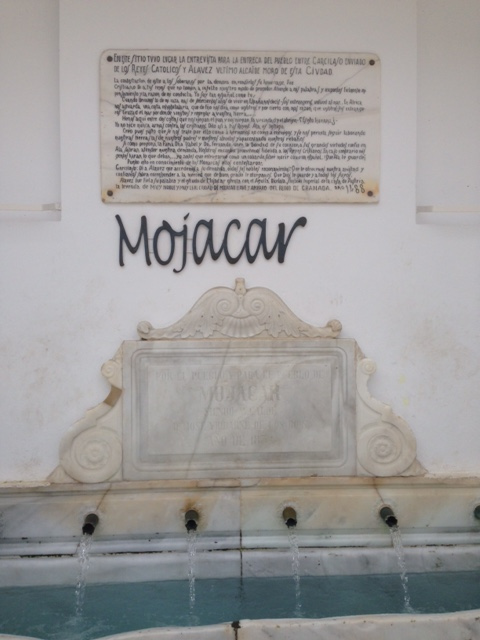
Mojacar FountainSo off we went to Mojácar. Gayle says – so why are we here? To that point of time we had not read too much about how Mojácar fitted into the historic scene we were looking at. Not too much later we were reading one perspective that what took place in Mojácar was the root of what sparked the rebellions of the Alpujarras. We would not place such weight on it as that but the key event that we prayed into and were very moved by was the story surrounding the Muslim mayor (Al Avez) of Mojácar in 1488, in the immediate era when the Christian forces were closing in on Granada.

On June 10, 1488, the leaders of the region agreed to submit to the Christian forces, although Mojácar’s alcaide refused to attend, considering his town to be already Spanish. When his non-attendance was followed up he responded with (as on the plaque above the fountain):

Yo soy tan español como vos, cuando llevamos los de mi raza más de setecientos años de vivir en España nos decís que nos marchemos. Yo no hice nunca armas contra los cristianos, creo justo pues que se nos trate como hermanos, no como enemigos y se nos permita seguir labrando nuestra tierra, y añadió: Yo antes de entregarme como un cobarde, sabré morir como un español.

I am as Spanish as you, when we came (those of my race) more than seven hundred years to live in Spain, and now you are telling us to leave. I have never taken arms against Christians, I believe we should be treated like brothers, not like enemies and we should be allowed to continue to work our land, and I add: Before I surrender like a coward, I will die like a Spaniard.

This is the story line that we have found again and again. Different faith, but Spanish. They loved the land, this was their home. This follow up meeting resolved things… and then a second story line that comes up so often, within a few short years the Christians broke their treaty, moved all Muslims out of Mojacar (their town) and moved Christians in. The story lines repeat as is so often the case.

We have also noticed over years there is a pattern of betrayal leads to destruction / murder… and maybe some measure of crossing borders precedes betrayal. This is the same pattern as we first encountered in Mallorca: piracy to betrayal to murder.

We went back to the meeting place in Mojacar to the fountain where it took place. The place where regardless of faith everyone had shared together (and still do to this day) dependent on the same source.

To drink from the same fountain where speeches had been made, where people no different to us had drunk for centuries was an easy and necessary place to pray.

SHARE ON:

Post PermaLink

Cartagena

Our first stop these past two weeks where we spent some hours to see, smell, taste and pray was in Cartagena. A port city and naval base in the Murcia region of southeast Spain. Founded by the Carthaginians around 228 BC, named after Carthage it was designed as the entry point for the conquest of Spain. The Romans captured it some years later and the city boomed during the Roman period. Among its many Roman ruins a theatre from 1st-century BC.

It was a prominent city during the Islamic period and was also one of the ports that Muslims were expelled through. In visiting these places, not as a tourist, but with a focus on prayer it is always surprising what kicks in. Slavery through the port was one aspect we prayed into, but the bigger situation was regarding the Pauline gospel. I do not believe Paul made it to Spain – of course there is no proof either way. Part of my convictions goes back to 2001 when in response to a question in Hanover about what wells to re-dig in Spain, I heard myself say that ‘You do not need wells of revival in Spain to re-dig. What other nation on the planet can we say with biblical authority that has unanswered first century apostolic prayer in the soil?’

Gayle believed very strongly that though Paul probably did not get there, she could ‘feel’ the weight of the presence of Gospel there from an associate of Paul. We called again for what had been released of that original message to permeate once more through the city, and for those who are believers there to again be confident in their proclamation.

Our focus on the expulsions was less strong here than we expected, but later in our journey we sense that we have picked up fresh understanding about the Pauline Gospel. As I indicated yesterday the impact personally when seeking to pray into historical issues is normally very deep.

SHARE ON:

Post PermaLink

I have been silent but…

Gayle and I have been on the road for 2 weeks and in the next few posts I will try to pick up on the broad headlines of where we have been and what we have done. Some 2.5k kms (1.5k miles) later across the south of Spain and into the mountainous area just below the Sierra Nevadas called the Alpujarras (we were up as high as 4000ft / 1200mtrs). Mosquito bites, one night no where to park up other than a car park, a birthday while on the road (I have had a few before), but above all amazing to connect with history.

South of Spain

Our journey took us to Cartagena, through the mountainous area of Las Alpujarras (and windy roads), Granada, Las Navas de Tolosa, Cordoba and down to Tarifa and finally on to the amazing town of Frigiliana (nr. Malaga). Frigiliana has been voted Spain’s most beautiful village and it would be hard to argue with that. We have been motivated for this, and the previous trips this year, by the expulsion of the Muslims from Spain. Toward the end of last year the Lord put this on our hearts, not knowing too much about it, but are more convinced now than then that this has to be done.

Over the next few days I will try and blog about some of the key parts of these past two weeks and will put a few reflections in this post to set the scene. Over many years I have found that in prayer the bigger changes take place internally. It is probably impossible to get involved in repentant prayer for history without being changed oneself. In a recent trip a good Spanish person expressed that only in prayer had she realised that there was hatred in her ‘blood’ toward Muslims. We have no criticism of that. We all think we are OK until we confront the kenotic love of God who gives his life not for his friends but for his enemies.

Here are a few ways in which we are being deeply impacted:

  • It does matter whether one is a Christian, a Muslim or a Jew (the three religions that have impacted Spain, and I use the terms to apply whether the person is nominal or a ‘believer’) and the outworking is one of oppression over the other – they are all in opposition, to one level or another, to Jesus.
  • Our spiritual ancestors are those of the Jewish faith who were called to be priests for the nations. Like them we have failed, wanting to be as the others, determining who is in and who is out, rather than seeking to be servants for all.
  • Those called in that way when become guilty of oppressing others are extremely guilty because of using the name of Jesus, and they sow what is reaped elsewhere. Sharia law… seed is in the ‘Christian’ nation; Dayesh / Al Qaeda… look to the crusades, expulsions in Spain, Sykes-Picot agreement (French / British)… and ultimately to Christendom / Constantinianism. Sadly those elements are not part of history past but are often being beefed up among many charismatic movements today.
  • Those evicted were of the land. They were either converts who had been in the land for (all-but) forever, or were descendants of those who came some 700 years prior. The persecutions and war was civil war. Many were genuinely, as they understood it in their era, converts to Christianity, and as a result were kicked out only to be rejected and often killed when sent back to where their ancestors came from. (Imagine an immigration policy that evicted all those who had been in a land less than 700 years!!)
  • Never perfect, but there was a general ‘convivencia’ (living together) in the land for Jews, Christians and Muslims under Muslim rule. Part of Paul’s apostolic Gospel would be to restore that… without ever losing sight of the uniqueness of Jesus. Paul was clear on both. ‘We are all his offspring’. And he himself as a pious Jew needed Jesus otherwise he would remain as the ‘chief of sinners’. It seems we have strayed so far from the Pauline Gospel, so that election for Jews means there are two ways for justification, and we have the right to demonise all Muslims.

This journey is changing us. We sow our prayers for a change in the nation, Europe, and for a restoration of the Pauline gospel.

SHARE ON:

Post PermaLink

Sierra de la Espada

It can be challenging tracking down where certain events took place and also the driving can be challenging too, but the views in the mountains – the only challenge there is to keep one’s eyes on the road while taking in the view!

One of the clues as to the position of the massacre is a ridge called the Barranco de los Muertos. In typical fashion the Muslims had grouped together to avoid slaughter, forced conversions or exile in the interior mountainous regions. The initial unsuccessful attempt was from Segorbe in the South but the forces were repelled. Then an army was assembled from the north at Onda and advanced on Alcudia de Veo and then beyond. This was a European army, with the backing of king and pope and viewed as a crusade. ‘All eyes in Europe’ were on this crusade and when eventually they were brutally vanquished it was proclaimed that finally all European territory was free of Muslims.

sierra de la espada

With a bottle of wine in hand Gayle and I drove as close to the area of the final bloodshed and found a place to pull off the road. Pouring wine on the ground (blood speaks, but the blood of Jesus speaks louder and calls for reconciliation now and eschatologically) we spoke forgiveness to the region.

Years ago I would have wanted to be able to defend such actions and prove that they make a vital difference. Now I hope I am less defensive and simply accept that they do. If the giving of a cup of cold water can seemingly make a record that is assessed in the age to come then I think pouring out wine symbolically probably does so too.

PS to Xativa / Alcala

After we visited Xativa and the day before we visited Alcala our friend Noe had a visit to his house at 10.00pm. It was a mechanic that he has both used to service his car and has befriended. The mechanic was coming on behalf of the Iman from the local mosque, asking if Noe would take part in a TV program from Moroccan TV on the relationship of Muslims and Christians in Spain! Noe was unable to take part, but the main pastor of the church took his place. The venue chosen was the church building and the backdrop the director wanted was the dove on the wall with the ‘Come Holy Spirit’ enscribed on it. Fernando was able to be both clear and reconciliatory, with one of the key people asking for him to pray for him after the recording.

Would that have happened if we had not gone to Xativa or pursued what God has put in our path? Was it a coincidence? Thankfully we will never be able to prove it one way or another. But it is so sweet when such coincidences happen after prayer – and they do seem to happen quite regularly. So here is to sweet regular coincidences!!”,”post_title”: “,”post_category”: 0,”post_excerpt”: “It can be challenging tracking down where certain events took place and also the driving can be challenging too, but the views in the mountains – the only challenge there is to keep one’s eyes on the road while taking in the view!

SHARE ON:

Post PermaLink

Alcala de la Jovada

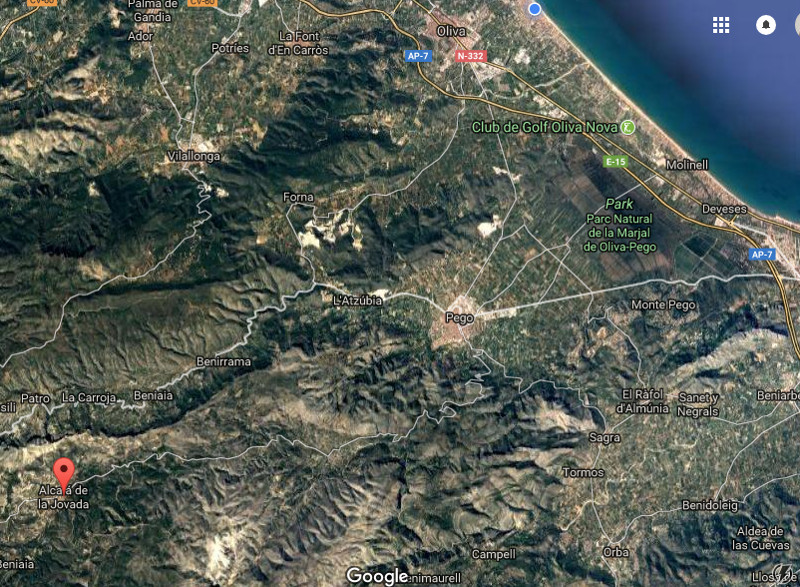
Thanks to google here is a satellite view of where we went a few days ago. About an hour’s drive and the birth place of Al Azraq and the place where the treaty was made that came to an end and Xativa (last post) was attacked and captured by Jaime I. Beautiful drive up to just over 2,100ft elevation, but to think of making this kind of journey pre-tarmac roads and cars!! Not for me, in spite of the views!!

Alcala de la Jovada

There were Muslims of north African and Arabic background, but there were also Muslims who were living in the land prior to the invasion and who converted. By the time of Jaime (13th Century) and certainly by the time of the Expulsions (early 17th century) those being attacked were being attacked by other citizens in the land. It can only be described as a civil war. The Muslims were also, by the main, the stewards of the land, their care and work is amazing. Drive today and you can see the wonderful terraces for irrigation from the Moorish era. We understand that there are more stones involved in the terracing in Spain than in the Great Wall of China!! Plants and vegetables were introduced and grown – would we have huge paddy fields for rice (paella) across the Valencia comunidad had it not been for the Muslim influence?

We understand then that there was a strong element of civil war and of sin against the land in driving off the stewards from the land (as well as economically not very clever!!).

When we went to Xativa Gayle had an image of a specific Muslim leader, who she described to Noe. Immediately he responded with that is ‘Al Azraq’. Born in Alcala, to a mixed Christian / Muslim marriage. He and Jaime had a relationship that genuinely seemed to have respect for each other, hence the treaty. In all of this it would be naïve to suggest one party was good and the other bad – and think of Solzhenitsyn’s wisdom of the good / evil line never running between us but through each of us – but the breaking of the treaty does seem to be what is triggering the response in the Dayesh video. We consider Al Azraq a man of peace, and (now you can choose to stop reading!!) that in some way he was ready to receive an apology from us, and to release the land.

In these situations it is so hard to describe what goes on, and much harder to put a theological spin on it. What really happens? Who / what is being addressed? I draw a blank on it all. If we accept that the resurrection creates a time-warp (an ‘end’ event taking place somewhere between the beginning and the end, hence even graves in Jerusalem being emptied before their time!!) and that the land holds the record of what has taken place, it is not surprising that there are strange events that take place.

In Alcala we came to the statue and prayed. Gayle even gave the statute a kiss of peace on the cheek to acknowledge that our apology had been received. She said it was as real as kissing anyone on the cheek.

A meeting – many years after the event, but not too late!!!

Alcala Team

Off home – the views are not bad!! A couple of days later Gayle and I drove north to another site… the content of the next post. Talk to you soon!!

Alcala Home

SHARE ON:

Post PermaLink

The punishment did not fit the crime

Not been a lot of posting going on here as we have been fairly occupied and also continuing to research. Our most recent journey out with Noe, Loli (Calpe) and Craig (Oliva) was to Xativa. It is around 45 minutes from our home and we have driven past it many times en route to Madrid but never stopped there. It caught our attention when I found a video released by Dayesh over a year ago. In it they said they would never forget Al-Andalus (Spain & Portugal) and then named three cities: Toledo, Cordoba and Xativa. We were intrigued why Xativa, a town of 30,000 inhabitants does not seem that significant. However…

Xativa from the Castle

Historically the city was a stronghold for all the ruling people over centuries as once established there control was reasonably easy for a wide area. In Roman times the main route from Cadiz, Cordoba and on to Rome, as well as from Cartagena came through Xativa.

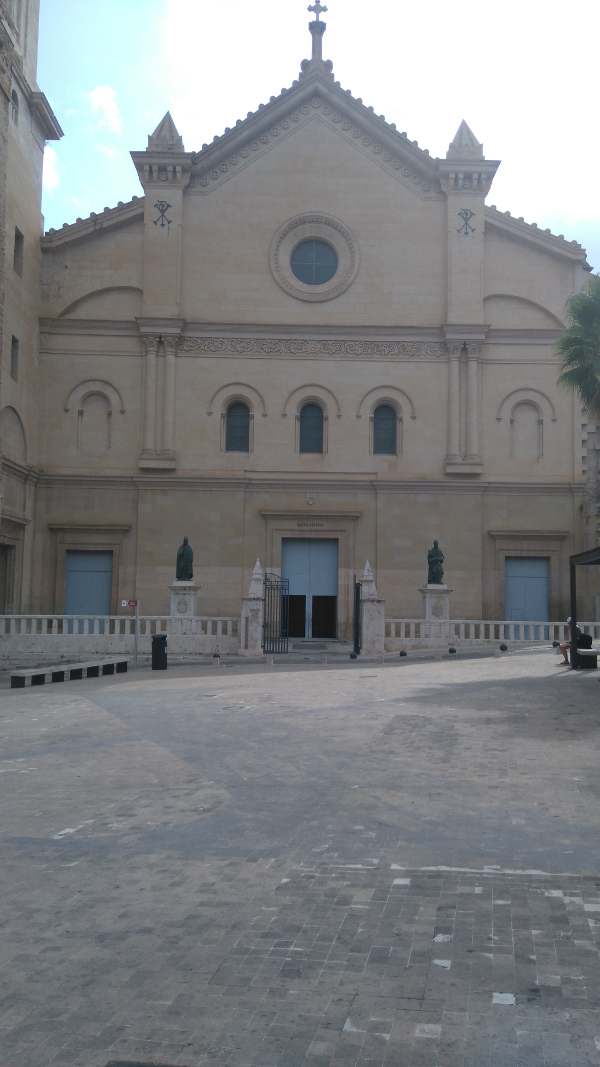
Xativa Cathedral

There are the inevitable situations such as the Cathedral built over the previous Mosque site, a well-documented episode of hundreds of Muslims being dragged to the door of the Cathedral in 1521 and given the choice of baptism (conversion) or death. All of that makes it a significant place but perhaps no more than any other place.

A while back Gayle and I went to La Muela where a major brutal massacre had taken place. The military force involved in this came from Xativa. Significant in that it led to the capture of the ‘last king of the Moriscos’. But we think there was something deeper. First a step forward in time and away from the Expulsion era.

In the Spanish war of succession as to which family would have the throne of Spain, the French Bourbons or the Austrian Hapsburgs. Eventually the Bourbons gained the throne. At one stage in Xativa they placed a portrait of the Bourbon king but upside down to show disrespect. The result was that Felipe (1707) with a strong force besieged the city, massacred those who defended it, deported many of the residents and burned the city. Punishment beyond the crime! Back to our era – or to the 13th century!

A Muslim ruler Al Azraq had a treaty with Jaime I of Aragon which resulted in peace as far as Xativa was concerned. Underneath this there were tensions. In response to violence against Muslims by some of the Christian population, some Muslims went and stole some mules. This act of retaliation Jaime took to be the Muslims breaking the treaty so now no longer believed he was bound by it. He now took force against Xativa and took it. A punishment that went beyond the crime.

We consider this is the root to the ‘we will not forget Xativa’. A betrayal. Our prayer was into the forgiveness for this. The night before we travelled there both Gayle and I had major battles over our sleep. I never, as far as I remember, have war dreams, but one after another was about shootings, snipers and even deception and seeking to make false treaties. Gayle was convinced that there was a former Moorish leader we were to meet and described his clothing. Once we dug into this it was undoubtedly Al Azraq, whose mother was a Christian. We sensed that even in the mess of the history he was willing to listen and accept our apology. (Not sure what that really means, but we will in the next few days make another trip to his birth place and where the treaty was made.)

The town welcomed us in the Spirit. Maybe now the door is closed there to Dayesh.

In closing a few thoughts:

  • betrayal opens the door to murder
  • Jesus on the night he was betrayed took bread and wine – he overturned this betrayal leading to murder by laying down his life.

SHARE ON:

Post PermaLink

What and where…?

Arrived home last night which is always a ‘nice’ feeling. Home… though being on the road is just wonderful too. We have just been to Madrid, Toledo and Caravaca de la Cruz. A few more kilometres on the ‘furgo’: around 1.3k or 800 miles, so not huge distances. Madrid was our first destination and we met there with two generations of ‘Hawkes’ from north London (Adrian and Pauline, Gareth and Jo). They are such inspirations to us – maybe I should say provocations. Their passion for the Gospel and its outworking at a level of justice (is there another outworking that is at the centre of the Gospel?) is very striking. They have given themselves to everyone but with a focus on asylum seekers and refugees and the provision that they have believed God for, not once but on many occasions. There are those you can read about but it is always a deep privilege to be with the kind of people one can read about.

Over the past years we have met with a sightly wider group from http://phoenixcommunity.org and are glad that we seem to have some positive input to them. Their input to us is immense. We had a few days together and we stayed with them on an interesting street (more below on this!).

From Madrid we made the short drive to a city with major history, the city of Toledo. At one time it served as the capital. Our focus was very narrow – the city had been a centre for church councils, many Jewish massacres and also a centre for the Inquisition – but our focus has been on the Muslim / Christian / ReConquista aspect. In 1045 Alfonso VI of Castile captured Toledo, and although the city is a long way south the capture was viewed as one of the most significant captures in the ReConquista process. A truly magnificient city and one that understandably pulls in the tourists but it is hugely oppressive with clear evidence of the alliance of religion and military pride coming together. It would be a major challenge to live in the city as a believer as those spirits always come to suffocate real life.

Alfonso has a statue erected to him on one of the main ways in to the city. A sword raised to heaven!

Because our focus was on the Muslims we did not visit the Jewish quarter, though we have done that in the past and are deeply grateful for the focus Spanish believers have had on repentance into that history. On the edge of the old city by the Puerta del Sol (gate) there is one of the 10 original mosques that were in the city. It is pretty much intact and has been there since around 1000AD. It was a good place to pray, and as it was still during Ramadan it also carried some weight.

From the Mosque we went to the Cathedral, the Town Hall and the archbishop’s palace. All three together in the one square, and all three together in a spiritual history. How far have we shifted from the simplicity of following Christ, the simple and yet deeply profound message of the cross that made an open show of what is at the heart of controlling power? It is very difficult to avoid coming to the conclusion when walking the streets of a city like Toledo that ultimately there is no difference between the controlling Judaism that colluded with Imperial power, the Islamic faith that proclaims a predestinating God, and a christianity that transforms the cross into a sword. They are of one spirit, and certainly not of the Spirit of Jesus… though wonderfully he can be found hidden in there. Days of walking, praying are very provocative, they seem to bring sight in new ways.

Cathedral and a military / Knights T / St George images:

From Toledo we went to Caravaca de la Cruz, a town not too far from Murcia in the south. It of course has Moorish history but our focus here was simply to complete going to the three places in Spain that are legitimated by the Vatican to offer ‘perpetual indulgences’. (Inside Spain there are three, outside two – Jerusalem and Rome.) I am sure there are those who find Jesus, and even find forgiveness in the midst of the paraphernalia, but oh for some of the simple ways of Jesus to become available! This place draws so many pilgrims but here the religious spirit was not so heavy as in Toledo…

Here is view of the city from the pilgrimage sanctuary:

So a little journey and back home. The next days we will try to shape the next parts.

And the street name? Just before we left Noé (from Calpe) had talked to us about what is considered the major battle that is the turning point in the ReConquista: the battle of Las Navas de Tolosa (1212). So we have been reading on this and know that (probably) in July we will travel there. There is much to write about on the history, but of interest in terms of where we have been, the ‘Christian’ forces came from Toledo to the battle. They included the most unlikely of allies, and also drew in the Knights Templars and the Order of Santiago. Later in the same year of the battle there was a major slaughter of Jews in Toledo. Those kind of connections are not uncommon.

And the street in Madrid? Here is the corner of the street:

Nice pointer on the journey – who needs GPS with signs like that!!

SHARE ON:

Post PermaLink

La Muela

La muela – the molar. The name given to high cliff top area to the West of Valencia, la muela de Cortes de Pallás. Our last 30 kms to get right in to the village took us over an hour, beautiful but inaccessible. It was here that some 3000 moriscos (and of course that term suggests that they were muslims but in reality they were a mix of muslims and christians) had gathered. They retreated to this area as they did not want to be evicted from their land.

Having travelled in the north with Noë, Loli and Sam, they left for Calpe and France respectively and Gayle and I drove to La Muela. It is in the middle of a huge mountain range:

They took to the cliff top above the town for their protection. A major force came against them, initially offering for them to surrender, but the ‘Christian’ troops did not want to lose their plunder so took things into their own hands, to rape and plunder. It was brutal, and there are records of women with their children jumping from the cliffs to their death in order to avoid the brutality. The attack was under the governor of Xativa (I commented on Xativa in yesterday’s post).

Eventually the so-called ‘last king of Morisco Spain’, Turixí, was captured a few months later and taken to Valencia where he was drawn and quartered.

A bloody history and one that took place centuries ago (1609) – for the Western mind-set it has nothing to do with us today. For other cultures? And for the land that holds the corporate memory, it is alive until there can be a Jubilee, a re-set. This reset is what is motivating Gayle and me. The cross is an event in time to re-set all things.

The pursuit of the moriscos from the area of La Muela continued and in 1611 a reward was given for every morisco brought in ‘dead or alive’. ‘Christian’ bounty hunters descended on the region in great numbers as a result. In the midst of this a Simon Zapata took on himself to coax Moriscos down without violence. He spent months roaming the mountains and led them personally to the coast. He even sent his brother on a ship with them to guarantee their safety on arrival in Algiers. We bless and are blessed by his memory. The land too remembers this.

SHARE ON:

Post PermaLink

Santo Toribio de Liébana

Spain is so varied in landscape. Travel in the north and get off the main roads into the villages and with mountains all around one could be in Switzerland or Austria. Liébana is in the picos de Europa (peaks of Europe) and the monastery there is one of the other five places that can offer ‘perpetual indulgences’. We travelled there with the main focus being on the beginnings of the ‘ReConquista’. The initial battle that halted the Muslim advance was at Covadonga in Asturias in 722. After this Asturias was a ‘Christian’ kingdom. It was though from Liébana that the agreement was made (church and civic) probably sealed with the eucharist to drive back the Muslims, fuelled also by an interpretive book on Revelation!

We took ourselves here to break bread in the open outside the monastery and to pray for a shift. As we began to pray the invitation was given over the loudspeaker to come to the service as this was the year of Jubilee. We did not join the service (really?) but took hold of the announcement of Jubilee. Debt forgiveness… Along with the prayer in the field pulling on the work of Priscillian this was a very powerful time.

I have been a little while in getting this up on the site – we were there a little while back. We are at home currently making plans for the next phases which we think will culminate in Gibraltar in September to coincide with the 50th anniversary of Gibraltar day (Sept. 10th). This week we also discovered a Dayesh video saying that they will not forget Al Andalus (Iberian peninsula) and that they will not forget Cordoba, Toledo or Xativa. The first two were not a surprise, but the third specific (and they only mentioned those three in this video) was surprising. We will be in Toledo in just under 2 weeks, and Xativa? Well it is 40 minutes from here… again indicating the brutality of the expulsions from this region.

A couple of images 1) en route through the picos de Europa; 2) the monastery of Santo Toribio that has (of course it is genuine!!) a part of the actual cross of Jesus:


SHARE ON:

Post PermaLink

Perspectives