For the past few weeks I have been lamenting, well occasionally reflecting. I am not very good at reflecting, and as for lamenting – not even too sure I know what the word means.
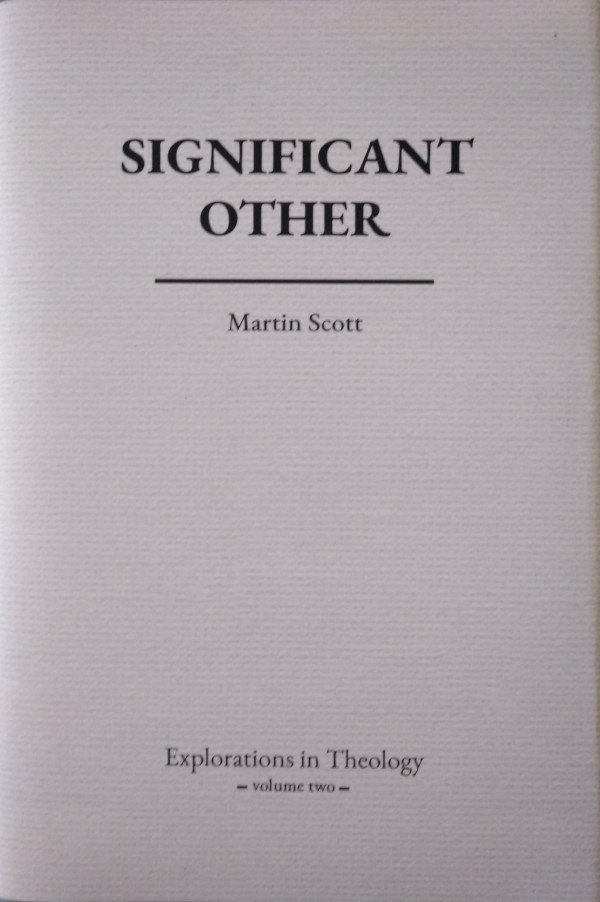
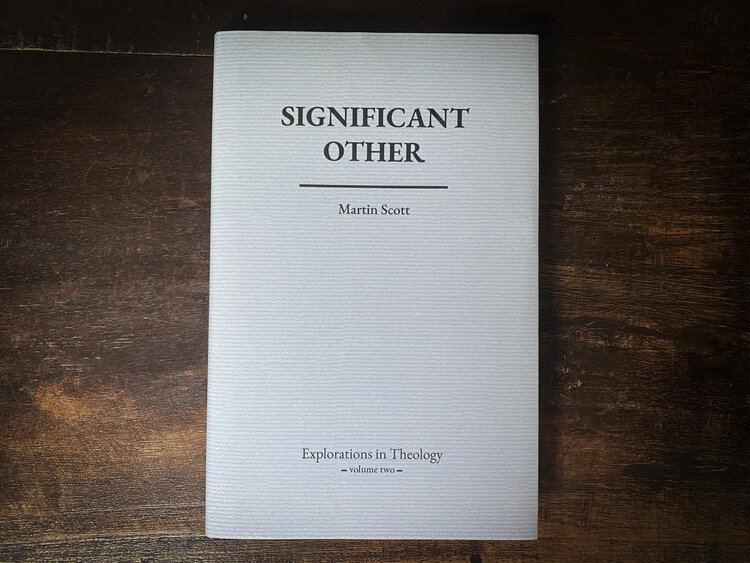
My reflectful lament has been over the four books written so far – the two you all rushed to buy and the two in the pipeline for publication. I have realised that the readership will be predominantly people like me (not the majority world). People who have a strong background in the evangelical (and likely charismatic) world but are willing to consider concepts that some think are outside the box. I am not going to get an atheist to read them and desire to join a zoom group, but I sure would love honest dialogue in that direction. Not to ‘convert’ them (when was that part of the job description of the Great Commission?) but to present Jesus as the ‘face’ of God and as the ‘face’ of ‘actualised’ humanity – OK theologically ‘true humanity’.
So I have made a start at writing for that audience, and also for those who do not position themselves completely at that end of the spectrum of faith / non-faith. (The other audience I would love to dialogue with are those born after 1980, so help me God!) I am not writing an apologetic, there are others much better equipped at that, but trying to write something that is open and transparent. It is interesting in trying to do that cos one’s own presuppositions have to be challenged in the process. A few days ago I said to a friend / neighbour who expressed (past tense) he was an atheist, and then (present tense) ‘I would like to believe, but…’, that perhaps faith wise I need him as much as he needs me. I need him to challenge my faith, cos although faith cannot explain everything it must have substance.
I am planning an opening chapter on Jesus and a second one on our holy book, the Bible. In doing so I wrote the obvious concerning Jesus that he grew up in a prejudiced world, that was also fed by an interpretation of the holy scrolls that he looked to. It is hard to believe Jesus also did not have biased perspectives, particularly with respect to Gentiles and women. Scripture clearly says he ‘became mature’ through what he learned, and as I have written in an earlier post he is the great teacher because he was the GREAT LEARNER. It is amazing that he broke through beyond the culture and his own preconceived perceptions. To be fully mature by 33, and in that culture… Here I am all-but double that age and… (Any way to follow this through the interaction with Gentiles and women is very informative to observe the learning process in Jesus.)
The guidance that the holy scrolls gave Jesus is instructive for us and the guidance we receive from the Bible. Today I wrote:
Jesus was so far ahead of his culture and setting, and that his holy book (set of scrolls) both helped to shape his life and thoughts and at the same time restricted his progress. And of course this is something we have to consider also when we as Christians read our holy book, the Bible, consisting of Old and New Testaments.
Never articulated it like this before, but seemed obvious as the words appeared on my screen. We are very grateful for Scripture. Jesus must have been so grateful as he meditated on texts and saw in them his true identity and destiny. I am not sure if the right word is ‘balance’, but let me use that. We have to balance that invaluable guide that the Scriptures are with the realisation that we can also be restricted by the pages we read. Of course there are good restrictions, but there are also restrictions that prevent us moving beyond the pages. Yes beyond. For the Scriptures are to speak of Jesus, not of themselves, and Acts 28 is an unfinished record of the continuation of what Jesus is doing and teaching. A progression beyond has to faithfully follow the trajectory set out but if the whole journey is not described in the pages we have to go beyond.