
I arrived home last night at 11:00pm after a 7 hour bus journey from Madrid, having been there for a few days to walk the city. So some disclaimers first – no idea what was achieved and certainly am aware that so much of what we (OK, ‘I’) do is for us even when we think we are doing this for ‘God’s kingdom’. I hope it was worthwhile and one day (maybe) will find out. Until then we seek to do whatever we think might be what we ‘should’ be doing in response to our discipleship.
Practically first. Schoolboy error (not the first one I have made) is to walk with shoes that are not fully broken in. I have two pairs of running shoes – one that is on the way out, but still good but covered in paint from when I painted the roof this year. I have another pair that I have been using to drive in and to go and get a few groceries – after a couple of hours I soon discovered they were not fully worn in, and over the following two days used over 200ml of vaseline to oil my way to the finish – more vaseline covering my feet than socks, methinks.
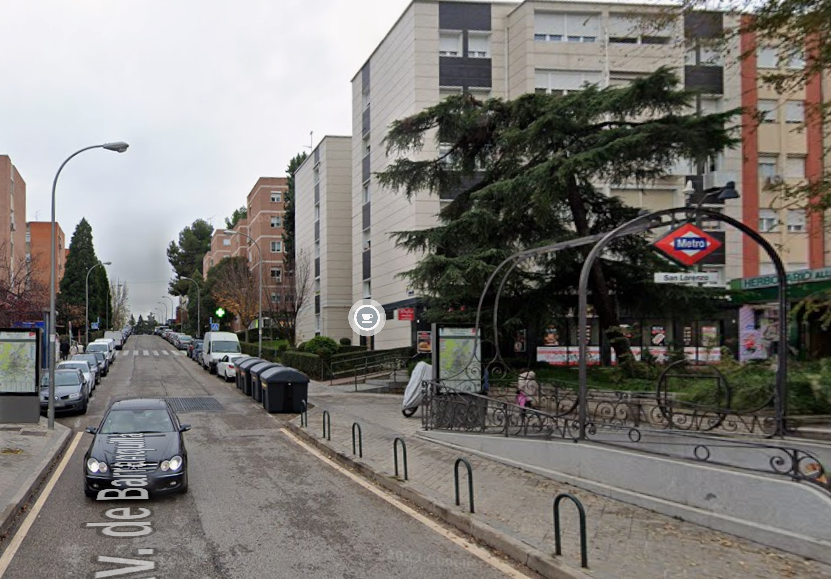
I chose to start and finish at San Lorenzo metro station. I have posted regarding the above mentioned gentleman before. 258, August 10th he came to the end of his life on this planet having been put to death at command of the emperor when his response to being commanded to bring the wealth of the church to the emperor was:
Here are the treasures of the church. You see, the church is truly rich, far richer than your emperor!
He presented those who were blind, physically disabled and impoverished. Not the response that was desired! But what a place to start – values. Any city, any civilisation, any society has to understand true values, and all values are measured by a truly human standard.
I will not document every step but pick up on a few aspects – basically I walked the city from the north east (San Lorenzo) south to finish the first day at Puerta de Alcala (near Retiro park); from there through Atocha station to the south and then turning north at Piramedes and Puerta de Toledo, past the royal palace to the university and then turning east back to San Lorenzo. The north of the city is wealthier, wider streets, bigger houses, people dressed with ‘better’ clothing, then the south (Lavapies for example) was in some contrast with for example right in front of me the police stopping their patrol car and jumping out to confront someone demanding their ID. Probably he was a little high, (un)like a much better dressed person in another part of the city who might be acceptably ‘high’ on having signed a very lucrative deal that day. Values!
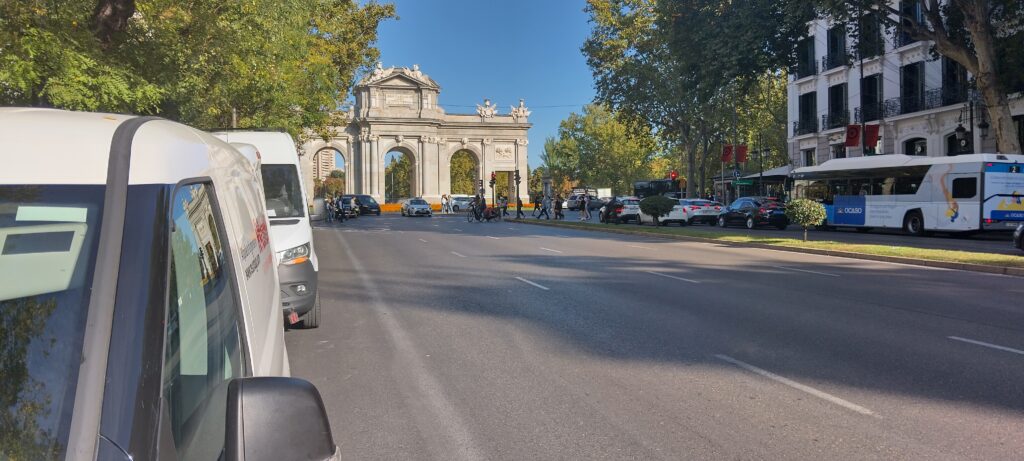
What stood out to me was what I saw in the various gates. Try these photos:
End of first day: Puerta de Alcala… from the bullring to Alcala to the fountain of Cybele to the bank of Spain to parliament – draw a straight line, for those who give credence to something along the lines of ‘ley-lines’). Alcala was one of the original gates into the city.
On the south side of the city there is an interesting twin obelisks that then give an entrance to the Puerta de Toledo. Obelisks are of Egyptian origin erected in honour of the sun god, with prisoners of war sacrificed in order to draw the power of the sun god.
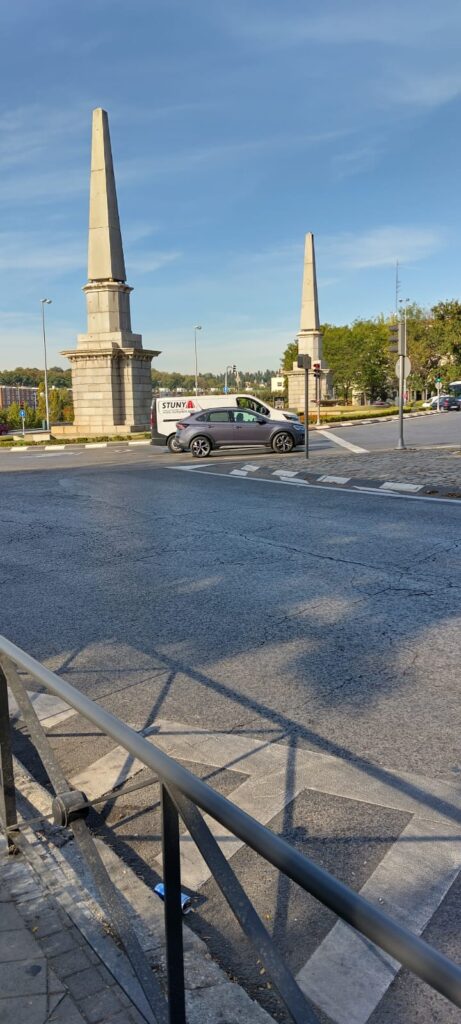
Standing between these two obelisks then pointing north and one would walk right through the Puerta de Toledo:

More ‘gates’… this one is quite spectacular with a conglomeration of arches and monuments – making quite a statement:
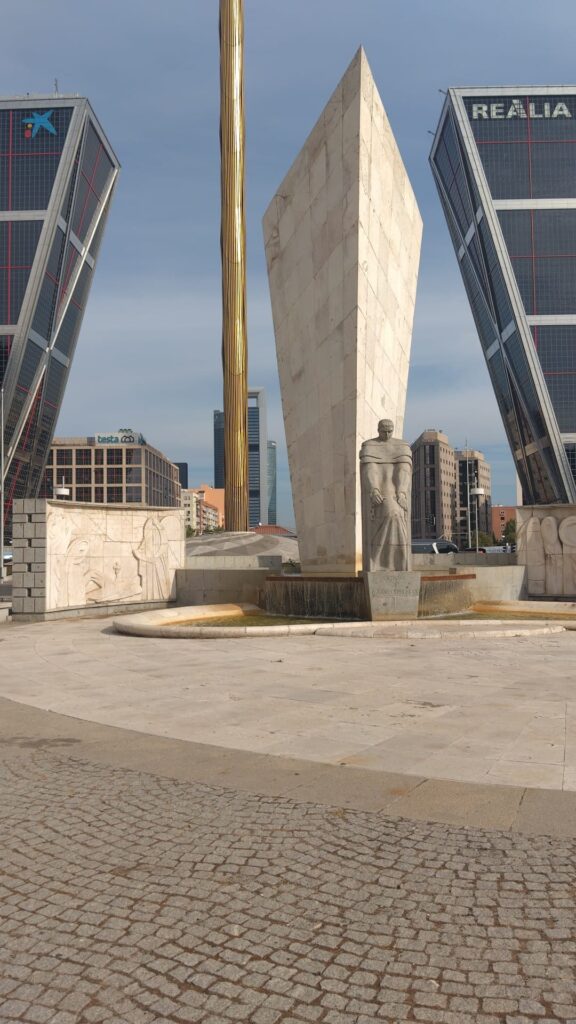
There were other gates too – and probably ones I missed. One marking the entrance to the bull ring and one ‘off the map’ to the north west in the ‘iron gate’ that unless I wanted to stand in the middle of the freeway I had no direct access to. (That would have been beyond my second ‘schoolboy error’.)
The gates are so often a place of contention and even with some initial tracking of alignments of the gates it seems there is some convergence on the parliament building – also with other aspects such as the obelisk at Plaza de Lealtad.
The major aspect of why I wanted to walk and pray the city was to follow up on what we sensed when we first moved to Madrid (and to complete before moving to Sicily) was that of seeking to hold the government and judiciary in to a wholesome mode of being and behaviour. In big langauge I wanted to make sure that over the next years the government and judiciary cannot ‘escape’!
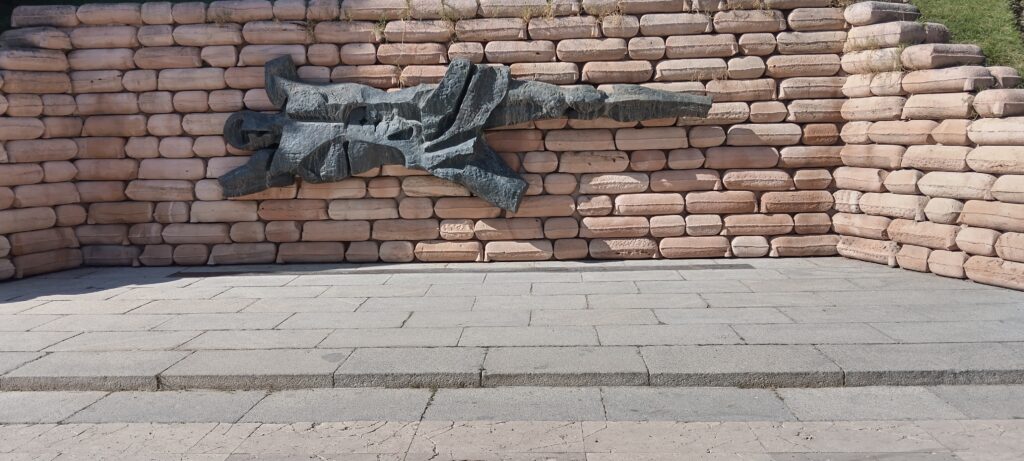
I am sure there are those who can prayer walk and be effective, I am not claiming to be one of those, but after the Toledo gate I came to the royal palace, then the Temple of Debod (literally moved from Egypt to Spain) and it sits with an East/west alignment and directly outside it on the wall is a sculpture to a fallen soldier from the civil war – this being the area where the entrance was made into the city.
So much more I could add but having started the walk at San Lorenzo with the issue of values the final photo has to be of ‘homeless Jesus’ asleep on a bench outside the main Cathedral (where the rich and famous are interred, including Franco’s daughter – but NOT him, thank God).

So what was achieved? Something cos God is gracious and listens to prayers but of course a percentage of what we do ‘for God’ is more for us and our own little ideas. Here’s to many of our own little ideas combining to sow into the future where values are measured differently, measured by the stature of the incarnated One.
That line in your post stopped me: “He presented those who were blind, physically disabled and impoverished… Any city, any civilisation, any society has to understand true values, and all values are measured by a truly human standard.”
Every civilisation builds its mirror.
Empires polish the surface until only strength looks beautiful.
The Kingdom turns the glass the other way—
our humanity is measured by how we stand beside those who carry frailty.
Jesus shows us what humanity looks like when it’s fully awake to God.
He turns power inside out: glory is not control but compassion.
“From glory to glory” isn’t escape from weakness;
it’s the slow transformation of our seeing—learning, through grace and frailty, to carry the same weight of love that once walked among us.
Perhaps that’s the challenge.
Language like this is often read as softness—a wound still waiting for healing—when in truth it’s a mirror.
It reflects strength that bends low, stays close, and keeps shining when power looks away.
The mirrors of empire shatter easily.
The mirror of the Kingdom keeps widening until every face, wounded and whole, can find its reflection.
In that widening, the image of God is revealed again—not as distant perfection, but as perfect love made visible in human vulnerability.
The Incarnation is the proof: divine perfection choosing limitation so that no wound would ever lie beyond the reach of grace.
Thank you for framing it that way, Martin.
It’s a timely reminder that the measure of any city, or civilisation, begins with how it values the vulnerable.
What would happen if our theology began inside frailty instead of just talking about it?
I keep noticing that so much writing on suffering still stands outside it—written for, not among, those who suffer.
I imagine a future where theology speaks from within the wound, where those who have known pain become its teachers and where presence, not distance, becomes the language of faith.
Awesome comment… and the poetry.
The final ‘I imagine…’ is so gripping in the present. I am convinced that is the call of the NT… if anyone is in Christ… ‘new creation’. What can we see / imagine? Just returned from running and thinking as I ran that I want in the next season to get a fresh tattoo – maybe with a rising sun to herald a new day (a day of healing) and then underneath:
Καὶ εἶδον καινὴν κτίσιν (not enough room to put Rev. 21 so shortening it to ‘new creation’… and any out there who know – the last word does not appear in the NT in the accusative form – so I think it should end with a ‘n’?).
I love how even the smallest turn of grammar can carry movement. It’s one of the reasons I think language itself is key — it carries movement, not just ideas; the tiniest shift can open a whole world.
When I write among the trauma-formed, I’m always aware that verbs carry motion — healing, remembering, returning. It feels like a kind of reading that goes both ways: history read forward in hope and backward through memory. That’s how I’m hearing your line too, Martin — moving in two directions at once.
The old vision beholds the new creation; the new creation learns to behold everything anew.
Sight itself is redeemed.
That little grammatical turn becomes a prophetic one for me: not only do we see resurrection, we begin to see from within it. If I ever get another tattoo, it’ll probably be a single comma—proof that even endings can pause long enough to become beginnings.