Off to London

I often meet people who regret the path they have travelled and I can understand that, and the majority of people would not repeat the past if they could have their life over again. The latter part of the above two perspectives I am sure I would relate to if I took enough time to reflect, but the former I find harder to resonate with. I am philosophically simple – I am where I am because of the journey I have taken so try to make the most of today, and I believe in a God who maximises every opportunity, a God who works in everything – including mistakes, wrong turns and what is simply wrong!

Anyway my journey took me off to London Bible College (now London School of Theology) in 1973. I had been strongly touched by the Holy Spirit when I was 16 and had a straight forward Pentecostal understanding of al things biblical!

I don’t remember every aspect of my travels but probably flew a small plane to Aberdeen or Edinburgh and than took the train to London the next day. I do remember being asked in Aberdeen / Edinburgh as to what station I would arrive at in London. I looked at them as if they were stupid – London station I replied! I had no idea that there were multiple stations in London and finally when I did get there had no understanding that I would have to catch a train that ran underground. (At least I came from Orkney where the nearest train station is in the norht of Scotland… if I was born in Shetland the nearest train station is Bergen, Norway.)

My room mate upon meeting asked me a question I did not understand how to answer. ‘How was your journey?’ I did understand the words, but the question… I had never encountered a question like that in my life. One, coming from an island such a question at a literal level would not mean very much – a journey of more than 5 minutes would be impossible and it took me months to work out that the question was not a question literally about my journey but a polite conversation opener. Cultural differences are subtle, but that interchange (or lack of cos I did not know how to reply) has helped me cross cultures.

Three years later I left with a degree and less than a year later married fellow-student, Sue Middlemiss. Immediately following LBC I joined YWAM (youth without any money?) for the Toronto Olympics outreach and then travelled across the USA. I am sure I wonderfully displayed all my lack of understanding in that period of four months, but very glad for the experience.

Back to College days… It was not the spiritual hot-house I anticipated; lectures were not so exciting and given my difficulties with comprehension of things written preparation for seminars was somewhat limited. Most professors / lecturers were either Reformed or modertely so and I was well able to engage a few in the lectures to push and press them, such were the inconsistencies that I perceived. Of course, as per all systems, provided nothing was adjusted the system would hold, but move one aspect and the system was vulnerable.

In the New Testament introduction I never understood the great pains that were gone to to ensure that each and every book was ‘apostolic’. Impossible to prove, and of course there was an underlying aspect that was ebing defended. Presuppositions based on a prior doctrine of the Bible is what rightly leaves such an approach open to criticism. In the 70s credible evangelical scholars were just beginning to enter the wider world of academia but the theology was just too defensive for its own soul’s sake. Thankfully that has changed a lot in the last 50(!!!!!!) years.

[‘Doctrine of the Bible’ will always be problematic and is normally filled with unproveable presuppositions. There was no ‘Jewish canon’ until after the NT era, and we still have different Christian canons… Jesus probably read or had access to books such as the book of Enoch – certainly NOT written by Enoch and yet quoted within our Bible as ‘Enoch the tenth from Adam said…’. And as for ‘all Cretans are liars… and this testimony is true’ does rather condemn anyone born in Crete! All the above pushes me to a narratival approach to the text with Jesus as the hermeneutical lens, blah, blah.]

Of all the subjects I enjoyed three the most – hisotrical theology, New Testament Greek and New Testament theology.

During those three years of study I visited YWAM on numerous occasions and sat through lectures there from Gordon Olson who had the largest library in the world on Charles Finney and Oberlin College (I was later to stay with him in Chicago in 1976). He was one of the earliest people in the modern era to embrace Open Theology – now in the popular world with people like Greg Boyd and the very articulate theologian Thomas Jay Oord who is yet more adventurous and I like that he uses the phrase ‘Open and relational theology’. Gordon Olson’s material was invaluable for me and I have leaned heavily in that direction ever since those sessions.

I think the professionalism and career aspects that I witnessed in those years… as well as coming to terms with what on earth does a 21 year old know about anything meant I now had ‘training’ (not!!) under my belt but could not with any integrity look for a post to exercise it. Thank God any form of church you care to mention was spared! And thank God it ended any concept I had of a ‘career’ in church ministry.

So a few months later – January 9th, 1977 – Sue and I moved to Cobham Surrey, south of London. Gerald and Anona Coates had initiated a small (with 5 others) in their home in the late 60s and this had now grown to around 60 people by the time we joined. It was like breathing fresh air – non-relgioius and with a passion for Jesus. Genuinely relational (not perfect… and daughter always teases me with ‘we grew up in a cult’)!!!

In a later post (also known as a ramble, and perhaps sometimes a ‘confused ramble’) I will get into life in Cobham Christian Fellowship, the Pioneer network and the wider New Church scene in the UK.

Faith – when? what? and how?

My family background was that of evangelical, and am aware as the decades have passed that word can carry different meanings. It does seem to centre on two key aspects – the authority of Scripture and the meaning given to the death of Jesus. Of course how those two are understood can differ enormously. Anyway my family background was more of the stricter form of evangelicalism – Sunday as a holy day, no alcohol, no -did I mention no fun? OK sarcasm was not allowed so delete the last comment. It can be easy to find flaws in faith approaches but I am glad that there was a basic authenticity in the faith context in which I grew up, and the respect for the Bible has been something that has stayed with me ever since then – when I had a daily reading in Scripture Union notes.

Coming to faith? In that background the question would be worded – when were you converted or born again? Interestingly Jesus only used that term once – John 3 to a specific person, someone who was totally versed in the ‘Scriptures’ but needed a major transformation to ‘see’ / ‘enter’ the kingdom of God. Nicodemus needed to be born again / born from above (the Greek can be translated either way). It is used one more time in the New Testament so it is not without content beyond the Gospels, but it is probably overused as the one and only paradigm. (Maybe an underused one is ‘sell all you have and come follow me’? – again used by Jesus to one person.)

New birth… birth is a process, and some births are premature, some difficult etc. This is why defining faith can be a challenge.

I grew up always believing in God, always having a Trinitarian belief, always considering that Jesus died for my sins. I many times considered God and talked to God. So was that faith, or what might be termed ‘saving faith’?

I made some kind of personal profession at age 11, but now looking back am not sure if that crossed me over from one side of the line to the other (more on that below).

At age 16 there was something very definite that took place. Under an old paradigm I was ‘born again’ at 11 and baptised in the Spirit at 16 – with the very presence of God coming to / through me as if I were physically under a fairly hot hair dryer that literally came through my body in a tangible physical way maybe for an hour or more. I spoke in tongues and very easily the two stages of Pentecostalism explained everything.

But… complex is it all, and never too easy to squeeze Scripture into what fits our personal experience.

‘Salvation’… Let me jump forward. Reconciliation to God – never God being reconciled to us through some payment by Jesus on the cross, but God was in Christ reconciling the world to him/herself. And in the fullness of that reconciliation is that of restoring our humanity, repairing and restoring us to the image of God. Salvation that is forensic might have made sense in the Reformation era when the context was that of indulgences for sin – but would that have made sense in the NT era? I think not – it would have been seen as inadequate, even if a truth of it could have been argued for.

The root of sin (big subject) is that of failing to be truly human, thus falling short of the glory of God. The one and only truly human one – the one who was the express image of the invisible God both revealed who God is and who humanity is. Thus salvation is probably more a process than we evangelicals make it out to be – more of a healing, restorative process.

‘Salvation’ is more to do with saved for than save from. Hence I find it harder to pin down what ‘saving faith’ is. It probably differs from one context to another, and the wonderful part of ‘evangelism’ is not that of a narrow – you are bad, admit it and I will show you a path – but I think more along the lines of ‘there is good news for you and for the whole of creation… come join the movement that is centred on Jesus and find your (small) part in the transformation (reconciliation) of all things’.

Follow me – consistent in the Gospels where the controversial nature of that invitation / command should not be minimised. Follow me spoken in the Jewish context was both radical and offensive, and post the cross deeply offensive (to the Jew a ‘stumbling block’). Yet it continues and finds a central part in Revelation where there is the description of those ‘who follow the Lamb wherever he goes’. Not come worship me, come preach me, but come follow me.

Following is a process… and although the 10 words were given to Israel, the early instructions that focus on ‘God’ continue to express elements of our journey – no other ‘god’, no ‘image’ and do not carry the name of the Lord in vain. Truth be out we all create an image of God, and we all probably act / carry out actions in God’s name that are not reflective of who God truly is – OOOFFFFF; Jesus was so vital, to show us the image of God and what it was to act truly in the name of that God.

I have no idea if there is a ‘line’ or not – that is not my deal. There are followers of the Lamb, and I trust that I am one of those and I trust the mercy of God that I have been solidly included ‘in Christ’… so to jump to the big picture I have worked with this pattern for years – all who genuinely receive Christ are ‘saved’ and those who reject Christ are ‘lost’. But no line that I have drawn as a result of my reading of Scripture.

‘My’ reading – so problematic!

When did I come to faith? In stages and it continued today when I encountered the Lord.

To know God and to make God known. Am I pentecostal? No idea… Was Paul pentecstoal – no idea… but I do know that he challenged the Galatian believers as to what was happenning among them as the expectation that God would continue to do miracles among them:

Well then, does God supply you with the Spirit and work miracles among you by your doing the works of the law or by your believing what you heard? (Gal. 3:5 – present (ongoing) tense).

Always today is important.

A friend who I miss (John Barr, passed away in 2001) was asked by a woman if he would pray for her as she had cancer and had been given 4 months to live. He replied with ‘the doctors have it wrong’. What then is the diagnosis and prognosis, she asked. Scripture tells me ‘you have today’… Today, choose life and thus be a life-giver. I you agree you have life today I will pray for you.

I am grateful for my background, probably no longer being recognised as someone from that background… but I hope that I am guilty as charged as being a follower of the Lamb, and continue to try and discern where that will lead to.

If someone can say ‘I was born again’ and then give a date and a place, I am delighted (though follow Nicodemus’ journey in John’s Gospel and try to find the date and place! Nicodemus’ journey is a process); I am delighted if someone says ‘I was baptised in the Spirit…’. Yes, yes and yes. But faith – it is a journey. It is an adventure. Jesus, not theology has to be central. And it is deeply personal… certainly those who are religious need to be born from above… maybe those who are centred on wealth need to sell all they have; all of us have to heed the call to follow.

  • Faith – when?
    Today.
  • Faith – what?
    An alive belief that there is in Jesus a ‘new creation’.
  • Faith – how?
    Full of authentic questions.

Not 70 yet… and definitely not arrived!!

My family background was that of evangelical, and am aware as the decades have passed that word can carry different meanings. It does seem to centre on two key apsects – the authroity of Scripture and the meaning given to the death of Jesus. Of course how those two are understood can differe enormously. Anyway my famly background was more of the stricter form of evangelcialism – Sunday as a holy day, no alcohol, no -did I mention no fun? OK sarcasm was not allowed so delete the last comment. It can be easy to find flaws in faith approachesbut I am glad that there was a basic authenticity in the faith context in which I grew up, andthe respect for the Bible has been something that has stayed with me ever since then – when I had a daily reading in Scripture Union notes.

Coming to faith? In that background the question would be worded – when were you converted or born again? Interestingly Jesus only used that term once – John 3 to a specific person, someone who was totally versed in the ‘Scriptures’ but needed a major transformation to ‘see’ / ‘enter’ the kingdom of God. Nicodemus needed to be born again / born from above. It is used one more time in the New Testament so it is not without content beyond the Gospels, but it is probably overused as the one and only paradigm. (Maybe an underused one is ‘sell all you have and come follow me’? – again used by Jesus to one person.)

New birth… birth is a process, and some birhts are premature, some difficult etc. This is why defining faith can be a challenge.

I grew up always believing in God, always having a Trinitarian belief, always consdiering that Jesus died for my sins. I many times consdered God and talked to God. So was that faith, or what might be termed ‘saving faith’?

I made some kind of personal profession at age 11, but now looking back am not sure if that crossed me over from one side of the line to the other (more on that below).

At age 16 there was something very definite that took place. Under an old paradigm I was ‘born again’ at 11 and baptised in the Spirit at 16 – with the very presence of God coming to / through me as if I was under a fairly hot hair dryer that literally came through my body phayscally maybe for an hour or more. I spoke in toungues and very easily the two stages of Pentecostalism expalined everything.

But… complex is it all, and never too easy to squeeze Scripture into what fits our personal experience.

‘Salvation’… Let me jump forward. Reconciliation to God – never God being reconciled to us through some payment by Jesus on the cross, but God was in Christ reconciling the world to him/herself. And in the fullness of that reconciliation is that of restoring our humanity, repairing and restoring us to the image of God.

The root of sin (big subject) is that of failing to be truly human, thus falling short of the glory of God. The one and only truly human one – the one who was thee express image of the invisible God both revealed who God is and who humanity is. Thus salvation is probably more a process than we evangelicals make it out to be – more of a healing, restorative process.

‘Salvation’ is more to do with saved for than save from. Hence I find it harder to pin down what ‘saving faith’ is. It probably differs from one context to another, and the wonderful part of ‘evangelism’ is not that of a narrow – you are bad, admit it and I will sho you a path – but there is good news for you and for the whole of creation… come join the movement that is centred on Jesus and find your (small) part in the transformation (reconciliation) of all things.

Follow me – consistent in the Gospels where the controversial nature of that should not be minimised. Follow me spoken in the Jewish context was both radica and offensive, and the other side of the cross deeply offensive (to the Jew a ‘stumbling block’). Yet it continues and finds a central part in Revelation where there is the description of those ‘who follow the Lamb whereever he goes’. Not come worship me, come preach me, but come follow me.

Following is a process… and although the 10 words were given to Israel, the early instructions that focus on ‘God’ continue to express elements of our journey – no other ‘god’, no ‘image’ and do not carry the name of the Lord in vain. Truth be out we all create an image of God, and we all probably act / carry out actions in God’s name that are not refelctive of who God truly is – OOOFFFFF Jesus was so vital, to show us the image of God and what it was to act truly in the name of that God.

I have no idea if there is a ‘line’ or not – that is not my deal. There are followers of the Lamb, and I trust that I am one of those and I trust the mercy of God that I have been solidy included ‘in Christ’… so to jump to the big picture I have worked with this pattern for years – all who genuinely receive Christ are ‘saved’ and those who reject Christ are ‘lost’. But no line that I have drawn as a reuslt of my reading of Scripture.

‘My’ reading – so problematic!

When did I come to faith? In stages and it continued today when I encountered the Lord.

To know God and to make God known. Am I pentecostal? No idea… Was Paul pentecstoal – no idea… but I do now that he challenged the Galatian believers as to what was happenning among them as the expectation that God would continue to do miracles among them. Always today is important.

A friend who I miss (John Barr, passed away in 2001) was asked to pray for a woman who had cancer and was given 4 months to live, and he replied with ‘the doctors have it wrong’. What then is the diagnosis and prognosis, she aksed. Scripture tells me ‘you have today’… Today, choose life and thus be a life-giver.

I am grateful for my background, probably no longer being recognised as someone from that background… but I hope that I am guilty as charged as being a follower of the Lamb, and continue to try and discern where that will lead to.

If someone can say ‘I was born again’ and then give a date and a place, I am delighted (though follow Nicodemus’ journey in John’s Gospel and try to find the date and place!); I am delighted if someone says ‘I was baptised in the Spirit…’. Yes, yes and yes. But faith – it is a joiurney. It is an adventure. Jesus, not theology has to be central.

Faith – when? Today.

Faith – what? An alive belief that there is in Jesus a ‘new creation’.

Faith – how? Full of authentic questions.

Way back in time

Been a long time since posting, so will try and ‘correct’ that. Gayle and I are away from home for almost a month and I am replying to emails as best I can on a phone. This is the first day I have managed to hook up to a wifi signal… But been thinking over these days that this year I have a birthday coming up, and as I have not had one of them in a long time I got out the calculator in one hand and the birth certificate in the other, could not believe what it said… changed the batteries and repeated… same response. So decided I would blog away with a few posts on some reminiscences. Now that will be a challenge as it involves memory. My memory for many things is great, but I seldom look back so it means my recollection is either non-existent or probably inaccurate. Great parts of life are forgotten. The strength? Of course there is a strength! The strength is I don’t get stuck but want to move forward. And – only if I were to admit it – the weakness is I have learnt so little as attempts, mistakes, wrong turns are all part of God-given human ability to encourage us to reflect and learn. Explains a lot!!

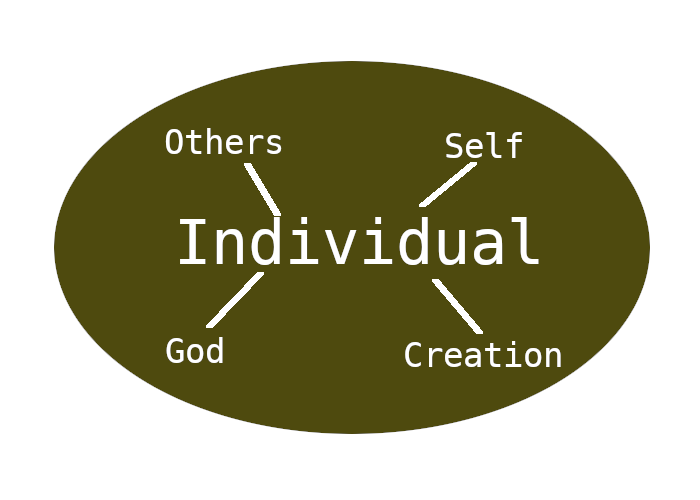
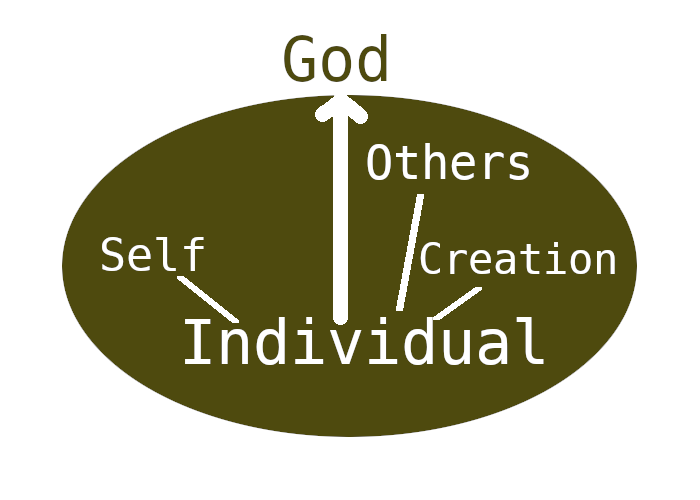
My larger framework I am working with at the moment is that of reconciliation in four directions – to God, to others, to self and to creation. It opens up a lot of scope and I expect I will cover some of that at a personal level as I blog.

I don’t intend to cover in minute autobiographical detail, but here are some insights from way back… My dad was a farmer so growing up on a farm the outside was almost as much home as the inside. I have no idea how old I was but I do vaguely remember smashing (with a stone?) every pane of glass in a newly built chicken run. No thought at all as to what that meant, no thought that this was wrong or even naughty. No thought of consequences, no conscience. Not normal. I think I have grown beyond that – and do think (now some 6+ decades later) that there are consequences for behaviour and the world does not resolve around one’s own enjoyment.

Second memory is being put in the driving seat of the land-rover and allowed to drive. I think two elder brothers were also on board. At one point one said to me ‘can you see the pile of stones, you’re driving straight toward them?’ I think I answered ‘yes’ but truth be out I could not see them as I was always badly short-sighted. A short time later as one of them grabbed the steering wheel, but too late, as I ploughed straight into a concrete post, thus altering the contours of the land rover for ever! I pretty much think that I was 10 or 11 at the time of the accident. Driving has improved slightly since then.

Short sighted. I do remember thinking at school (in my big class of 7 kids) that I could not understand why the teacher used a blackboard and chalk. No-one could see what was being writing on it. Until I had an eye test (after 5 years of thinking the teacher was evidently stupid for using such equipment) and thus discovered everyone else could see what was written there. Painfully discovering that I was not the ‘norm’ on everything. I still am learning that – we are all different and to some extent eccentric.

And my final memory for this blog is that of buying my first laced up leather soccer ball. Bought at Leonard’s shop for the price of 21 shillings (yes I grew up under pounds, shilling and pence). A leather ball that lost its shape, weighted a ton when in the wet grass, but meant I could run and kick it around for hours on end. Rain or sun made no difference. Not sure if I have grown out of that, but having played football in the street against two young kids I did decide my call-up to the Scottish national team is not going to come any time soon.

Maybe all kids are stupid? But one of the best lessons in life I have learnt is I am not that smart. I did well at school but I think cos I had a good memory and discovered how to negotiate exams. Doing well in that way can lead to the deception of being smart. I was not and continue to be amazed how slow I am to learn. Ah well – assuming I will have as many more birthdays as I have had (!!!!) I might even become a little smarter than I am today, though probably not.

On not too smart, one thing I have realised is that I am not a good reader. I can read words but do not have a high level vocabulary nor comprehension. It is far better for me to listen to someone so as I grasp what they are communicating then later I might be able to read anything they wrote. A good lesson for me was moving to Spain and saying good-bye to a reference library of some 2000+ books. Accept your limitations.

When Sue was 40 she had a list of guests and celebrated. She asked – and you what about your 40th (7 months later). I replied with I will do nothing as I have not got to that stage where I have accomplished anything, but maybe talk to me when I am 55, maybe then I will have made enough mistakes to have matured a little. Fast forward… eve of my 55th and cycling along a wet path, a man walks out, I instinctively hit the back brake, but the back brake handle in the UK is the front brake handle in Spain. Front brake locks, I go over the top and land with the handle bar into my ribs – broken rib as a result. OUCH. Maybe I hadn’t learnt enough?

So now coming up to the 70 marker, at last the mature Martin is arriving.

Where did he go?

I have just finished reading Lamb of the Free – the fourth reading of the book and if I had the energy I would need one more reading that included the footnotes, a Bible in one hand and a pen and paper to make extensive notes. That is not going to happen today and I will probably let the material settle for a while. (I highly recommend this book and a challenging read but a major pushback against ‘substitutionary’ view of the atonement.) What was not new for me is the idea that sacrifice is not something done in my place but in order to cleanse… forgiveness of sins does not require blood / death but cleansing – so Heb. 9:22 “Indeed, under the law almost everything is purified with blood, and without the shedding of blood there is no forgiveness of sins”; Acts 15:9 “in cleansing their hearts by faith [the Gentiles] he has made no distinction between them and us”. Cleansing, purifying being the effect of both the OT sacrifices and that of the death of Jesus. God not requiring the death of Jesus in order to forgive – indeed (from memory) in Acts we always read that ‘you’ put Jesus to death BUT God raised him from the dead. Anyway enough of the book and my smart observations!

Partly provoked by the book and also my own readings it seems clear that Hebrews focuses on areas regarding the work of Jesus from unique angles. So what took place after the death of Jesus – and death is understood as the presentation of life to God, hence the death of Jesus is the presentation of an indestructible, perfect human life to God. Maybe there are two ‘opposite’ answers – he went to ‘hades’ to proclaim freedom to the captives:

He was put to death in the flesh but made alive in the spirit, in which also he went and made a proclamation to the spirits in prison (1 Pet 3:18, 19).

Or the very opposite!

Thus it was necessary for the sketches of the heavenly things to be purified with these rites, but the heavenly things themselves need better sacrifices than these. For Christ did not enter a sanctuary made by human hands, a mere copy of the true one, but he entered into heaven itself, now to appear in the presence of God on our behalf. Nor was it to offer himself again and again, as the high priest enters the holy place year after year with blood that is not his own, for then he would have had to suffer again and again since the foundation of the world. But as it is, he has appeared once for all at the end of the ages to remove sin by the sacrifice of himself (Heb 9:23-26).

Moses had to make the tabernacle according to the pattern he saw in heaven – and that needed cleansing (sacrifices) so as it would be a meeting point of heaven and earth. Is there a ‘heavenly’ tabernacle? And why would that need cleansing? I think rather than there being a heavenly tabernacle what Moses was to create was a reflection of heaven itself (we read ‘Jesus entered into heaven itself’)… but that still raises the question as to why heaven needs better sacrifices, and needs to be cleansed! Maybe heaven was left polluted after the fall of Lucifer (not likely to get my vote) or perhaps the sin of humanity affected heaven also (OK a tentative vote from me this time).

If I had to choose between the visit to ‘hades’ or to ‘heaven’ I go for the latter – though of course both might be possible.

And on the going to heaven I think probably what we have is the flip side of cleansing of things merely earthly but to include all of creation (‘heaven and earth’ being a merism for the whole creation).The result being that rather than the separation of the two (dualism) that the path is opened through the cross for the reconciliation of all things – things in heaven and things on earth. Jesus’ death is much more than my sins + your sins placed on Jesus (indeed I don’t see that at all!) – it is the defeat of every power that stands in the way of the divine presence manifesting through all things. Thus the death of Jesus is that of the indestructible human life that overcomes all hostile powers (narrowed to ‘sin and death’ and including ‘principalities and powers’) being presented to the Creator God, thus cleansing the Temple (heaven being the throne and earth the footstool) in totality. Jesus the one who ‘tabernacled’ among us risen and ascended to ‘fill all things’ cleanses all things by his blood (and here we have to think life, death, resurrection and ascension) – hence there can be no more need for a tabernacle / temple (ripped curtain).

Now I guess over to us – what aspect do we fill out, not with domination, but with presence?

Two links: Kenarchy Journal and a podcast

A couple of links today… A short while back the Biblical (Old Testament) scholar Walter Brueggemann passed away. He could not be classified into a narrow box – not surprising as he never allowed the Bible to be classified into our personal small box. A while back (2017 I think) Pete Enns interviewed him. Here is the link to the podcast:

Second link is to the current recently published Kenarchy Journal (Volume 7: Perfecting Love):

https://kenarchy.org/perfecting-love/

Europe – left behind or aligning for the future

The global world order is changing. No amount of trying to restore a former order will succeed. In every challenge that changes order there is the opportunity to sow into the future. Europe could be left behind -and by that I am not referring particularly to trade and commerce but spiritually. If Europe can learn how to get on board then there is a major contribution to be made.

I have (and still do) hold to a two-fold movement in the NT. Jesus dies in Jerusalem stating that no prophet can die outside of that city, for religious restrictions have to be broken in order for the promises to Abraham to be released by the Spirit. Paul then travelled throughout the then known world (almost) with the implications for society. We have reduced the effect of the cross to a possible internal transaction (you can have your personal sins forgiven), reducing the overcoming of all powers in order that there might be a new creation… Paul’s message was that the Caesar reign was over (for Caesar’s imperial rule was the earthly image of the demonic realm that seeks to subjugate all humanity in that ‘kingdom’. Jesus, not Caesar, was ‘king of kings and lord of lords’ (titles accorded to Caesar) and a new era was present – an era of liberation of humanity.

A twofold movement – from Jerusalem to Rome – Jew first then Greek / Gentile:

καὶ κηρυχθήσεται τοῦτο τὸ εὐαγγέλιον τῆς βασιλείας ἐν ὅλῃ τῇ οἰκουμένῃ εἰς μαρτύριον πᾶσιν τοῖς ἔθνεσιν, καὶ τότε ἥξει τὸ τέλος (Matt 24:14… Greek text not to be clever but a few interesting points within it).

And this gospel of the kingdom (same word for kingdom of God and also the Empire (of Rome)) shall be proclaimed (a public message) in the whole civilised world (oikoumene – the word used to draw boundaries of what was in and out in the sense of Roman Empire) for a witness to the non-Jewish peoples (ta ethne – used to distinguish from ‘the people’ of God, in other words Gentiles) and then the end (telos not eschaton) will come.

The second element that captivated Paul with his ‘I want to get to Spain’ – the Western end of the Roman oikoumene. OK… the then known world with an all-but one world government… except for the Empires that co-existed at that time (and before and after)…

Europe – a pivotal time for something that recaptures the Pauline proclamation with a reach now beyond that world he operated in. The Far East waits. What will that look like… 2040 we will be able to look back and see how we responded. There is more at stake than global trade wars and what currency is the reserve currency. And then… yes the Middle East. The place where the prince of peace died in order that there might no longer be the divisions of Jew and Gentile (Arab – close cousins!, caucasian, Asian/ East Asian); those who control the finances and those who serve to maintain the economic inequalities; the patriarchal system… War about boundaries can hide the desire to hold things in a proper way…

Embracing and manifesting presence

Often in the Charismatic world there has been an emphasis on demonstrating power to convince… I see a necessary shift from power to presence. Knowing who God is… carrying that presence, so that God is again mobile – not having to put up with the frustration of being confined to a ‘temple’. The curtain is torn.

Time – repeats or the future arrives?

Time is such an elusive factor – a discussion within the scientific community, a theological / theo-philosophical discussion (I am not of the ‘God outside of time’ school, but cannot easily resolve all the factors – another post another day!), and in the light of the video that I reference here it is a challenge prophetically. I am deeply disturbed by the ‘again’ language that is used explicitly and implicitly. In times past I came across people who said that the most basic step in the prophetic was to have authority over the weather but I have come to the conclusion that the greatest requirement is to enable kairos time (arrival of heaven) to chronological time. Otherwise history just repeats.

I recorded three videos, the first one here and I will publish one a day over the next couple of days. The first is on the issue of time and not being caught in the snare of ‘again’. The second is a shift I see that is vital that we move from ‘demonstrating the power of God’ as a conclusive sign to that of the presence of God, and the third I look at the shift from Jerusalem –> West, and now what?

Walter Brueggemann (11/03/1933 – 05/06/2025)

A few days ago a giant passed away – Walter Brueggemann. I asked Chris Bourne who is much better qualified than me to write a post on Walter. (Above dates in European format dd/mm/yyyy.)


Born March 11, 1933, in Tilden, Neb., Walter died June 5 in Travers City, Mich. He was 92. From 1961 to 1986, Brueggemann was Professor of Old Testament at Eden Theological Seminary . He then held the William Marcellus McPheeters Professorship of Old Testament at Columbia Theological Seminary in Decatur , Georgia, where he retired in 2003. Retired being a very loose term.

Nothing quite fits. That’s the problem with Walter Breuggemann. In academic terms his status as an OT scholar was settled a very long time ago, but it is not a good fit with higher criticism, not even the more amenable progressive versions, but certainly not 19C European versions. Neither is he a traditionalist in anything except the most powerful broad narrative sense. His was a uniquely literary form of criticism (but he was not a literary critic in the technical sense, go figure!). He was digging for gold, not proof.

He was never able to be anything other than a poet of the prophetic, an advocate of allusion, master of metaphor, a seeker of transferable resistance to the principles and powers of empire. From his earliest work (The Land, for example) he drew from the text rich tapestries of understanding of male domination, female agency and the lies of the Pharaohs, even Jewish Pharaohs. Understanding of the Land led to understanding of the society of the land, their leasehold upon property, sexual ethics, marriage, social justice (if only between men), agency and its absence.

He was always as uncomfortable a writer for conservatism as for the more tawdry aspects of liberalism and was not shy about saying so. The status quo, that infinitely variable source of phony comfort and private regret, does not fare well with him whether it arises in 1000BCE or 2000CE.

But it is the way his poetic reading, weaving epic hope for the poor and broken, gives basis for the sort of resistance that, even on a good day, seems very far away from us today. To the extent that I remain Christian, some credit is due to the challenge of listening to this man. He has the most appalling and frequent knack of saying the one thing that will not allow me to give up! He has no fealty to contemporary systems of power no matter their brand. But he is equally robust in his rejection of the sort of church that, like Israel, demands a king and a king’s totalizing power. Cunningham, Schaeffer, Wagner and dominion theology be blowed, along with its illegitimate offspring Project 25!

What can I say about someone who wrote more than a hundred books, and not a dud among them. I would urge everyone to read (and that means really read, as in several times) The Prophetic Imagination, and my utter favourite, Finally Comes the Poet. These are among his most accessible, profound, beautiful and brief titles. I am presently in the middle of reading A Biblical Theology of Provocation (Ice axes for frozen seas). That’s when I am not negotiating its implications and having to dry my eyes.

As with so many, I have found that a long association with any thought-leader’s work leads to areas of divergence. For one who understood so deeply the place that emancipation stories occupied for Israel, he was remarkably quiet on the lack of critique of slavery in scripture. And for his warm embrace of the marginalised and mistreated, the lack of biblical perception on women’s history is also notable. This is not to say that Walter lacked these things, but that he rarely dealt deeply with the biblical lack. And he was not being ironic, when challenged about divinely ordained violence in the Bible, when he suggested that maybe what we see is a God who is in recovery from his violence. But as I said before, he was not that sort of critic. He was not dealing with any doctrine of the Bible, he was dealing in the stories of the Bible, the way people behaved and spoke to each other, to their overlords, to their systems and their deities.

It strikes me, in a wave of imposter anxiety, that I might not be the best person to offer commentary on his work. The best person is Walter Breuggemann.

Thus every totalitarian regime is frightened of the artist. It is the vocation of the prophet to keep alive the ministry of imagination, to keep on conjuring and proposing futures alternative to the single one the king wants to urge as the only thinkable one.

Prophetic Imagination

Compassion constitutes a radical form of criticism, for it announces that the hurt is to be taken seriously, that the hurt is not to be accepted as normal and natural but is an abnormal and unacceptable condition for humanness.

The task of prophetic ministry is to nurture, nourish, and evoke a consciousness and perception alternative to the consciousness and perception of the dominant culture around us.

Prophetic Imagination

In both his teaching and his very presence, Jesus of Nazareth presented the ultimate criticism of the royal consciousness. He has, in fact, dismantled the dominant culture and nullified its claims. The way of his ultimate criticism is his decisive solidarity with marginal people and the accompanying vulnerability required by that solidarity. The only solidarity worth affirming is solidarity characterized by the same helplessness they know and experience.

Prophetic Imagination

It is astonishing that critical scholarship has asked forever about the identification of these store-house cities, but without ever asking about the skewed exploitative social relationships between owner and laborers that the project exhibits. The store-house cities are an ancient parallel to the great banks and insurance houses where surplus wealth is kept among us. That surplus wealth, produced by the cheap labor of peasants, must now be protected from the peasants by law and by military force.

Truth Speaks to Power: The Countercultural Nature of Scripture

In this interpretive tradition, Sabbath is not simply a pause. It is an occasion for reimagining all social life away from coercion and competition to compassionate solidarity. Such solidarity is imaginable and capable of performance only when the drivenness of acquisitiveness is broken. Sabbath is not simply the pause that refreshes. It is the pause that transforms. Whereas Israelites are always tempted to acquisitiveness, Sabbath is an invitation to receptivity, and acknowledgement that what is needed is given and need not be seized.

Sabbath as Resistance: Saying No to the Culture of Now

People of faith can read the Bible so that almost any perspective on a current issue will find some support in the Bible. That rich and multivoiced offering in the Bible is what makes appeals to it so tempting—and yet so tricky and hazardous, because much of our reading of the Bible turns out to be an echo of what we thought anyway. THE ISSUE OF LAND The dispute between Palestinians and Israelis is elementally about land and secondarily about security and human rights.

Chosen?: Reading the Bible Amid the Israeli-Palestinian Conflict

If you want verification that God’s promises are kept, you will not find that verification among the new atheists who have reduced everything to a tight little package of reasonableness that easily explains everything away. Nor will we find verification among the fundamentalists who have God in such a box that there can be no room for inexplicable gifts. You will find verification among the daily performances of the trusting ones who live out their trust in ways that the world terms foolish: in a church ready to be venturesome into God’s future; in a church that pays attention to those disqualified by the capitalist system; in the acceptance of those who are unacceptable; in the commitment of time to neighbors when we prefer to have that time for ourselves; in the telling of hard truth about the world, and that in a culture of denial; in the slant toward justice and peacemaking in a world that loves violence and exploitation too much; in footing the bill for neighborliness and mercy when we have many other bills to pay; in lives that give testimony before the authorities who want to silence and intimidate and render others irrelevant.

A Way other than Our Own: Devotions for Lent

I wonder, sometimes, just how far back we need to reach in order to grasp today.

The Arc of Mission: Presence, Naming and the Table

Across the past three reflections, I’ve been writing from a field most people don’t see—among the trauma-formed, the silence-carriers, the ones the world didn’t stay for. That’s my people group, and it’s the lens I write from. But I want to say plainly that these themes—Presence, breath, naming—are not exclusive to trauma. They are human. They show up in leadership, in mission, in formation, in grief, in spiritual threshold. And if we name “trauma” too many times, there’s a risk people will treat it as something happening over there—something distant, specialised, exceptional.

But that’s not what this is.

This is not content for a subset.

It’s witness from a field that reveals something the whole body needs to hear.

These aren’t theoretical pieces. They are real-time accounts of Presence at the threshold—held among people who have often had no place in the room.

Together, I believe these three reflections trace a coherent arc. They don’t form a system or a solution, but they spiral out from a shared centre: the kind of Presence that doesn’t arrive with noise, the kind of breath that returns slowly, and the kind of naming that rebuilds what trauma tried to erase. They’re written from the field—but not just about the field. They carry movement, witness, and language that belongs wherever people are learning to stay near what hurts without turning away.

And this isn’t a sideline view. This is the gospel. Jesus didn’t begin at the centre and make a compassionate detour to the margins. He was born outside. Lived outside. Was crucified outside. His entire ministry spirals out from presence among the ones systems discard. The disciples weren’t a mission field—they were the ones he stood among. They knew him. He called them from where they were already standing, already aching, already labouring. And when he said “Follow me,” he didn’t just commission them. He became mobile Presence. He led the way in motion—not away from pain, but through it. So when I write from the field, I’m not stepping away from orthodoxy—I’m writing from within the place Jesus began. The place he still dwells.

Part One explored what happens when Presence arrives quietly and without resolution. It held the tension that Presence isn’t proof—it doesn’t arrive as validation that things are okay. It comes as mercy, not spectacle. Not because we’ve healed, but because God chooses to dwell here. We don’t co-opt Presence to explain our stories. We are abided into it. It is not the sign that we’ve arrived. It’s the beginning of where mission and mercy take root.

Part Two followed the naming gate. It lingered in the garden, in the breath between grief and recognition, in the moment Jesus speaks “Mary.” Not as explanation. As invitation. As reconstitution. This was not just naming—it was naming that moved. Mary becomes a verb. The first apostle not by credential, but by encounter. This is what real sending looks like: to be named into motion. Not after you’ve recovered. But as you’re still breathing through the ache.

Part Three came to rest at the table. Where the resurrected Jesus cooks breakfast. Where mission is not a platform or a strategy, but a fire and food. Jesus doesn’t begin with explanation. He begins with presence that cooks. Nourishes. Holds. This is where resurrection breathes—not in spectacle, but in shared re-regulation. Not in proving, but in coexisting. The disciples are still processing. Still unsure. And still—he feeds them. He stays. And he sends them from there.

Together, these three movements aren’t just a devotional arc—they’re a glimpse of God’s own apostolic rhythm. We often inherit models that frame mission as what comes after we’ve healed, or what we go and do once we’ve resolved the ache. But in each of these moments, Jesus doesn’t wait for healing to complete. He begins in the ache. He meets people in trauma-space—not to extract a testimony, but to re-humanise them in breath, body, and name.

This is not a detour from the apostolic—it’s the blueprint.

God’s sending always begins in Presence.

He breathes before he instructs. It is not absence. It is preparation for return

If we are named we are sent .

He feeds: we carry the fire that feeds us.

We see in these three scenes what real sending looks like:

It happens from the threshold.

From the garden.

From the fire.

From the grief that hasn’t fully cleared, and the body that hasn’t yet stopped trembling.

This is what it means to be sent as Jesus was sent (John 20:21).

Not with noise, but with breath.

Not with tools, but with attention.

Not from triumph, but from table.

This is also what it means to be mobile Presence (some of these insights were sharpened in dialogue with Martin’s recent post on mobile holiness which I deeply appreciated). To move as Jesus moved—not from centre to margin, but from among, as one who has stayed, eaten, wept, breathed, and still walks. Incarnational presence isn’t an abstract theology—it’s God pitching his tent, not in temple courts but in hungry places. It’s John 1:14 lived out in movement:

“The Word became flesh and tabernacled among us.”

We become mobile not because we are strong, but because Presence never stayed still.

This is Jesus’ mission.

To be with.

To dwell.

To send not by platform, but by breath.

Sometimes we are still trembling at the edge—

waiting for the ache to pass before we speak,

before we go,

before we believe we’re part of the story—

let me say this plainly:

We already are.

The threshold is not where you wait to be fixed.

It’s where Jesus meets you, breathes peace, and sends you from there.

This is how resurrection moves.

Presence.

Naming.

Shared fire.

And a path that begins not in power, but in Presence that stays. 

To go may look like to staying.  

To remain may look like to running. 

But either way-we walk among. 

Perspectives