For Gayle and I this year has been extraordinary, with so many aspects coming together for us. Almost 12 months ago we were convinced that we were to follow the path of the ReConquista (the ‘re-conquering’ of Spain & Portugal for Christianity and ending the Muslim rule) and seek to find the hot-spots (most of which are marked with a red dot on the map below) where there was unresolved issues in the land. Weeks of research led to four main trips across Spain and Portugal with some 5k miles (8k kms) covered. We loved this time, just kind of what we feel we were born for!

And once our travels were over, ending with some wonderful people coming to join us in Gibraltar, we were really happy to head north to Zarautz, camp on the headland and be joined by Noel & Tricia Richards (from Mallorca). It is so good to have friends that demand nothing, give a lot and one can totally relax with – nothing to prove. That was so good for us. A few days in and two other places came on our horizon, two places where we could go and maybe make a small contribution. So a slight detour on our way home to Tarragona and to Cambrils (top right on the map). The latter place being where the young men who were involved in the Barcelona attack were radicalised. Young men that the locals knew, young men with whom they played football. Tarragona being the place where the campaign for independence of Cataluña was launched.
Cambrils, a small town, clean and mainly pristine. A pleasant place to live, but underneath it what would appear to be some strong divides. We prayed on a bridge over the river, the river that divides the town almost perfectly in two. Praying that healing might come not simply to the recent reason for being in international news but healing that goes before that in time and goes deeper. Praying somehow that angels will hold the land and its divides.
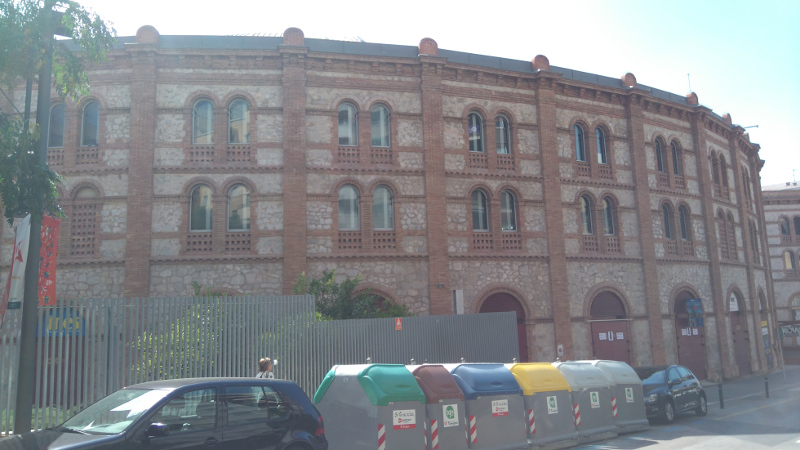
It was probably, though, Tarragona that pulled us more strongly, and we went to the (former) bull-ring to pray where the ‘yes’ campaign had been launched. We are a few days away (October 1) from an ‘illegal’ referendum in Cataluña concerning independence. If the vote is a majority for independence then the Catalan government has said they will announce Cataluña as an independent republic in the days following. The vote is ‘illegal’ because the constitution of Spain says there is one indissoluble Spain. There can be no separation according to the constitution.
As per all such possible divisions there are underlying narratives that stretch back in time. Immediate history of finances going to the central administration (Madrid) and little coming back; Civil War history when Franco’s forces were extremely brutal toward Barcelona / Cataluña and the language was suppressed; the war of succession history (1702-1714) when Cataluña supported the ‘wrong’ side and was subsequently punished, suggesting to hard line Catalans that they are the spoils of war. Wrongs that have to be righted – but how?
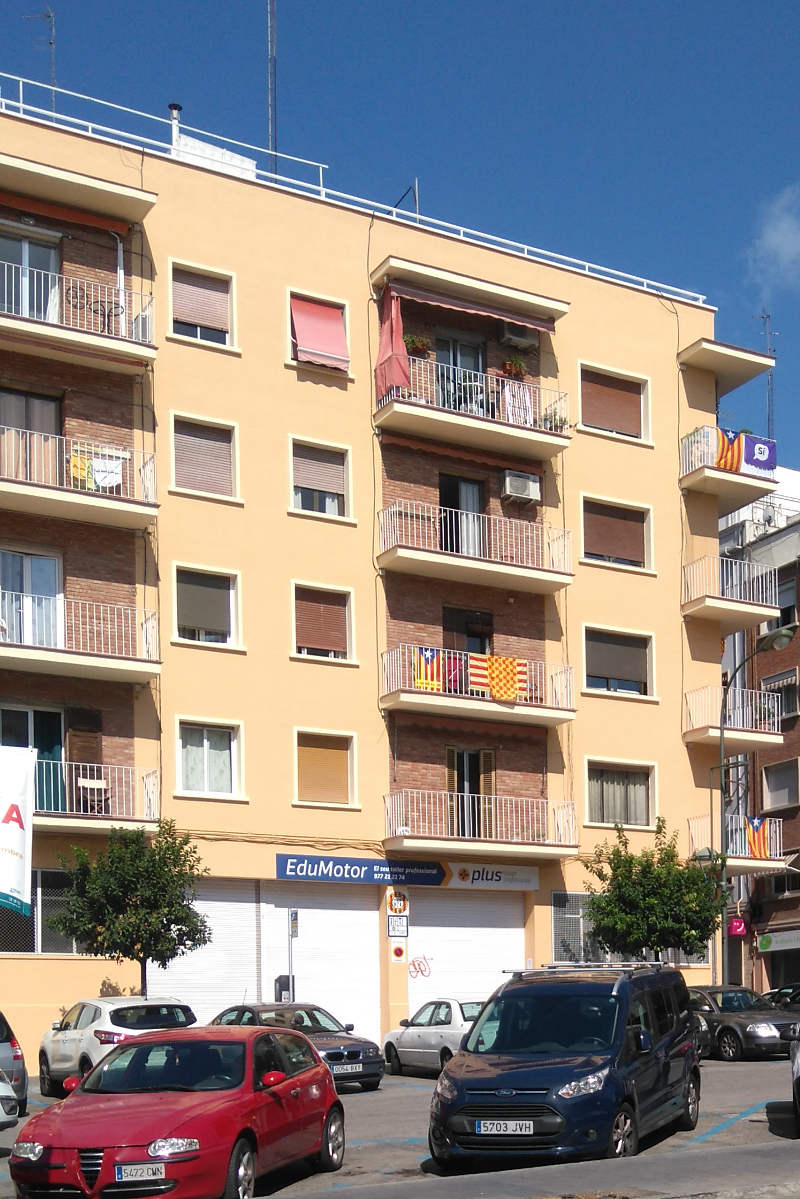
At this point of time there are two intransigent forces. On one side the central government of the PP and President Rajoy. They have seized ballot papers, detained people, actively instigating heavy fines on anyone involved in the administration toward the referendum, and even drafted in large numbers of police from outside Cataluña, taking over the organisation of the police from the current Catalan boss. Just short of putting the army in the show of force is very deliberate and visible. On the other side there is also no backing down, an assurance that there is no plan ‘B’ and that in spite of the courts’ ruling that the referendum is illegal they are insisting they will go ahead with it. Spain is divided and Cataluña is divided. The ‘yes’ campaign is very visible, organised and strong. It is being fuelled in reaction to the response from Madrid. The ‘yes’ campaign is also very hostile toward those who wish to remain as part of Spain. Madrid is seeking to silence the democratic voice, Cataluña is seeking to allow only the ‘yes’ voice to be heard. (It was easy to find the ‘yes’ flag of Cataluña flying.) Not the way to right wrongs!
A week ago the two mayoresses of Madrid and Barcelona (both of whom have reduced the debt in the cities, along with many other positive changes) were interviewed on TV. They called for a lowering of the testosterone, the aggessive stances on all sides, and calling for the ‘feminisation’ of politics. This was a theme that Gayle had picked up from Ada Colau (Barcelona) when she studied a couple of years back on the politics of love. Not simply more women in politics (Spain has some very high profile women in politics) but of a different approach, characterised as ‘feminine’. Dialogue, listening and seeking to find a third way (maybe in my language ‘the most redemptive way forward’?).
These next days will be very challenging. The language (wonderfully) used in Barcelona after the attack by the people on the streets of ‘we are not afraid’ is now being used by those on the streets in opposition to the excessive resistance from Madrid to the referendum. The language of ‘convivencia’ which we have seen as a suitable term for the societal outworking of the Pauline gospel is being used by Catalans of them co-habiting space, but not with the rest of Spain.
Many years ago I had a waking vision, one we are still engaged with, of a man lying across Spain. His right arm pinned to the north east around the A Coruña area, the head over Bilbao, the left arm over the Barcelona area, the lower back over Madrid and the two legs going down over the south coast. A few weeks ago I again had a waking vision and it was of a bear trampling over the border into Cataluña, causing it to become very unstable. Maybe there is a connection with history as there is the strong suggestion that the (‘Christian’) troops from Madrid who joined the battle that defeated the Muslims at Las Navas de Tolosa (1212) carried a banner with a bear on it, and soon after this the bear was part of the shield of Madrid. Whether the bear represents Madrid specifically or not it certainly represents imperial power. In the waking vision the bear was stamping just across the southern border of Cataluña (pretty much where Tarragona is) and trampling Cataluña as a whole so threatening that it could be trampled into the sea.
The outcome of these next few weeks will not be pretty whatever takes place. Even if there is a referendum there will not be a resolution. Wounds are not resolved by aggression, but through dialogue and forgiveness. So we prayed in Tarragona… our hope is through the next few years of pain and restlessness there will be a long term shift. We trust that the prayer into the ReConquista will have a knock on effect on these internal Spanish politics, but again it highlights that there are ongoing unresolved issues in the more recent past.
Spain has so much to offer. A nation of great diversity, geographically and to some extent ethnically. A nation that could open its doors to those from other nations, particularly those fleeing troubles of war and economics. What is for sure this is not a time to turn the clock back, not a time for a conservative response but for new ideas that will facilitate a depth of ‘convivencia’.
We are sure that Spain will come into a time of great restlessness. It could set things back at least 20 years, or through these strains and stresses we could see something fresh come through. Ever since visiting Bilbao two years ago to pray into the thinking in Spain we have seen that the constitution has to loosen up. Tension, stress, conflict. Yes that is what we expect these next years. A pull back to the status quo will be a disaster… the challenge is finding the right way forward.


