Kenarchy, love, politics, practicalities

We covered the four interviews in just an hour. Not sure about you but I could have extended each one to an hour or more, and then we would have opened up other areas… and if we had taken a breather I could have put Sue on for a few follow ups! All goes to say a deep appreciation for the resource they both have been to so many; not simply a resource – knowledge and perspective wise – but as people who come alongside.

I hope you have all found the interviews as stimulating and as encouraging as I did. One final one to come, but hold on just a minute!

If you would like to connect more with the writings and communications from Roger there are a number of ways you can do this.

His blog with a place to interact through the comments:

https://rogerhaydonmitchell.wordpress.com

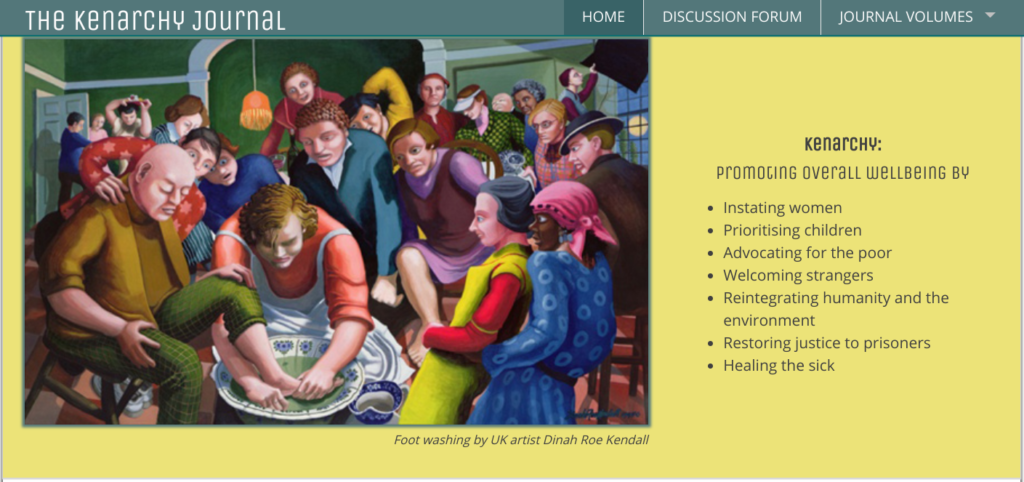
There is a Kenarchy Journal that Roger is the main editor for. Click on the image or the link to be taken there:

https://kenarchy.org

His academic papers and articles can be found here:

https://wtctheology/academia.edu/RogerHaydonMitchell

His books can be sourced through normal stockists.

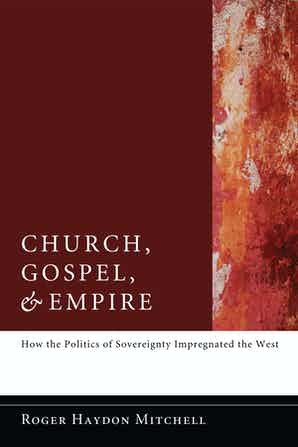
The Church Gospel and Empire: How the Politics of Sovereignty impregnated the West

This is an adaptation of his PhD for publication as a book, and if you wish to engage with his original research this is what to read.

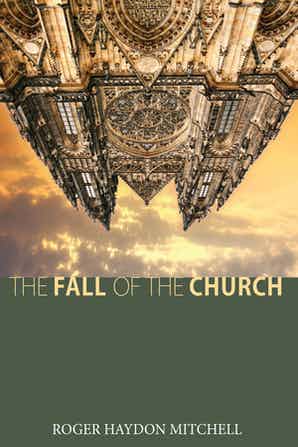
The Fall of the Church: I found this book ever so helpful. I profess to be deeply influenced by an AnaBaptist approach to Scripture and the Gospel (though go research the Dirk Willems story and see if I am genuine!) and expected that I would read something along the lines of ‘pre-Constantine pretty good; post-Constantine all goes wrong’. Much more profound. If ‘The Church, Gospel and Empire‘ is a read too-far, this one I would love to see everyone access and read.

Discovering Kenarchy

Discovering Kenarchy:

Written by a number of contributors pushing into the practicalities of an outworking in different areas of kenarchy.

And finally the video:

The cross

I talked with Roger on Good Friday, so thought what a day to ask about the cross. Given that his push toward his research was the encountering of the cross (video #1) at the very practical level of addressing the issue of corporate sin that had been expressed through the action of western colonialism… OK what I am saying is what a great few minutes this video is.

Kenarchy? Why that term, Roger

I did four zoom interviews with Roger Mitchell a couple of days back. Short, to the point, clear and… fun. I have known Roger and Sue for some decades and have loved their pioneering spirits, attitudes and actions. Roger pursued a path that took him into the world of academia (to producing a well-acclaimed PhD from Lancaster University), so my first question was related to what took him in that direction. Suffice to say not academia for academia’s sake! I will post one a day for the next days and will give various links after the last one to where you can follow through on his material.

The four videos will also become available for those who join me for Zoom groups. I now have some pre-work (work? mainly watch a video or two!) and some optional post-work,

My favourite easter story

What an event! The birth of new creation marked by the raising from the dead of the ‘firstborn of all creation’, closely followed by a whole group of saints in Jerusalem also being resurrected (only Matthew records this, but it indicates a major time warp). Then the first appearance and being identified as the ‘Gardener’ highlights the connection back to the former garden… and then.

The road to Emmaus.

If not a married couple, Luke records it in such a way that we are to think it is a married couple… but a married couple I strongly consider it is: Cleopas and his wife Mary. The man is revealed as Cleopas (Lk. 24:18), and we have his wife identified in John’s Gospel (variant of name Cleopas is used Clopas, variants not being unusual also where Aramaic and Hebrew languages being similar are quoted):

but standing by the cross of Jesus were his mother and his mother’s sister, Mary the wife of Clopas, and Mary Magdalene (Jn. 19:25).

The parallels (explicit and implicit) are incredible. Imagine the two leaving Eden. The discussion, the heavy hearts, the disappointment. The road to Emmaus and also the heavy discussion, perhaps even the ‘he let us down in the end’ discussion.

  • Then the day is closing, the evening is drawing in, as they walk with a ‘stranger’. Just like that other Garden when God came to visit at the ‘cool of the day’, certainly a stranger to them.
  • Their action in Eden caused their eyes to be opened (to shame); he breaks the bread and their eyes were opened.
  • They leave Eden with the ‘death’ consequence ringing in their ears; they talk to the stranger informing him that the one who carried the hope for the future had been ‘condemned to death’.
  • Behind them was a cherubim with a flaming sword that stood guard so that access to the tree of life was banned to them; but the flame no longer external but burning now within them (Lk. 24:32).

I am sure there are more parallels, but here on resurrection morning, with the birth of ‘new creation’ that changes sight (2 Cor. 5:16,17 – kaine ktisis -‘new creation’, not new creature… see up to date translations) there is so much to see.

Sight all the way back to the beginning. The original commission is re-established; the future placed in the hands of humanity again. Placed in the hands of humanity for when they were expelled from Eden a stranger walked every step with them. Unrecognised, unrecognised even by the righteous who could (as did Jesus) quote Psalm 22 ‘My God, My God why have you forsaken me’. They might have left with the sound of ‘death’ in their ears but the Living God left Eden also carrying the consequence of death in his heart, trudging through the dust with them.

(And as we continue to read in Psalm 22

For he has not despised or scorned
the suffering of the afflicted one;
he has not hidden his face from him
but has listened to his cry for help (Ps. 22:24).

We realise that God did not turn away from Jesus on the cross. Far from it, he was ‘in Christ reconciling the world to himself’. Even the final words of Jesus on the cross ‘it is finished’ are likely to be a response to the last words of Psalm 22 – ‘he has done it’. The idea that God turned away from Jesus on the cross does not bear up – there is no split in the Trinity, not even a ‘creative dispute’!)

The path from Eden for God was the path to the cross; the path for humanity was to the tree of Life. The cross was indeed the final door closed to the tree of knowledge of good and evil that religion in particular has always sought to cultivate. Right / wrong are such sub-criteria in Scripture, the overriding criteria being that of life and death.

I have set before you life and death, blessings and curses. Now choose life, so that you and your children may live (Deut. 30:19).

The resurrection.

  • Tells us God was with us and never left humanity. He walked from the Garden, determined that he would restore not a Garden but the whole of creation for and with us, where we could invite his permanent presence to be with us (no going to heaven then).
  • It tells us that we cannot flee from his presence; that he does not hide his face from us.
  • It tells us that the restoration of gender equality is essential for the way forward (and also what lies beyond gender, for there is not ‘male and female’).
  • It gives us sight back – to Eden and original purpose, and forward – to new creation; a creation that appears in contrast to this one as feminised, incomplete but to be explored (with the eschaton as both and end and a beginning).
  • It gives us new lenses to see others. Not through the lenses of categorisation but the lens of ‘image’, the ultimate lens being the Jesus’ lens.

Little wonder the couple did not sleep that night but made their way back to Jerusalem to tell the others. We live in that flow. The flow of resurrection.

The ‘arc’ of the books

I am revamping the whole section on the books so that they will actually be more streamlined and ready for a ‘course’. Bit of a laugh really. So I spent a whole day writing articles that would go with each chapter. Articles to explain what I have written. Then when the groups could meet they would discuss what I had written about what I had written – ever so creative? I showed my work proudly to Gayle… And I also heard the voice of a certain brother from Leeds: ‘too much!!!!’ So I started again. A good day’s work thought, but I have found I often need to think again.

Anyway the groups will consist of a few questions to think about, maybe a podcast or a video (neither longer than 10 minutes), with any extra articles fairly short and as optional extras. No one will need to read what I have written about what I have written!! I will leave a few articles covering material beyond the books but they will be optional.

There is one article that is somewhat longer and I am publishing it here also. It is on the trajectory of the books… and of course now you will really want to buy them? BTW: if you wish to join a zoom group I hope to run a couple on book 1 Humanising the Divine in May through June.


The ‘arc’ is important to understand to grasp my intentions. I have not written for someone who comes from a fixed evangelical position. To try and engage with such a person would probably result in that person throwing stones from their corner, and I would probably try and throw stones back. They are probably smarter than me so their stones would be bigger, their aim more accurate… but when all is done and dusted the whole exercise would be fruitless, not to mention my bruises and their win! Ouch on both counts.

My overarching arc and theirs would be so different there would be no / little point of contact. I do write from that background, but probably have moved further than I realise, for often change is gradual and can almost go unnoticed.

The first book I consider is the foundation and for that reason the Zoom groups take it chapter by chapter. The first chapter is putting humanity at the centre of the discussion, suggesting:

  • that God has a wonderful focus on humanity; the Incarnation being essential so that the ‘unknown’ God might be known as revealed in the face of Jesus.
  • That Jesus, fully God and fully human was also truly human. In being fully human there is a growing process that he experienced, a growing (and learning process) through to maturity.
  • To fall short of being truly human is at the heart of sin, the aim of the demonic being to dehumanise, thus every aspect that is valuable (and God-like) is to humanise.

There are then three chapters that relate together. They focus on three individuals, Judas, Peter and Cornelius. They might bring some fresh insights about the characters but the purpose of the chapters is to sit in the arc. Judas betrays Jesus, but we all have betrayed Jesus. He betrays Jesus as he seeks to direct the outcome of his mission. The ‘I know better’ is his downfall. The narrative I give is one that I consider fits both the texts we have and also the historical setting. Peter is not too dissimilar. The betrayer or the deniar, the parallels are clear. Peter is a paradigm of those that God ‘builds’ on! Flaky and weak, yet chosen. He also gives us clear insight to the personal and corporate journey – one of facing previous understandings (clarities) and discovering through the puzzles that our convictions are not always rooted in a deep knowing of God. For there to be advances there has to be a ‘conversion’ of those who already have convictions and understandings. The Cornelius passage does not answer all the questions but the confession that someone who was formerly unclean (Gentile) can no longer be called unclean, and that there was an acceptance by God for such a person before they made a response to Jesus. Those chapters seek to track with the arc of heaven’s universal mission toward growing a new society, namely ‘a new heaven and a new earth’, not separated but integrated.

The Judas chapter is about Judas being the sharp end (of betrayal), thus he respresents us all. Our vision corporate is what often betrays Jesus… The cultural barriers that were in place, and the spiritual powers that shaped the distorted views of God, were incredible, hence the money / weakness is at one level not an issue, but the false (and passionate) vision of the kingdom is what betrays Jesus. Betrayal is necessary to lead to the cross, as betrayal of the generous vision of God took place first in the garden. Betrayal in the face of life-poured-out love. Betrayal leads to death in both situations, the gardens of Eden and Gethsemane. There is a move away from Life as the shaping framework, to one where being in control with the knowledge of good and evil was the betrayal, taking control of God’s vision. (This becomes even further perverted with Babel / Babylon where it is no longer God’s vision that is perverted but a godless vision – a tower that reaches heaven… however I think the critique of all visions that take control are that they are a form of Babylon?) The consequence of taking control is death… However the path out of Eden eastward is the walk God embarked on with them… eventually leads to Incarnation where the walk with humanity is physical and deeply intimate. This journey that God embarks on was hidden from their eyes – shame does this. The married couple on the road to Emmaus (Cleopas and Mary – Adam and Eve so to speak) finally saw this. Their eyes were opened not to realise shame but glory when they saw that he was walking with them: they saw what was always true. Until that point they had thought that Jesus had betrayed the vision of God. The cross is the end to wrong visions of the kingdom… Reminiscent of the question ‘Where is God now’ that was thrown at Eli Weisel as the young boy was hanged in the concentration camp. Where is God revealed?… There he is, hanging on the tree… was Weisel’s response. On the tree – the cross. Hence take up your cross and follow me.

In the next chapter we move beyond the time of the historical life of Jesus, to the intersection with Cornelius that is also beyond Pentecost and acts as the door opener in the Spirit to Paul. (Beyond Pentecost but as a result of Pentecost.) It also is a paradigm of every move beyond boundaries, hence it sits at this point in the book. This is the Gospel touching the Gentiles (the word is ta ethne: it is the word we get ethnicity from and in mission usage is often taken to mean ethnic groups… but it is the generic term for those who are not of the covenant, i.e. non-Jews. Hence I suggest a paradigm for every boundary crossing.)

Following on from the interaction with Cornelius is the chapter on witness, that contrasts the narrow view of evangelism that can be perverted into treating people as objects to be saved, thus not being good news but aligning with the work of dehumanisation.

The next chapter is a preliminary look at the cross, seeking to make the point that the ‘when’ of the cross is important to discover ‘what’ the cross accomplished. I therefore describe the cross as a roadblock that is placed on the path of destruction that humanity has chosen; and that it is first for the Jew then for the Gentile. (The cross is looked at in more detail in the fourth book.)

The first book then ends with a joining chapter to the next books. A reminder that the tree Jesus died on was the problem tree in the garden of Eden: the tree of knowledge of good and evil; and that from his side came forth a suitable partner for the work within creation. Those chapters I consider are very foundational and open up the following books. In summary those books follow this trajectory:

Book 2 (‘Significant Other’) presents the ‘church’ as ekklesia, essentially a political term. Thus suggesting that a ‘movement’ paradigm is at the heart of the understanding of what ‘church’ was always meant to be.


The approach to Scripture (seeking to read it narratively as related to the historical context) opens up necessary possibilities to be considered. Rather than simply taking texts and approaching them as timeless truths it becomes the task of understanding them in context. Hence Jesus is addressing Jews (as is the majority of the Bible). The broad road / narrow road is related to the Roman Imperial conquest – few will find the way that is to safety / salvation, but many are and will remain on the road to destruction; I suggest his references to hell (Gehenna) by Jesus are references to AD70; ‘born again’ is addressed to a religious Jew (whose journey in the gospels is to new birth, but ever so slow!). Likewise ‘no name under heaven by which we are to be saved’ is addressed to Jews… Abraham is not the name by which they will be saved… and they have a generation in which to align with Jesus, otherwise not one stone upon another will be their experience. The historical journey is from Jew to Gentile; the theological journey likewise: first the Jew and then the Gentiles. First the Jews sinned; also the Gentiles – thus all have sinned and ‘fallen short’. Likewise salvation is historically and theologically to the Jew first and then to the Gentiles. I therefore don’t think we can simply jump from verses that we collect together and then prove our point. For even the cross of Jesus, which is totally universal in scope, is for Jews and males… They have to die – they are the ‘sharp’ end of sin. In the same way that we all betray Jesus, but Judas is the sharp end. Likewise all have sinned, but there is a ‘sharp’ end. Hence I also want in the light of new creation to purge the Bible of its patriarchy, suggesting the Bible demands we do that!

I see the whole context is from creation, creation gone wrong that needs to be fixed / healed, to the new society where there are no divides. Death is a divide, a separation; death leads to divides. Jesus death ends the divides, ends the knowledge path that religion had polished, exposing that path as empty with ‘they know not what they do’. Religion is the top layer of the knowledge of good and evil so is the first element to be touched at the cross. From there is opened up one new humanity of no longer Jew nor Greek, slave nor free, male and female. Questions of who is saved takes a back seat, not everything of the kingdom is in the church. And not all our churchiness is in the kingdom. The work of the ekklesia is in the kingdom and for the kingdom’s increase but we do not have to (and cannot) affirm that is true of what we have produced as ‘church’.


The trajectory moves us toward a greater and challenging understanding of the universal mission of God. A mission / vision for the new heaven and earth.

Church, in that sense (ekklesia), is important but not the form / shape / structure of it. And I am more than open to the strong possibility that Paul only had vision of the first step. Even the first step might be very different today, and the second, third etc. might be beyond the biblical record… not beyond the biblical story, but beyond the biblical text.

Book 3 (A Subversive Movement) seeks to explore how all of this ekklesia as movement embeds in society. It has to be subversive, from the bottom up, rather than a vision to impose values on society. Any truly apostolic vision will therefore have to have patience, transformation will not take place overnight. It also has to engage the ‘little people’ for the work of God is done through that ‘that is not’, marked by ‘not many wise, rich, powerful’ having been chosen.

The final book in the series Life Line is a push into Pauline theology, with a final re-visit to the cross where alongside the ‘road-block’ suggestion from book 1 I put at centre is the need for ‘cleansing’. I push away from any split in the Trinity (angry God, loving Son) which leaves us with a conflict within God, and a conflict between the Persons of the Godhead, even if we were to stretch it to a creative conflict, it nevertheless remains a conflict!


Being an exploration in theology there are directions that could be pursued (indeed that seems to me to be the nature of the Bible with its many wonderful internal dialogues). Issues related to sexuality and gender are certainly implied as new creation does not consist of ‘male and female’, exhibited I would suggest in the resurrection (or if not resurrection, the acension) of Jesus who rises as a human, this resurrection I would consider being neither ‘male nor female’.

The four books lay a foundation for such discussions and perhaps other volumes could have been added that address issues of eschatology, though the intention of the four volumes is to suggest a direction that would be appropriate on these subjects.

(I intend to write on eschatology but to publish them solely in eBook format.)

Let your kingdom come

Well known, and very focusing, words from the prayer we were taught. Who has not repeated it over and over again? So what are we asking for?

We can probably answer it two different ways (very broad and simplistic little division coming up).

We can easily say – righteous laws passed, abortion removed, the presence of ‘false’ religions reduced / removed… etc. Yes, been there and done that.

Or if we consider what makes up the culture of heaven… it is the place that exists in light and is full of uncontrolling love, to such an extent that it is love for the enemy.

So I am leaning toward the heart of the prayer is to call for a community on earth that loves the enemy. ‘Let your kingdom come, let your will be done on earth as it is in heaven’. It will indeed see a reduction in some of the classic things we want to see reduced in society… but if there is a resistance to a community that is marked by the uncontrolling love manifesting we have prayed something with our lips but resisted it with our being. (Reference the post from a few days back on Roman Religion.)

The cross brought to an end certain ways of being… we cannot quote some easy Scriptures concerning how the times vary, and there is a time for war (not getting into non-violent resistance within society… I appreciate the difficulty governments have). I am considering the tendency that seems to be rising (or simply manifesting more clearly) that defends use of physical force to bring in the kingdom of God. But we pray… let your kingdom come. A kingdom of uncontrolling love… now is that manifesting… or is it Roman (imperial) religion that wants to rise?

Four years before the angels came with the proclamation:

Glory to God in the highest heaven,
and on earth peace to those on whom his favour rests (Luke 2:14).

there was almost certainly a similar proclamation in Rome. The altar to Peace (pax) was dedicated in 9BC. It was built on the field (in the video interview with Stephen I said ‘hill’, I was confusing it with Mars Hill in Athens) that was known as Mars field (campus Martius), the field that was dedicated to the god of war. The altar was to honour the peace that Augustus Caesar had brought after 100 years of war. If this was not the declaration that was literally made it was certainly ‘made’:

Glory to the gods and to the great goddess Roma,
and on earth pax (Romana) to those who are now favoured by Rome’s benevolent rule.

All enemies gone. They are in submission… or eliminated.

Roman religion… or your kingdom come?

Podcasts

I am adding a few podcasts that are intended to sit alongside the ‘Explorations’ series of books. I will post them at:

https://3generations.eu/explorations-podcasts

I currently have four there and the first two are a kind of introduction to the books with a focus on volume 1.

I won’t post them all here but here is the first one – they are only 10 minutes long so not too arduous.

In this podcast (and the subsequent one) I give a few aspects with regard to the overall flow of the books, focusing on Humanising the Divine. Why start with the focus on humanity? One of the reasons being that no theology appears water-tight!! The bigger aspect though is that Jesus, as human is key to our knowledge of who God is, and that God has a high view of humanity.

I had a call recently to a very honest guy who is involved with a Bible College, had to laugh. He is the opposite of me on virtually every point. (I never was a fan of the acronym TULIP – indeed that took some effort to type those letters!) However, no theology is water-tight. Even mine probably leaks… just a little.

Why I am not a Universalist

I am writing a few articles that stand alongside the books and are at times a response to questions from a Zoom group. It is not uncommon for a version of ‘why are you not a universalist?’ to come up. Understandable as I am not an exclusivist; I do anticipate that most who claim to be ‘born again’ will partcipate in the age to come (I do not use the ‘go to heaven’ langauage as that is not found in the Bible)… I anticipate that as God is gracious – hence my faith for myself is that I will ‘be’ there as through the cross God is gracious to include me… I also expect to be surprised who also is included!

These articles I am uploading at https://3generations.eu/explorations, but I thought I would include this one here as a post.

First I cover my back!!

I am not a Universalist (all will be ultimately ‘saved’) though I have a sneaky suspicion that God might well be. I am not only covering my back, though, as I consider that the Scriptures give us a picture of God that shows his generosity to all. Generosity is seen in the garden of Eden with the permission to ‘eat of all the trees’, or we can consider one of the reasons that Peter gives as to why Jesus has not yet appeared:

The Lord is not slow in keeping his promise, as some understand slowness. Instead he is patient with you, not wanting anyone to perish, but everyone to come to repentance (2 Peter 3:10).

If only a few were to be saved the longer the delay would simply mean that more people were to perish. This Scripture seems to present an optimism in the delay. Likewise in 1 Timothy 2:3 we read,

who wants all people to be saved and to come to a knowledge of the truth.

Apart from not viewing the cross as a transactional exchange mechanism that acts as the answer to the wrath of God, these Scriptures are some of the reasons why I do not subscribe to a ‘limited atonement’ perspective (that Jesus died for the ‘elect’; those for whom he died will therefore necessarily be saved). There is a consistent ‘died for all’ that comes through in Scripture, and for anyone who approaches the Bible as a Calvinist to avoid the universalist perspective, I find it difficult that the uncomfortable (and to me unavoidable) conclusion is that God wants something (all to be saved) but chooses something very different (only an elect are saved). If Jesus died for all, and he pays the price for all, then I find a universalist position the most natural one to take, if we view the cross through the lens of penal substitution.

There are many ‘universalist’ texts, with the ‘as in Adam’ / ‘as in Jesus’ texts being core ones. Alongside those we have the ‘reconciliation of all things’.

Through him to reconcile to himself all things, whether things on earth or things in heaven, by making peace through his blood, shed on the cross.(Col. 1:10).

to bring unity to all things in heaven and on earth under Christ (Ephes. 1:10).

Another Scripture to consider is the description of Jesus as the Saviour of all, especially those who believe (1 Tim. 4:10). There is a parallel verse, language-wise, in which Paul asks Timothy to ‘bring… the scrolls, especially the parchments’ (2 Tim. 4:13) indicating that he is asking Timothy bring as many as possible. He is not asking just for the scrolls (‘only the parchments’), but is asking Timothy to take as many as possible. If salvation is only by the choice of God and he can save whoever he chooses, then it would seem he does not have to make the choices that Timothy might have to make! ‘How many can you bring Timothy? If you can’t bring them all make sure that you bring the parchments.’ If you can’t bring them all. But if God can save all he does not have to make that choice. Timothy, limited by capacity and ability, but God limitless.

The texts in favour of universalism cannot be taken in isolation from other texts. God’s saving purpose has universal scope but people may refuse to enter into that purpose. In Col. 1:19-23, for example, the Colossian believers enter into the reconciliation effected by Christ ‘provided they continue in the faith’. Universal reconciliation does not, in and of itself, necessarily imply that all will voluntarily submit to Christ. All ultimately confess the Lordship of Christ, but not all might do so willingly. Although Paul says that all will acknowledge the Lordship of Jesus, including that which is is under the earth (Phil. 2:9f.), yet when he speaks of ultimate reconciliation he does not include that subterranean sphere (Eph. 1:9f.).

Ultimate reconciliation could mean that of individuals (and demons, the devil) are included, or it could indicating that all rebellion in all spheres comes to an end. If the former then Universalism is a given, if the latter ultimate final inclusion of all as participants in the age to come is not implies by the use of such terms as ‘the reconciliation of all things’.

The ‘as in Adam’ / ‘as in Christ’ Scriptures (Rom. 5: 12-21; 1 Cor. 15: 22-23) could imply a universalism. All are in Adam (by birth) and all are in Christ (by the work of the cross). Perhaps the Corinthian texts are the strongest with the repeated ‘all…all’, but the final verse in the reference above makes us ask a question as to who ‘belongs’ to Christ. The two verses with an emphasis added are,

For as in Adam all die, so in Christ all will be made alive. But each in turn: Christ, the firstfruits; then, when he comes, those who belong to him.

Those who come with him are the ‘dead in Christ’ (1 Tim. 4:16), those who will be raised from the dead. The ‘all’ are the all who are in Christ. Not all are in Christ, we read,

Therefore, if anyone is in Christ (2 Cor. 5:17).

We read if someone is in Christ. The ‘if’ suggests that this is not automatic, and in the Pauline letters participation in Christ seems to be conditional on a response to Christ. Being included in his death, we read in Romans, was conditional:

We are those who have died to sin; how can we live in it any longer? Or don’t you know that all of us who were baptized into Christ Jesus were baptized into his death? We were therefore buried with him through baptism into death in order that, just as Christ was raised from the dead through the glory of the Father, we too may live a new life (Rom. 6:2-4).

This ‘belonging’ to is not too dissimilar to verses in John ch. 1. Jesus came to ‘his own’ but they did not receive him. But to those who did they were born of God. Later using the same terminology in the Gospel of John we read that he sat at table with ‘his own’ (the disciples at the Last Supper). Responding to the offer of salvation seems to be the criterion that determined if those who were ‘his own’ were truly ‘his own’.

There does appear to be the belief in a final judgement,

For we must all appear before the judgment seat of Christ, so that each of us may receive what is due us for the things done while in the body, whether good or bad (2 Cor. 5:12).

Perhaps there is a post-death opportunity to respond to Jesus, but Scripture is not explicit about that as a future possibility, with the strong emphasis that our lives and responses pre-death determine participation in the age to come.

Finally, the warnings (particularly in Hebrews) I consider are not theoretical warnings to keep us in line but warnings of the consequences of rejecting Jesus. Those two final words (‘rejecting Jesus’) also give me an optimistic hope that many will be included in as participants when the renewal of all things take place, for I place the emphasis on the exclusion of those who (in some way actively) reject Jesus, rather than a narrow approach that insists that only those who have received Jesus (and how is that defined depends so much on one’s tradition) are included in.

Those in summary are reasons why I am not a universalist. I think I have left sufficient in the above paragraphs to show that I am not of a simple ‘all born again are in’ and ‘all not born again are out’ belief. (Of course that begs also a huge question of the use of the term ‘born again’ and to whom that applies.) I am optimistic, I believe as Clark Pinnock described it in ‘a wideness in God’s mercy’.


Addendum

I consider that the strongest appeal to universal salvation would be if a penal substitutionary view of the cross is held to. If Jesus paid the penalty for all, then all are free, irrespective of their acceptance of that. Certainly for God to endlessly punish people for their sin that has been ‘paid’ for I would consider is a gross injustice. The ‘limited atonement’ perspective (Jesus only died for the elect) seems the only way to protect a penal substitutionary from becoming a substantial piece of the pro-universalist argument. Hence on the cross, I consider we have to find another way of understanding what took place there.

Perspectives