God has it ‘all under control’

The Sovereign God:

Words, words, words. What do they mean? What are they meant to convey? So following on from marginalising the word ‘power / omnipotent’ in our thinking so that we don’t do mental gymnastics with the clash between an all-loving God who has (exercises?) all power but does not intervene, I want to look at ‘sovereign’ – all under the umbrella of creating a God in our image, making a construct of God.

Maybe I could end this post now with the teaching of Jesus who taught us to pray that the will of God be done on earth – surely indicating that it is not being done in totality and there is an invitation for us to co-align with God in order for this to move toward a point of realisation.

In what follows I suggest we need to leave behind some cherished ideas even if it lands us in a ‘I don’t know’ position. We can be so quick to tie down what we know (is it a desire to put God in a box or the need to live with certainty?).

God being sovereign over all. What would such a claim mean? Big surprise that I am not of the Reformed persuasion where such views of God are taken to mean just what it says on the tin: even regeneration coming before repentance. (God regenerates us – the elect – so that we can repent and believe. Salvation is a total work of sovereignty. In contrast I believe we do not save ourselves, God saves us, but it is like a drowning person being thrown a life-saver that they grasp on to. They were saved – they did not save themselves, but are released from their plight by grasping on to the life-saver. They are saved by the rescuer and would be foolish to claim they saved themselves, but the work of ‘salvation’ was a partnership.)

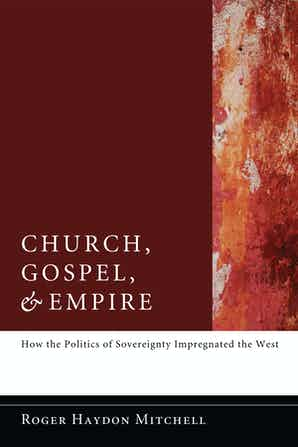
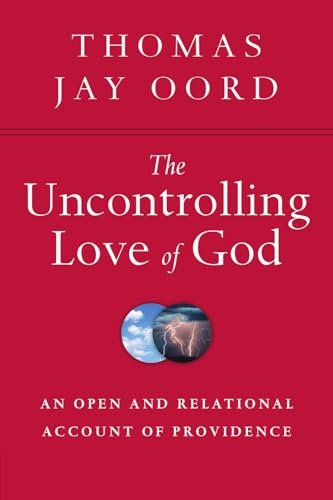
If you wish to dive into the issue of sovereignty and how it has impregnated how the Christian faith is expressed in Roger Mitchell’s Church, Gospel, and Empire: How the Politics of Sovereignty Impregnated the West, and for a well written book with ‘love’ (and uncontrolling love) as being at the sharp end by Thomas Jay Oord, The Unctrolling Love of God.
Meanwhile back to my simplistic few words here in this post.

There is a naïve response to catastrophe that says ‘God is in control’. Does God control in that way? Of course suffering can have a major redemptive element, but the level of suffering – 6 million Jews in the Holocost; 2 million displaced in Gaza?

The ‘government’ of God is:

  • not imposed and
  • is to be exercised through the people of God
  • into a hostile environment.

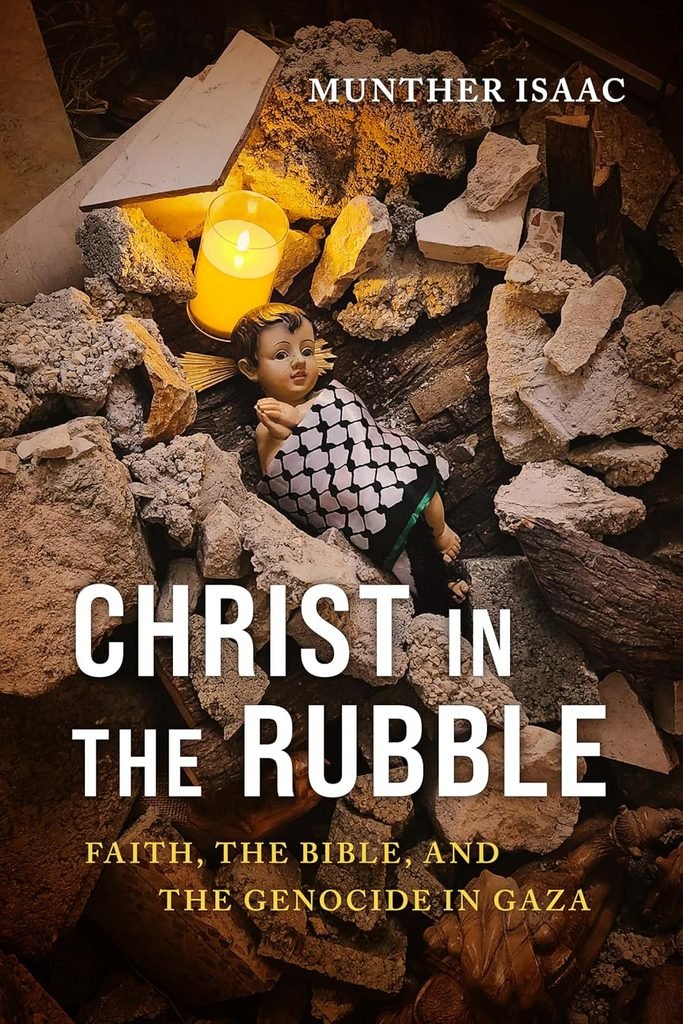
Is God involved or absent in our world? A challenging read both with regard to the history and also the amazing expression of faith is Christ in the Rubble (by Munther Isaac). It is easy to have faith when one gets up in the morning and makes a cup of coffee, offer up a prayer of thanks for an easy life, but Gaza?
God is indeed very present but also limited

God was present in Jesus with the goal of new humanity carrying the presence of God. Present in totality? No as Scripture is clear that the Holy Spirit given as a downpayment… much more to come n totality as a result of the parousia.

There is a well rehearsed (and rightly so) Scripture often quoted as ‘all things work together for good…’ Even my favourite NRSVUE has,

We know that all things work together for good with those who love God, who are called according to his purpose.

Now a little Greek that I hope does not get too complex…:

Οἴδαμεν δὲ ὅτι τοῖς ἀγαπῶσι τὸν θεὸν πάντα συνεργεῖ εἰς ἀγαθόν, τοῖς κατὰ πρόθεσιν κλητοῖς οὖσιν.

The two words: πάντα συνεργεῖ can be translated as ‘all things work…’ or as ‘[God] he/she works all things…’ I prefer the latter. God is not absent but there is not a belief that somehow whatever goes on is automatically working toward a good. I hold to this because of the legitimate – and I think more natural – translation and also due to the context.

The ‘dative case’ τοῖς – can equally be translated ‘with’ as opposed to ‘for’. So now to my way of translating (and compare to other versions):

We know that to those who love God, he (she?) works all things into / toward the good, with those called according to his / her purpose.

(Apologies for the clumsiness of the he/she pronouns but I need to keep the reminder that God is not male.)

Salvation – being in Christ – is personal ‘if anyone is in Christ’ and it is also being ‘called according to his/ her purpose’ – that purpose has always been one of co-working with God to pull the creation project toward the glory that will be revealed. It is in this context (this chapter, Romans 8) that Paul speaks of ‘all creation groaning’ and God at work with those who have received the Spirit. God is sovereign – not in any absolute sense, yet never absent.

The idea of independent sovereignty is not appealed to. The idea that whatever comes (the holocaust / personal tragedy) just somehow magically works to a wonderful end is not something that Paul suggests. There is an implicit appeal for those who are in the Spirit to be involved in and through the mess we are in. We are not be those seeking to naïvely proclaim ‘don’t worry everything is under God’s control’, but rather ‘don’t worry, have faith in God, for God is working right now to bring redemptive elements out of this – now and then’.

So sovereignty? Let’s define what we mean and not be naively telling people a Christianised form or ‘que será será’.’In Christ’ elevates us to pray and get our hands dirty. In that process passivity has no place, we might suffer but the redemptive purposes of heaven will proceed.

God and power

‘So God created the world, then who created God?’ And who was the ‘god’ who created ‘God’ and then who was the god who created the god who created God (ad infinitum) – hence the idea of a creator G/god is nonsense, so goes a common atheistic argument. And of course the response is if there is a God then that God is uncreated; the other option is somehow that something came from nothing (now both are faith statements). One is not the scientific answer and the other one the faith answer.

If there is a ‘God’ then one aspect that follows on is this God must be omnipotent (all-powerful). Some (process theologians?) might have a measure of issue with the idea that God is all-powerful, but it is generally accepted… the implications of that belief is where the rubber hits the road, not the belief itself.

I can have the power to do something, but the question is whether I will use my power to do what I could do (or will there be soe aspect of my character that liits what I will do), and when it comes to the divine we cannot simply isolate ‘power’ as an independent attribute. This is where the right objection comes to the Christian faith – if God is all-powerful and all-loving why then is there suffering. All kinds of convoluting answers come back but none of them satisfy the honest enquirer.

The problem comes by isolating ‘power / all power’ as an independent attribute. Sometimes to analyse something we take it apart and this is what many systematic theologies do with respect to God. The problem with taking anything apart is it no longer functions (or in the case of God no longer is the living God).

Once we say that every aspect of God is subject to his/her (necessary to use both pronouns) ‘character’ there is no free flowing inependent attribute that we can elevate. What limits God’s power is not a lack of power but consistency of character.

‘God has the potential to’ does not wash as God will not do anything that denies his/her character. In other words God does not simply love, nor simply act in a loving way, but God IS love. Every aspect – holiness, justice, judgement – has to be understood through the lens of who God is.

Why does this matter?

If I elevate an attribute (and yes I am not reducing ‘love’ to an attribute of God, but a revelation of who God is) then I have my ‘god’. This is currently manifesting with numerous Christians opting for the political candidate who is powerful even though they might be suspect character-wise. The candidate who can impose ‘Judeo-Chrstian’ values often then gets the Christian vote. My perspective is that God is then created in our image of who we think a god should be. A god who imposes through divine fiat. (Sadly not too different to the ancient pagans who gave attributes to their gods… and eventually as I will explore in later posts, leads to the need to appease the gods.) This is why labels are so difficult – the original label ‘Christian’ was a label given seemingly because those they labeled had their focus on ‘Christ’. I like the term ‘Jesus-aligned’ and am well aware that I continue to fall short!

Jesus – he messes it all up; not easy to be around

Years ago I was in a forum and someone cut through some of the discussion on the atonement with ‘when Jesus died he died to give us access to God and at the same time to defend our right to reject God’. Jesus died while we were enemies.

The mess we are in at one level we can blame God for – ‘You gave us the right to choose to go our own way; You should never have done that’. Then we realise that a) choice is essential for love; and b) ‘we’ have all made the wrong choice. As Paul puts it ‘both have sinned and fallen short of the glory of God’. Fallen short… and the result is this mess. We are the guilty ones.

The transcendent God does not step in to stop every wrong choice; but the transcendent God becomes humanly immanent in the Person of Jesus of whom John says that we ‘beheld his glory’. No falling short.

Even the Incarnation is not an act of forcing Jesus into the world to stop the fiasco. Jesus comes into the world the way we all do, through the womb of young submissive woman. An innocent baby. (And nothing pagan implied of a god procreating through the sexual act with a woman – there are two ‘wombs’ that of Mary and of the Spirit – another example of the sidelining of the male.)

Religion might be a human ‘construct’ but I suggest Jesus did not receive top marks as far as creating a religion. Live to a mere 30+ years of age, submit to religious and political powers who between them could (and did) sentence death. Die in an obscure Roman province the way countless thousands had before him, all the while teaching that the new kingdom era was coming through him! Not much of a hope that there would be a world-wide movement as a result. But here we are.

All-powerful as it describes God’s activity in our world is misplaced.

A more pastoral response to personal trouble is one that says ‘but God is sovereign’. I think that too needs to be pulled apart somewhat, though in all things there will be situations that we simply do not understand. Faith is not the opposite of understanding, but faith is much deeper than simply understanding.

So next post let’s have a look at ‘sovereignty’.

Developing Empathy Dismantling Patriarchy

The power of connection

Simon Scott (I, not being egocentric, just have to note the quality surname) is someone I have quite often dalogued with and have been challenged and impacted by his thoughts and writings. What follows is taken from his substack with his permission. It also fits in here with respect to the post I wrote yesterday on how we create god in our image. His substack link is below:

https://personcentredtheology.substack.com


Over the last couple of weeks, I’ve returned to university for my second year of MA Counselling training- it’s going to be busy. I’ll start meeting real clients in the next few weeks, continue academic study and and dive into very intentional personal development. It’s all personal development really and I’ve stopped seeing it as simply ‘training’ but life in a very real way. It isn’t practice for life, it is life. That mental shift is important for me; it keeps me focused on the now and the people in front of me and not on a future goal of counselling perfection, as if!

I suspect counselling training may be quite unique in the depth of interaction between students. The person-centred approach is especially so because relationship is at its heart. Personal development is there for the privilege of being invited into relationship with others and their lives with all its pain and joy. And that starts with my fellow students and tutors.

There is a key question at the heart of it all which is;

Who am I and who can I be for others? maybe that’s two questions! Either way, it’s one we can all ask.

The question has brought a very specific focus for me as one of just two men on my course (that’s 8%). Everyone is amazingly warm and generous making my fellow male human and I comfortable in our surroundings. Unfortunately, I can’t be sure that a woman in my position surrounded by men would feel as comfortable or be made to feel as safe and as welcome as we are. I’d love to be wrong, but I don’t think I am. I’ve asked, I’m not wrong.

On one of the first days 12 months ago, I read a news article on male identity and the high level of sexual abuse among university students1. Everywhere you look sections of masculinity are doing all they can to live up to the ‘toxic’ label that turns up with increasing frequency. I could give you many more headlines, but I wonder if some of you reading this may be consciously limiting your news intake. If you are then I completely understand…yet.

The issue of an ongoing epidemic of violence against women is revealed in so many different guises within those headlines. It exists alongside violence and abuse of so many groups whose identities make them the ‘others’ outside of power and priviledge and even extends to the earth we share. There are common roots to all of this.

Patriarchy, the control of others through power by men, is refusing to go quietly.

I read a sign recently that said, ‘if you are not outraged then you are not paying attention’. I know there are men who are attentive, but far from all. Women already know the reality. I suggest that we (men) need to pay attention, for the wellbeing of others and for our own wellbeing.

Why also for men’s wellbeing? Because True self-identity cannot be found through oppression and subjugation of others as it fractures the relationships that are needed for identity to be fully and healthily realised.

Patriarchy does not do empathy, ask Elon. If part of your identity is rooted in authority and power over others, then empathy and non-judgment are simply out of reach. It looks weak in their eyes, and patriarchy runs scared of appearing weak.

The refusal to exert power over others is central to the person-centred approach so as a person-centred practitioner I am not the expert on another person’s life. Power over others is the antithesis to non-judgement, empathy and genuineness. Every person is the expert on their own lives and has within them the means to find the solutions they need to be the person they know themselves to be. Having said that there is always recognition that we live in a social context which means balancing individual and collective needs.

My take on Jesus is that he refused to control others and demonstrated this in how he lived and invited others to live in this same way of being. I haven’t the energy for a rational theological argument on this right now- I’m sure I could do a half decent job, but I’m not sure rational academic argument is enough to bring change.

Maybe pause and consider the statements above in bold and examine the power we carry in the world and the effect that has on ourselves and others. Sometimes we need to silence rational arguments and engage with emotions, intuition and our spirits to examine the consequences of what we believe and therefore what we support. Does it feel right? Are there other perspectives?

Feminist theologian Rosemary Radford Reuther wrote a paper entitled ‘can a male saviour save women?2 Christina Cleveland3 added another layer by asking how can (maybe ‘why should?’) black women relate to a patriarchal, white, male God-why indeed! As a white man, I’d never thought about that. Of course I hadn’t. I hadn’t learned to view the stories I’d inherited from someone else’s perspective until I got to university 30 yrs ago. I hate admitting that, but also the fact it took me so long to ask decent questions! Reuther asked the question because the dominant tradition, the one I first encountered faith in and still exists today, always uses male language for God. We are now in a time where the divine feminine language is being recovered and bringing great insight and freedom. God isn’t a man. But that’s still controversial because years of subjugation and patriarchy refuse to let go.

Back to where I started, I am left with a variation on Reuther’s question. How can a male (counsellor) be a safe companion to a woman (client) or for anyone else for whom my maleness could be a barrier?

What is mine to do and what is not mine to do?

What is mine to say and what is not mine to say?

Patriarchy sucks the joy out of life and is doing so on the global stage. It denies the possibility of mutuality, equality, the care and empowerment of others and care for the earth.

This week I heard that joy is an act of resistance. I like that.

Finding joy in relationships that cross divides is a place we can all start. What is the view from someone else’s perspective? I am in awe at the courage I find in others.

Apparently, empathy is toxic to patriarchy-what a great idea!

Every joy

Simon

P.S. A poem I wrote to grapple with the headlines and feelings

Adamah meets Chavah 
Earthling meets life being
Mutual, relational, sacred, whole human
More than female, more than male
UK 2025, 100 lights lost at the hand of Adam
USA 2026 Adam caged, ready to fight,
A role model embodying a nation’s values a spokesperson says
Myth offers life
Power obscures the image for gain,
Full Knowledge, no plausible deniability
Yesterday, today, tomorrow
Full circle, tears fall on hard ground
Every moment a choice
The price of freedom
Creatures of the myth, children still,
Resuscitated, awakening, living breath
He, we, her, they, them seeking being
Slow walk into divine likeness
Embodying the deep knowledge of love hard won

1 Clarke, H., & Doughty, E. (2025, September 25). Thousands of students report sexual violence at university. BBC News. https://www.bbc.co.uk/news/articles/cq65z20pde2o

2 Ruether, R. R. (1983). Sexism and god-talk: Towards a Feminist theology. SCM.

3 Cleveland, C. (2022). God is a black woman. Harperone.

Once upon a time

I avoided using the title ‘In the beginning’ but maybe I should have as that would indicate the world that has always been here. I however have opted for ‘once upon a time’ – the way stores begin. So…

Once upon a time humanity said ‘let us make God in our image, after our likeness they made God’.

Maybe I should have added ‘once upon a time humanity, but with only the voice of the masculine being heard’?

Religion is a human construct – often a position taken by those who are not religious or are atheists. My response is of course it is. Can we work our way through the construct seems to be the core issue. Paul in Athens seems to suggest that ‘the unknown god’ is a move forward in the stumbling approach of humanity. It is a move that has the potential to set ‘God’ free from our boxes that define.

There are many constructs that we create in this world and often we do so to try to make sense of what is beyond us so that we can find where we fit in. I love cities with the life that is present, but I also love the outside particularly a clear sky at night. Looking up at the moon there is always a thought that goes like this ‘no surprise that the ancients thoughwt of the heavenly bodies as ‘gods’ – the wonder at the transcendent would have gripped them’. In our ever-so educated(?) world of course we are so much smarter that those ancients. But the constructs continue.

Some of the ‘constructed-god’ constituent attributes are not always stated explicitly but are often well-defended. It is so hard to see someone else’s perspective whose experience means they struggle with ‘it’god’ or they simply submerge their response in order to keep the status quo in place with a ‘this is just the way it is’ and in silencing their persepctive that person subsequently makes it very hard to fully blossom.

I often wonder how does one have faith in God if born in (e.g.) Gaza when the ‘god’ you read about is pro-Israel and seems to not simply turn a blind eye to genocide but encourage it? What about a black woman encountering a white-male ‘god’? (I will use a capital ‘G’ when referring to the God of Scripture – and therein lies a challenge we can assume our god is the God of Scripture! Hence the capital ‘G’and the lowercase ‘g’.)

Jesus. He messed and continues to mess up religion. And dare I say it Christianity when it manifests in any form of construct (this is not a pointing the finger statement… we construct to make sense, so I can make it personal in that Jesus will continue to mess me up till I see Jesus without imperfect vision, for only then will I be ‘like’ Jesus. Before that, if I cooperate I will be changed from glory to glory, faith to faith etc., into the image of Jesus. (Grammatically I could have used ‘him’ but for reasons that will come out I think we are in danger of another implicit construct.)

There are a million aspects that I think Jesus disturbs about our constructs but not being smart enough I really don’t know what half of them are. If ‘all things’ are to be made new that is certainly more thn I can count, yet if all our works are to go through fire and some will come out the other side to enter the new reality we can be encouraged to pursue this Jesus so that our actions and thoughts are transformed (thoughts marked on the forehead and actions on the hand – OK a little side note there on Revelation with the inevitable link to buying and selling – trade / economics).

The next few posts will be very limited attempts at making suggetions where our ‘god’ might become a little more ‘God’ than before.

Perspectives