
The Sovereign God:
Words, words, words. What do they mean? What are they meant to convey? So following on from marginalising the word ‘power / omnipotent’ in our thinking so that we don’t do mental gymnastics with the clash between an all-loving God who has (exercises?) all power but does not intervene, I want to look at ‘sovereign’ – all under the umbrella of creating a God in our image, making a construct of God.
Maybe I could end this post now with the teaching of Jesus who taught us to pray that the will of God be done on earth – surely indicating that it is not being done in totality and there is an invitation for us to co-align with God in order for this to move toward a point of realisation.
In what follows I suggest we need to leave behind some cherished ideas even if it lands us in a ‘I don’t know’ position. We can be so quick to tie down what we know (is it a desire to put God in a box or the need to live with certainty?).
God being sovereign over all. What would such a claim mean? Big surprise that I am not of the Reformed persuasion where such views of God are taken to mean just what it says on the tin: even regeneration coming before repentance. (God regenerates us – the elect – so that we can repent and believe. Salvation is a total work of sovereignty. In contrast I believe we do not save ourselves, God saves us, but it is like a drowning person being thrown a life-saver that they grasp on to. They were saved – they did not save themselves, but are released from their plight by grasping on to the life-saver. They are saved by the rescuer and would be foolish to claim they saved themselves, but the work of ‘salvation’ was a partnership.)
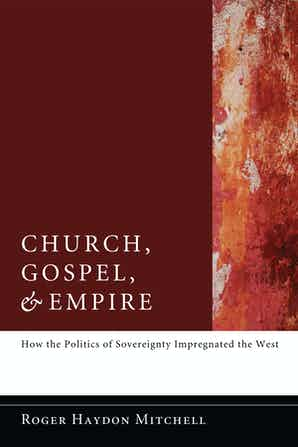
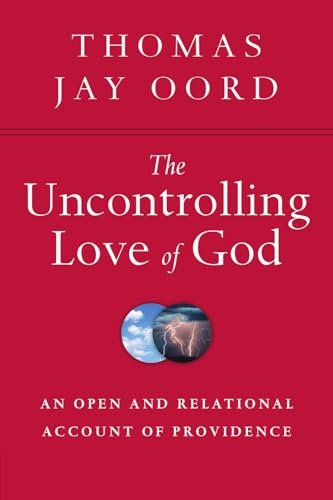
If you wish to dive into the issue of sovereignty and how it has impregnated how the Christian faith is expressed in Roger Mitchell’s Church, Gospel, and Empire: How the Politics of Sovereignty Impregnated the West, and for a well written book with ‘love’ (and uncontrolling love) as being at the sharp end by Thomas Jay Oord, The Unctrolling Love of God.
Meanwhile back to my simplistic few words here in this post.
There is a naïve response to catastrophe that says ‘God is in control’. Does God control in that way? Of course suffering can have a major redemptive element, but the level of suffering – 6 million Jews in the Holocost; 2 million displaced in Gaza?
The ‘government’ of God is:
- not imposed and
- is to be exercised through the people of God
- into a hostile environment.
Is God involved or absent in our world? A challenging read both with regard to the history and also the amazing expression of faith is Christ in the Rubble (by Munther Isaac). It is easy to have faith when one gets up in the morning and makes a cup of coffee, offer up a prayer of thanks for an easy life, but Gaza?

God is indeed very present but also limited
God was present in Jesus with the goal of new humanity carrying the presence of God. Present in totality? No as Scripture is clear that the Holy Spirit given as a downpayment… much more to come n totality as a result of the parousia.
There is a well rehearsed (and rightly so) Scripture often quoted as ‘all things work together for good…’ Even my favourite NRSVUE has,
We know that all things work together for good with those who love God, who are called according to his purpose.
Now a little Greek that I hope does not get too complex…:
Οἴδαμεν δὲ ὅτι τοῖς ἀγαπῶσι τὸν θεὸν πάντα συνεργεῖ εἰς ἀγαθόν, τοῖς κατὰ πρόθεσιν κλητοῖς οὖσιν.
The two words: πάντα συνεργεῖ can be translated as ‘all things work…’ or as ‘[God] he/she works all things…’ I prefer the latter. God is not absent but there is not a belief that somehow whatever goes on is automatically working toward a good. I hold to this because of the legitimate – and I think more natural – translation and also due to the context.
The ‘dative case’ τοῖς – can equally be translated ‘with’ as opposed to ‘for’. So now to my way of translating (and compare to other versions):
We know that to those who love God, he (she?) works all things into / toward the good, with those called according to his / her purpose.
(Apologies for the clumsiness of the he/she pronouns but I need to keep the reminder that God is not male.)
Salvation – being in Christ – is personal ‘if anyone is in Christ’ and it is also being ‘called according to his/ her purpose’ – that purpose has always been one of co-working with God to pull the creation project toward the glory that will be revealed. It is in this context (this chapter, Romans 8) that Paul speaks of ‘all creation groaning’ and God at work with those who have received the Spirit. God is sovereign – not in any absolute sense, yet never absent.
The idea of independent sovereignty is not appealed to. The idea that whatever comes (the holocaust / personal tragedy) just somehow magically works to a wonderful end is not something that Paul suggests. There is an implicit appeal for those who are in the Spirit to be involved in and through the mess we are in. We are not be those seeking to naïvely proclaim ‘don’t worry everything is under God’s control’, but rather ‘don’t worry, have faith in God, for God is working right now to bring redemptive elements out of this – now and then’.
So sovereignty? Let’s define what we mean and not be naively telling people a Christianised form or ‘que será será’.’In Christ’ elevates us to pray and get our hands dirty. In that process passivity has no place, we might suffer but the redemptive purposes of heaven will proceed.
Back when I was a church pastor I would tell people that if we do the wrong thing, God behaves redemptively. And if we do the right thing, God behaves redemptively. God always behaves redemptively. I like that better than the sovereignty emphasis.
I remember, before I left the church prayer changed so that often people would exhort God to do something sovereignly. I could never figure out what they meant by that. Generally they were telling God what they thought God should do. And, I guess, in the process were giving God permission to override any constraints in the situation. Honestly, it was one of the reasons I walked away. It was offensive. Are we finished with that now?
I have also seen the ‘God is in charge’ thing mis-used. I’ve known people, often on the edge of genuine mental illness, get to a point where they could not make any decisions at all unless God communicated his/her will to them somehow. That came down to the level of choosing the color of socks to be worn that day. Believing you are always seeking and doing God’s will because God is in control means you can never be wrong and therefore never learn anything. It cuts off all discussion, conversation, negotiation, and feedback. Its incredibly destructive in relationships.
We have such a strange way of twisting things around to suit our needs for control. And then pinning the blame on God. I think the period of chaos we are now entering will teach us much about how things really work. And free many of us for a better set of relationships with God, others, and the earth. As the old is challenged and falls away we are free to imagine and create the new.