
Leaving Cartagena behind we moved on to Mojacar on the south coast. We had visited Mojacar in 2010 so knew it a little. It was really intended as a sleeping point for us as we prepared for the major drive through the Alpujarras, but…

A quaint, beautiful place with narrow streets so well preserved:

Before getting in to Mojácar and what we did there we look back on our first trip across the south of mainland Spain in 2010 with deep appreciation. We did this from Mallorca, renting a car and taking a tent, but now looking back it was so foundational to our understanding of Spain, and it was what eventually took us to Cádiz. It was at the end of our southern trip, we were in the city for just over an hour and then basically prayed for it for the next 2 years on an all-but daily basis. An accidental connection but a shift for us. Now living, more or less at the point of entry for that first trip, we reflect how what seems accidental can turn out to be so full of God.
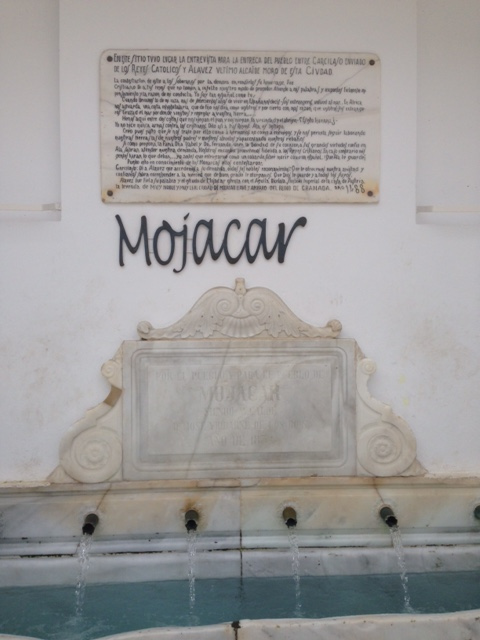 So off we went to Mojácar. Gayle says – so why are we here? To that point of time we had not read too much about how Mojácar fitted into the historic scene we were looking at. Not too much later we were reading one perspective that what took place in Mojácar was the root of what sparked the rebellions of the Alpujarras. We would not place such weight on it as that but the key event that we prayed into and were very moved by was the story surrounding the Muslim mayor (Al Avez) of Mojácar in 1488, in the immediate era when the Christian forces were closing in on Granada.
On June 10, 1488, the leaders of the region agreed to submit to the Christian forces, although Mojácar’s alcaide refused to attend, considering his town to be already Spanish. When his non-attendance was followed up he responded with (as on the plaque above the fountain):
Yo soy tan español como vos, cuando llevamos los de mi raza más de setecientos años de vivir en España nos decís que nos marchemos. Yo no hice nunca armas contra los cristianos, creo justo pues que se nos trate como hermanos, no como enemigos y se nos permita seguir labrando nuestra tierra, y añadió: Yo antes de entregarme como un cobarde, sabré morir como un español.
I am as Spanish as you, when we came (those of my race) more than seven hundred years to live in Spain, and now you are telling us to leave. I have never taken arms against Christians, I believe we should be treated like brothers, not like enemies and we should be allowed to continue to work our land, and I add: Before I surrender like a coward, I will die like a Spaniard.
This is the story line that we have found again and again. Different faith, but Spanish. They loved the land, this was their home. This follow up meeting resolved things… and then a second story line that comes up so often, within a few short years the Christians broke their treaty, moved all Muslims out of Mojacar (their town) and moved Christians in. The story lines repeat as is so often the case.
We have also noticed over years there is a pattern of betrayal leads to destruction / murder… and maybe some measure of crossing borders precedes betrayal. This is the same pattern as we first encountered in Mallorca: piracy to betrayal to murder.
We went back to the meeting place in Mojacar to the fountain where it took place. The place where regardless of faith everyone had shared together (and still do to this day) dependent on the same source.
To drink from the same fountain where speeches had been made, where people no different to us had drunk for centuries was an easy and necessary place to pray.
 It was a prominent city during the Islamic period and was also one of the ports that Muslims were expelled through. In visiting these places, not as a tourist, but with a focus on prayer it is always surprising what kicks in. Slavery through the port was one aspect we prayed into, but the bigger situation was regarding the Pauline gospel. I do not believe Paul made it to Spain – of course there is no proof either way. Part of my convictions goes back to 2001 when in response to a question in Hanover about what wells to re-dig in Spain, I heard myself say that ‘You do not need wells of revival in Spain to re-dig. What other nation on the planet can we say with biblical authority that has unanswered first century apostolic prayer in the soil?’


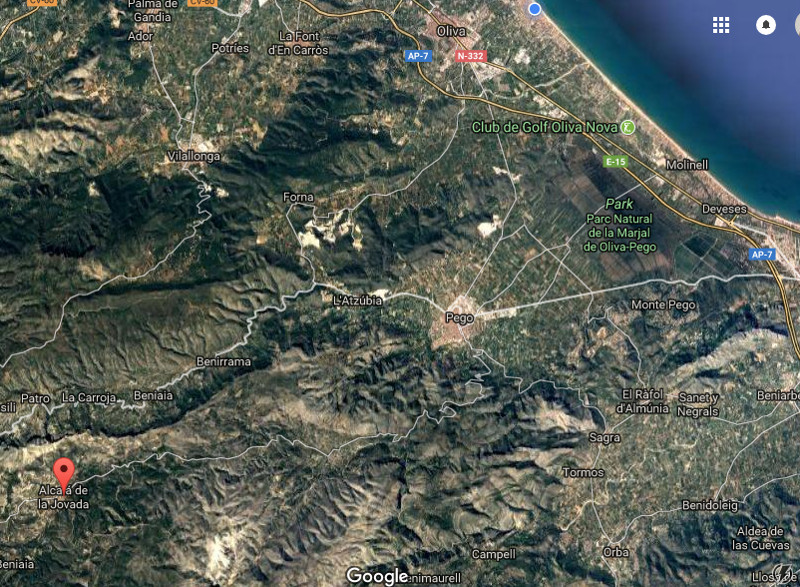
 When we went to Xativa Gayle had an image of a specific Muslim leader, who she described to Noe. Immediately he responded with that is ‘Al Azraq’. Born in Alcala, to a mixed Christian / Muslim marriage. He and Jaime had a relationship that genuinely seemed to have respect for each other, hence the treaty. In all of this it would be naïve to suggest one party was good and the other bad – and think of Solzhenitsyn’s wisdom of the good / evil line never running between us but through each of us – but the breaking of the treaty does seem to be what is triggering the response in the Dayesh video. We consider Al Azraq a man of peace, and (now you can choose to stop reading!!) that in some way he was ready to receive an apology from us, and to release the land.


 Changes, changes, changes. Who can predict the future? Post Brexit referendum the jury is still out as to what that all means. Gibraltar the clearest ‘remain’ vote (could this be down to vested interest?!!) and yet one of the biggest financial contributions to the leave vote campaign came from there. How will a year-old party shape up in France? Across the pond what is happening?


