Power: fear or love

A certain gentleman whose tweets can be followed with various gasps of ‘surely this time he is joking’ apparently when asked about power and how it works responded with the word ‘fear’. For him to be effective and get things done the best attribute to have is one that enables a climate of fear to be cultivate among those around him. Fear certainly enables the exercise of a certain type of power.

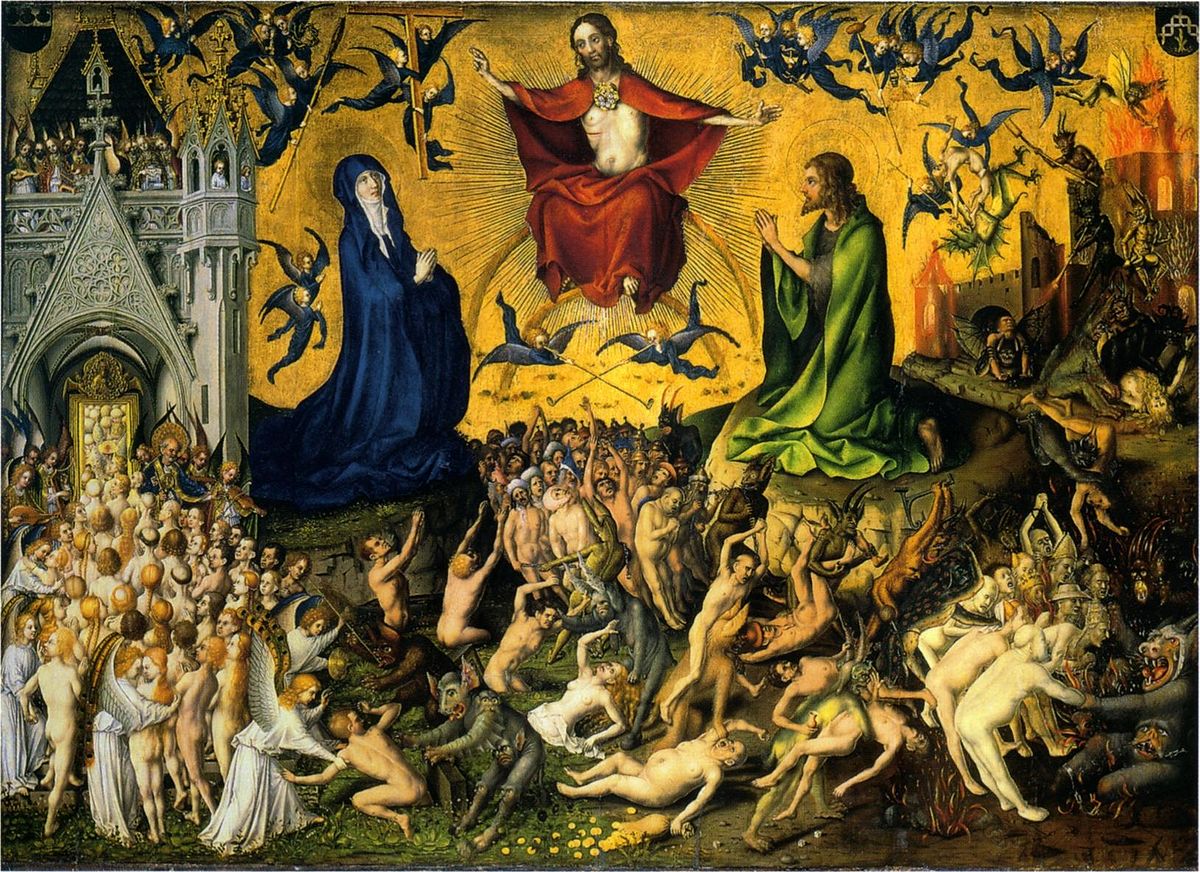
In some of the medieval religious art the fear of hell fire and torment was certainly a tool employed to keep everyone in line. There are consequences to choices and it is a ‘fearful thing to fall into the hands of the living God’ so some measure of ‘nervousness’ is probably in order. That though is a long way from using fear to control and make sure that everyone complies with our will.

We head off to Brazil in a few weeks time after a pause of some 9 years. Back in those days I was travelling doing prophetic seminars and soon discovered that in the highly exalted prophetic world of that country there was so much abuse. Prophets who would give a word and say if it was not received the person would be ill or even die! It was no surprise that when we broke those literal curses off people there were significant outbreaks of instantaneous healings. That was a not so subtle means of using fear to control.

When Sue was ill with cancer I had a phone message left on my ansaphone. A person with great revelation who discovered that in the book ‘Impacting the City’ there was an error. I was to seek the Lord, re-read the book, discover the error, repent and lo and behold Sue would be healed. If only there was only one error in the book!! I am glad the call was so ridiculous that it was easy to dismiss.

Discerning where there is an effect from choices that we genuinely need to put right, and where we are looking (in vain) for where we have been wrong, and so things are not as they should be, can be a challenge. However, approaching any such question from fear will not get us any where positive. Even if we were to find the right ‘answer’ the underlying approach is so wrong that the answer is unlikely to produce the desired solution.

There are a couple of fairly strong Scriptures that have a ‘warning’ sign attached.

… but if you do not forgive others their trespasses, neither will your Father forgive your trespasses.

For with the judgement you pronounce you will be judged, and with the measure you use it will be measured to you.

A couple of pretty strong ‘fear-inducing’ Scriptures those two, and two pretty strong life-giving Scriptures if we come close to lining up to them. Life-giving: forgive. Can be tough and thank God I have never faced tough situations where I have had to dig deep to forgive, so I want to be careful what I write. To forgive is to release, it is not to say what was done was OK, in fact it can mean to do the opposite of that. Forgiveness to be real is to accept what was done was not OK but I am not going to ask for my pound of flesh. Life-giving for that is what we will then experience ourselves. To experience forgiveness at a human level is wonderful but to expand that to the divine level is incredible. That is freedom, and the pathway is to forgive others. Be cautious about judging is a good bench mark. Religion likes to judge, but does not give life. I have been a happy advocate for Identificational repentance because identification is pretty easy. Repent for the crusades of 1000 years ago – easy as I too have wanted to conquer for God (= make life easy for me, prove me right, get God on my side, suppress all who challenge me).

When Jesus spoke the above words it was not to put the fear of God in us, but to outline paths of life. Imagine a world where forgiveness went up by just a few percent, and judging went down just a little. Wow!!

God does not control by fear. Indeed I would suggest that those who have something to fear are the religious… the very ones who try to control by fear. Oh and the power hungry as religion is just one more manifestation of power hunger.

The power that God exercises is power for change coming from love. That threatens us to the core. What if people do not want to change? Well apparently God is not so ignorant of that to be surprised and has not changed his ways. If he has not changed his ways I was simply wondering if it might be a good thing for a bunch of God’s people to get back to his ways?

SHARE ON:

Post PermaLink

Privilege

We are ever so radical, Gayle and I. We have taken part in protests, stood outside courts and made proclamations, blah blah blah. Ever so radical, or not. At this moment of time a man who protested over the Russian regime is currently in hospital in Germany probably having been poisoned. In numerous nations there are those imprisoned for their faith (spiritual and / or political). So how radical are we? At the global level not that radical in that our lives are not really put at risk. It is not to likely that you will read we have been imprisoned or tortured, for we are among the privileged.

We – not all but many of the readers of this blog – are privileged. The majority of us have an education, food on the table, we are not threatened with violence, nor persecuted for our beliefs. This is who we are and our context. It seems that the issue is what we do with our privileges. In Jesus’ society to be Jewish, male and free was to be privileged, and he totally undermined all of those privileges. Those within those categories being called to humility and those outside being elevated. Paul’s pedigree was impeccable and he was highly privileged, but when he met Jesus he came to the conclusion that it was all of no value.

Privilege means we have to do something. My issue with the capitalist idea of ‘trickle down’ is that it has not worked. The divergence has only increased. My issue with the equalisation of all things where the state is the master is that entrepreneurship is squashed, concrete becomes the creative norm and poetry is lost. Gifting, entrepreneurship, privilege is part of our world, but unless something is in place ‘trickle down’ stops trickling very soon. The OT law was not simply ‘religious’ law but also state / societal law and there is plenty in there that encouraged entrepreneurship yet limited the extent of the benefit to the entrepreneurial centre and made sure through legislation that any benefit and growth were available to those beyond.

We have to do something with the privileges we have. I am not sure if I can call myself a feminist (I appreciate there are many definitions to this word, but for the moment assume the positive meaning that egalitarians see in Scripture). I am pro-feminist, but can I really call myself a feminist? By this I mean can I really move beyond a patronising response to one of integrity? I am not inside, nor ever been in the skin of the person who has lived in and through a patriarchal world. I can empathise, I can be supportive and add my voice but can I authentically take an identity that is not mine? I can be pro-‘black lives matter’, but when does is it simply a hollow noise to say so?

We all have a context, and I am not writing with a downer on myself nor anyone else, but simply suggesting that we have to use our privileges with a long term vision and on behalf of those who find themselves in a non-privileged position. I cannot be as radical as those who oppose oppression in lands where freedoms are closed down, but I still have to use the context I am within to push for freedoms, even if I personally already experience those freedoms.

The world of academia is a privileged world. It is dominated by those privileged by class, previous education, world-view of home or society, money etc. Those wishing to change the world in the political realm often come from that background. Does change really come from the realm of the intellect? I love to write about a bunch of societal issues, and the word ‘write’ should be spelt beginning with a ‘p’ – pontificate – and ‘on things he is unqualified to write about’ added in parenthesis. I have sat recently opposite one of the main financial advisers in a local bank to say ‘money is not real, it is digits on a computer, only 3% of what you and your like claim exists can be substantiated’. But truth be out – what do I really know about changing the system. There are those (I presume) who can talk about these things and outline a genuine and just way forward. They are usually those with ‘Dr’ / ‘Professor’ before their name. I hate to admit it but the privileged have power.

Gayle and I have the privilege of being able to travel to places to seek to undo the effects of history. We can outline our (very impressive) vision for Spain and Europe. We can post a newsletter outlining how important we are to the future. The circumstances of others means they cannot do any of the above. Survival is their vision. If we (G & I) ever assume we are important in a way that others are not we have lost the plot, yet we have to live in our context. We have to be faithful to our vision and use any privileges we have for long term purposes of justice.

We have the context of being able to debate the implications of ‘true north’ for the body of Christ. Other contexts are simply trying to survive and they meet together for this reason. They are to be respected… but we in our privileged position need to push for new expressions, new positioning not to show how smart we are, but so that we help create something long term that re-positions the body of Christ globally for genuine societal shift.

We cannot compare our lives to those who are under the thumb of oppression. We can empathise but we cannot patronise with a glib ‘we understand’. We can look for shifts, small or large, believing that all shifts contribute to the future both pre- and post-parousia. For this reason whatever privileges we have we need to accept that they are of no value status wise, but place responsibility on us to live and act humbly from those privileges for the future. Privilege is ours to enable us to help level the field.

SHARE ON:

Post PermaLink

Beyond mind to mind

Gayle found a little phrase that I said a few months back when ‘true north’ was a focus. It was:

This is not a time for mind to mind communication but for mouth to imagination inspiration.

Maybe the ‘mouth’ word needs some tweaking, particularly in the light of the previous arts post, but there remains something key in the quote.

The mind is to be honoured. Great thinkers, even some of whom have had inadequacies socially, have brought about change. We are told to love the Lord God ‘with all our mind’. We are given instructions as to what to think on in Scripture. I am deeply grateful for those who have abilities I do not have who have opened up whole new avenues of thought and insight into both the Scriptures and the world.

I appreciate the deep surprise when I say I am not of a Reformed persuasion (!) and I cannot square the passion some of those from that camp have to share their faith and by ‘all means win some’. I might be wrong but I cannot see how the theology and the passion connect. Those from the opposite viewpoint (e.g. Open Theology) could be viewed as surely being insecure about the future and God’s intervention. Regardless of camp we might think we can square all the corners that need squaring, even if how we do that is a mystery to those of an opposite persuasion. What is sure, regardless of doctrinal belief, is that passion transcends beliefs.

Mind to mind communication is not wrong, but it does appear that God does not put too much weight behind convincing others of how correct my beliefs are. I found that out a long time ago! Some people track with Gayle and I because they can see the journey we are on is consistent, others do not track because… Now if only God could recognise how important it is for all to embrace my beliefs!

Mouth (arts / imagery / sounds etc.) to imagination inspiration. This is what is needed. Once the imagination is inspired we might well need to examine the validity of the inspiration so as we do not simply embrace a fantasy (vain imagination in Scripture), but something has to begin in the imagination to bring about an inspiration that we might not even be able to square with our beliefs. It does not seem to me that there will be too many questions on the final exam paper concerning doctrine, and certainly none about how well we did in convincing others to accept the finer points of what we thought were our important beliefs. The ‘questions’ apparently will be over what we did. I hope I go beyond my beliefs.

I think we find out that true imagination transcends fantasy when we hit adversity, and the challenge of what we see around us. And one aspect that is hard to quantify is how much transformation will we see prior to the parousia. I am no scientific expert (and maybe the word ‘scientific’ was superfluous in that phrase) but the mess we are making of the planet and the pollution to the oceans, the waters, the land, global warming etc. challenges any imagination for a different future. To proclaim ‘I have a dream of the coming back to life of species, of clean water, of climates in balance’ would either take great faith or be simply the empty words of fantasy… unless we can see that what we sow now will carry through to the age to come. We are the ones preparing the material for what only God can put together. Maybe the original creation was ‘ex nihilo’, maybe God worked with some already existing material that was chaotic. The new creation though does not come about ex nihilo, but from material that God himself will, and only he can, work on to produce something beyond our dreams. That material will come from our works and our imagination.

It is not a time to pump out meaningless fantasy, but it is a time to allow our communication to focus on the imagination. Bless the mind and the intellect, but we have to elevate the imagination in this season. Not simply imaginations that will enable us to survive but that can set something in motion for our world.

SHARE ON:

Post PermaLink

What can be lost?

I read this article this morning in Christianity Today. Short but pulls a focus back to the bottom line issue, confronting the compromising road that Christendom opens up. Although the article is written in the USA and applied to the US it has an application beyond there. I have sought to make no comments about the US as I do not carry a responsibility for it, others carry that responsibility, but the singular point of the article makes it worth referencing. Just before reading the article Gayle and I were talking about Brazil as we go there in October, and were listening to what I spoke into a conference there in 2016 (by Skype) as to what was coming to the nation. Although the comments are ‘this is now happening’ I am also convinced that there is much more to be flushed out. The challenge politically will be when a ‘moral’ candidate comes forward to pull in the evangelical vote with favours given in return.

We are called to be shaping our location. In the article Horton quotes Phil. 3:21 which I would take to mean that because our citizenship is in heaven we are called to make where we are resemble heaven, thus pushing us to a passion for transformation. I have some hope that Brazil can break the christendom paradigm, that the wilderness becomes the more natural habitat than the palace. Maybe this is why I have long-term hope for the European context. If we (Christians) are less privileged we might just find that true glory is found in the wilderness.

A taste of the article can be seen in this quote (again focused on the US but applicable anywhere):

When we seek special political favors for the church, we communicate to the masses that Christ’s kingdom is just another demographic in the US electorate.

SHARE ON:

Post PermaLink

Once a year

Ever wanted to get to see the notes that were made as a result of that annual appraisal you had? Or rather not see it at all? Of course not all appraisals are 100% accurate but I have checked out with the person in question and have their permission to highlight here some of the key notes. This appraisal was always going to be fairly significant as it was not simply an annual one but it marked the end of their 9th season of 7.

Some glaring weaknesses came out. A tendency toward arrogance marked by an assumption that they already know better, or already have enough knowledge, compounded by an over-developed independence produced at best some strong convictions and at worst a slowness to learn. It is clear that not all people find working in team easy!

I had to mark their communication skills down mainly because of what seems to be an inability to really listen. This was disappointing as they should be able to make a bigger contribution to conversation and been a greater encourager. It seems also that they have moved on too quickly from their mistakes so have not learnt as much as they could resulting in less wisdom that could have been helpful to others.

Positively they remain focused seeking to keep distractions at bay and giving priority to activities that are at the centre of their vision statement. I hope that aspect remains and if they can embrace the critique of their weaknesses their continual small contribution should prove valuable.

I had one suggestion to make to them and that was to consider the next 30 years and what they might wish to focus on: people, places, historic events and current situations. That if they drew up some big brush strokes it would give a greater clarity to the immediate. I am aware in giving them the challenge of 30 years there might not be another 30 years of annual appraisals for them, however I suspect if they can do this it could well open up space for others.

Appraisals are a mixed bag! This person could be discouraged (I hear them say ‘surely there is something more on the positive side?’), they could argue their case, blame others… It will be interesting to see how they respond.

SHARE ON:

Post PermaLink

The definite answer

For many of us with our evangelical background we have been intuitively taught to believe that there are answers (not so bad a concept) and that we have them (not always a good concept!). This is also compounded if we also have a personality that is biased toward the black and white approach of there being an absolute that is knowable in every situation. Maybe add a little bit of youthful energy and we will always be looking to receive or to give the definitive response. ‘I’m glad you asked me, and even if you didn’t ask me I am more than capable of telling you the answer. So pin back your ears…’

I suggested in conversation recently that when we are younger in our faith and in our stage of life that we are often ready with the answer, but as we develop we move away from being equipped with the quick answer to seeking the slower and less easy task of trying to help find solutions. An answer based approach will say ‘this is right, that is wrong, I know that because…, and so this is what you need to do.’ A solution based approach might even say ‘I don’t have the answer, and I am not sure there is an answer, and probably what you are experiencing will be an untied loose end and won’t even be resolved.’ A way forward (a solution) can consist in ‘there is no answer.’ Strangely knowing that there is no answer can help us find the solution, whereas holding on to an answer can leave us vulnerable to the many turns and twists of life.

I listened recently to a part of a video where the person said, in effect, that he had come to them with questions for their answers. That is not something we like when we want certainty! Yet doubt and uncertainty is not the enemy of faith, but are the companions that enrich our faith.

There are answers to many of our situations, it is not as if all of life is a loose end – thank God! But a premature answer can also sell us short, so that we avoid the journey in waters unknown, and do not discover what needs to change within us. Maturity is not marked by finding all the answers (becoming a human ‘wikipedia’) but in meandering ever closer to the God who does not always deal with rights and wrongs but in redemptive solutions that move life forward. (Life is a meander because we do not always know in what direction we should head, but somehow as we walk in humility our meander takes on a distinct direction.)

We can see this kind of meander in Paul (an apostle meandering – whatever next?). We read:

Paul and his companions traveled throughout the region of Phrygiaz and Galatia, having been kept by the Holy Spirit from preaching the word in the province of Asia. When they came to the border of Mysia, they tried to enter Bithynia, but the Spirit of Jesus would not allow them to. So they passed by Mysia and went down to Troas (Acts 16:6-8).

They were headed toward Asia, presumably because they felt clear to head in that direction, but hit a block; they tried to enter Bythinia but were prevented. Not exactly clear apostolic direction at this point. There must have been a relief when at last Paul got his act together announcing he had had a clear dream of where they should go – Macedonia. The dream of the man calling for help clearly restores faith in his ability to receive apostolic direction! So off to Macedonia (Philippi) they go and ever so quickly they walk into the fulfilment. Or do they? It is not a man of Macedonia that features but a woman – Lydia! Of course there might be ways of resolving it all (the jailer and family respond later) but I like that there is not a clear – ‘and as a result of the dream this is what came about and all the boxes were ticked.’ The Bible helpfully leaves things unresolved – it is a book of God’s solutions not simply his set of answers. It is not a codified text of a way to live but a narratival account of the meanderings of those who were not among those who were mighty, highly intelligent and lived happily without a doubt again ever after.

I suspect God is not scratching his head seeking to find the answer but is willing to open his heart to us and help us find a way forward. And the way forward just might be a messy one.

Solutions are not always the answer, but answers are not always the solution. Solutions open the future; answers try and explain the past. They might be related, and maybe one day we will receive all the answers to the questions we had, but I suspect when we fully live the other side of the solutions we probably won’t be interested in the answers.

PS: You can present all the answers in the comment section should you wish!!

SHARE ON:

Post PermaLink

To, for or with?

For the past couple of months I have been mulling over these three words in the context of our relationship to ‘the world’. Here then are a few of my not totally formed thoughts (partly provoked by a video clip of Dr. Sam Wells that I watched). My guess is this is an extension of contemplating how to be ‘in’ the world but not ‘of’ it. The application should be into a much wider context than evangelism (and I think the primary biblical paradigm is ‘witness’ not evangelism as defined by modernism) but will use that as my means of dialogue.

In the TO the world, my approach is shaped by a view that I am over here, the world is over there and there is a gulf in between the ‘washed’ and the ‘great unwashed’. I have an obligation to do something to them, but in taking that approach I enter into a I-it relationship (Martin Buber’s usage to describe something that falls far below a true encounter). I do this to someone as we are very different, they are truly the other, and other in the sense of inferior. Evangelism is done to in order to convert, if there is a conversion then they can move over here to where I am, and then together we can act to do more ‘to’ those who need conversion. If there is no conversion then necessity means I should move on with the hope that someone else I do this to will be more responsive.

In the FOR mode, I recognise how much I have that the world does not have, therefore am moved to share what I have with them. The invitation is to come to my ground as I have something for them. This normally moves beyond a simple I-it relationship, but can prove very problematic when there is no response leading to conversion. Does the relationship continue or is it now unprofitable as there are others who I can relate to in a ‘for’ them relationship. The hope is that they will convert, join me in my ground and together we invite others across to hear what we have for them. If they do not convert I am in a bit of a dilemma as I only have so much capacity. If it was a true I-thou relationship do I drop them and use my energies with others?

In the WITH mode, I recognise that there is a commonality between us all. I do not abide in some separate piece of ground, but live, move and have my being as all others do in God. This commonality means I am seeking always to relate to anyone, regardless of how ‘other’ they are in a I-Thou relationship (Buber’s term). I see we have much in common, this commonality is not based on a specific response of faith – and Paul’s relationship with the Asiarchs is a powerful example on this (Acts 19). We are not simply coming with our projects, but with our gifts, calling and faith to discover ways of being ‘with’ people. There will be a very strong ‘with’ whenever there are those who dream of a different world, for if anyone is in Christ they do not simply dream of a different world – there is a different world.

(The above I have applied to ‘evangelism’, but it needs to be applied to so much of Christian charitable work also. It might be a great experience to go and work in an underprivileged place, and there might be many reasons why we cannot simply go and live there, but the deepest relationship is the ‘with’, not the ‘for’, and certainly not the ‘to’ relationship.)

The believer in Christ lives in two places: in Christ / heavenly dimension and geographical / horizontal relational level. (‘To the saints in Christ in Corinth’ was a typical Pauline greeting.) We have to be faithful to both settings, and both settings are lived in simultaneously. Our faith determines how we live in the second setting. We live there to humanise others, to be full of hope, to bear witness that our world view is shaped by the Transcendent one who entered into a I-Thou relationship with us. Tangible signs also accompany us: the signs that Jesus gave marking the change of time, those of supernatural healings and of the marginalised hearing the sound of good news.

To be in the world but not of it necessitates living in both spheres simultaneously, of determining to be shaped by the ‘with’ mode. A new day is always being offered; a new day should have been our habitat given the resurrection. Maybe the sound of a new day has been muted because the body of Christ has not been too quick to live out the new day in the ‘with’ mentality.

SHARE ON:

Post PermaLink

Maybe no connection

When we were in Prague with a focus on prayer for the Czech Republic and for Europe one of the central focuses (plural = foca / foci / focuses???) was that of praying into time being unstopped and moving forward. The symbol of the metronome overlooking the city was helpful to us, provoking us to pray that time will not be marked with a ‘keep in step’ rhythm but by the imagination of a new future.

Now maybe there is no connection at all but so often there are signs that accompany prayer and a few nights ago I woke to remembering that I had watched a short news clip on a European community-wide survey that has been opened on changing the clock in Europe. A survey has been opened from July 4 – August 16th as to whether citizens want to retain the practice of summer time change. (An example article.)

A few weeks later Gayle and I were in the north of Scotland and a focus there was on setting true north. If that is set then we can know how to navigate. So two key issues – time being unlocked, and direction being set. On the latter it is not about getting the shape of the church correct (this was such an emphasis back in the day when the apostolic and prophetic foundations, 5-fold ministry etc., was our focus) but of the positioning of the church. That positioning has to be for (and set by) the world. I say set by as perhaps I should not have used the word ‘for’. If we are set by the world, then it will determine we are ‘with’ and even ‘in’ the world, and only in that sense ‘for’ the world. The day of doing things ‘for’ has to be superseded by doing things with, which can only result from being with.

I wonder… will there be something coming on the radar, short news snippets on ‘true north’? If there are maybe it will bear no connection to what we have prayed, and yet so often there are gently encouraging signs. Just wondering…

SHARE ON:

Post PermaLink

Spirit & Power: religion set the rules

Glad I call this site ‘Perspectives’ as it gives me an opportunity to write from time to time some musings that enter my head. Today’s musing began when Gayle read me concerning a lawyer who used to play on his home beach in Mumbai as a child but when he returned as an older adult it was covered in trash. He began with one other person to try and clean it up and eventually engaged the wider community. It took over a year till they began to see the beach restored. When the beach had been in good condition all those years ago turtles had come and laid their eggs on it, but none had been seen in the previous 20 years. After cleaning it up the turtles returned. Although there is ‘no more sea’ in the new heavens and earth this surely is a theological statement concerning the imagery of the sea as the source of chaos and not a material statement about its non-existence. If what we do now is providing the building material for the age to come (our good works) maybe what this community is doing is making some sort of provision for that age. (Perspectives / musings!!)

The story did get me thinking about something that many religions have in common. They seem to elevate ‘spirit / spiritual existence’ above physical existence in a way that denigrates humanity. Thus embracing the ‘soma sema’ of Greek philosophy (the body is a tomb, the real me is inside this tomb… real life is non-physical, death is an escape, etc.). Or they embrace the exercise of power over as being the mark of righteousness. We see this with Paul as a ‘righteous’ Jew. Persecuting those who were renegade to the faith, viewing them as enemies and deserving of the expression of his zeal. The Crusades and some aspects of current terrorism are religiously motivated with the desire to impose what is ‘right’, and what is right takes precedence over the lives of others. In the realm of legislation we see this in a desire to express ‘sharia law’ over a society, and also the Christian variety of that where we wish legislation that imposes Christian values.

I, as do most believers, oppose abortion except for some very few cases. As far as I am aware this was also the personal position of Obama in the USA although his position on legislation was that it was a personal choice. Abortion is one of those very difficult areas for believers who are in public office. Personal beliefs and public legislation cannot always line up. The arguments are very far reaching, but the fact that the abortion rate was lower at the end of Obama’s time than before the famous Roe v. Wade ruling indicates the complexities involved.

Faith has a huge impact on the public life of a society and rightly so, but a religion, any religion that seeks to impose on the wider society often draws on the concept that righteousness is aligned to power over. Add to that the elevation of life that is a removal from society (spirit is superior) and maybe we can suggest that (most) religions have those two elements in common. The two elements result in a withdrawal from the wider society and an engagement that is an imposition of a change from above.

The Jesus way I think is different. Righteousness cannot be about expressing zeal against people. Paul concluded that what he formerly considered was an expression of righteousness he now saw as excrement and that he was indeed the chief of sinners. Righteousness has to be centred on enemy love. Zeal has to be a zealousness for the ways and character of God to infiltrate society: love permeating all relationships and actions. A spirituality that is life-affirming, that sees the (eternal) good in the actions of all around us.

Does such an approach compromise the message of the Gospel? Yes, if the Gospel is about power and the denigration of human existence. But if the Gospel calls all those who have heard the voice of Jesus to follow him and lay down their lives for others, and then ‘go’ with a focus on discipling all peoples there is no compromise, particularly when on that journey there is no elevation of self over others.

I end my musing with the question as to what contribution religion, in all its forms, has made to the world as we have it today when shaped by the twins of spirit above matter and power over others for righteousness’ sake. And what might happen if there was a genuine Jesus revolution by a new apostolic wave that was willing to work for the future with patience, knowing that the multiplicity of the small and the richness of diversity could yield a future so different to the one that will be ours if we continue on this current pathway.

SHARE ON:

Post PermaLink

He is everywhere

Someone once said to me ‘Omnipresence is not all it is cracked up to be. Imagine Sunday morning worldwide… you have a choice, but God has to be present week after week… That’s the downside of omnipresence.’

Probably not the joke that is about to win the Edinburgh Festival best joke award, and pretty irrelevant to this post anyway, so moving on quickly. God’s presence and the evidence of it is a strange phenomenon, and by that I mean the places where he shows up. Not looking to offend anyone, but assuming most of the readers of this blog are not full out and out Catholics who regularly pray for the pope, we have this strange aspect where (I guess) most of us do not have a firm theological conviction that he is indeed the spiritual descendent of Peter and that unique representative of Christ on the earth. Yet most of us see him as so representing God, and appointed by him. I think we have a way of handling that without too much difficulty. God is present with him, present in the system, yet the system is not ordained by and therefore ‘of God’.

Maybe though we do not do the same thing with ourselves. Someone is healed, thus God is with us and approving of us, what we do and how we do it. God’s presence and his activity does not endorse who he is active with or the context in which his activity manifests. A very clear example of this is with the appointment of the king. The context and choice made by Israel is a rejection of God, yet God shows up to anoint the king. It does not go well, but rather than command Israel to abandon the cray (Pharaonic) idea he promptly sends Samuel out to find another king.

I write this post while in Prague. Been great today to walk in the city and see such a beautiful city, but also to think of its history. Walk past churches that perhaps have at times not represented God too well, which normally happens whenever we become complicit with power, but maybe at times they have been the means of grace and people finding a future and hope.

We are ever so grateful for everyone who seeks to serve God in whatever capacity and in whatever context. God is a real compromiser, entering into situations that we are ready to be critical of (‘wouldn’t touch that with a barge pole’ kind of response!). That is grace.

I don’t think God is looking for the perfect, the NT based community in order to work. He is more likely going to call people into situations that are not perfect, to wrestle with what is compromised within those situations, but in that to imperfectly align with God so that God’s presence might manifest.

Walking around Prague today we asked each other, what would one do if one were living here to facilitate people finding faith. (An interesting thought given that the Czech Republic seems to come bottom of the statistical pile in Europe for a lack of interest in faith among younger people.) I am sure there are models of church that could come in here and see some quite impressive growth. The temptation would be to assume if that were to happen that indicates God’s approval. Maybe and maybe not. (The real issue of change of course is not to simply look within four walls, but in the context of the wider city and location.)

We do not have easy answers, but remain convinced that the way ahead is through a multiplicity of small actions, within imperfect situations, by imperfect people. None of us have the approval of God in the sense of what we are involved in being a total reflection of heaven’s activities. That should not condemn us, but encourage us to give it our best shot, and to be very uncritical of others who are doing it so differently and in a different context to us.

Glad God is omnipresence, not in the theological sense but in the grace sense of him showing up in all situations. I think omnipresence is everything it is cracked up to be – and a whole load more.

SHARE ON:

Post PermaLink

Perspectives