Ten weeks and a bit more

It has been a little while since I have posted about our small adventure in Sicily. We are now into our 11th week here – probably about half way through. Today is the second day of a storm centred on the island; yesterday Gayle left for Malaysia with an overnight in Rome. Of course objectively Gayle is not at a Pauline level of shifting the powers but subjectively of course she is! Paul left Sicily to get to Rome and we held on to that with regard to her getting on that first stage of her journey and that she would not be storm-bound. She heads east – to the ‘far east’.

In previous posts (to the point of boredom?) I have shared my take on the ekklesiastical (yes my spelling) task. The gospel of the kingdom to the nations… or ‘the Pauline gospel to the ends of the earth’. Paul cheekingly claimed the gospel had gone throughout the entire world, knowing full-well it was impacting the entire world of the Roman empire, but the far east? I think the world-view those early Christians had was of ‘once this is completed everything follows’. Once Jerusalem was ‘split’ (Zech. 4) everything else could follow… once Rome had been ‘split’ (the apostolic task, embodied particularly in Paul) the rest can follow… and here we are at a wonderful time in history. (By split I intend to mean separated from the previous dependency and set apart to the revelation that is from heaven.) Western empires (drawing on Rome) are crumbling, the east is rising and it is time for the gospel to go eastward. And absolutely the gospel has been there in great abundance already, and at numerous levels a purer gospel, and yet…

Christendom has to go. Sicily sits in the old maps as the world under the domination of Christendom, so I do consider that if something can shift here there is a knock on effect. And for all of us anxious about the future we are told to cast our anxiety on ‘him’. For all of us who trust in the world economic system to save us we will need to shift our trust asap. For there is no ultimate shift without there being an economic jolt within cities / empires in Scripture.

Gone a bit off-track.

While Gayle has gone I have some walking to do, some sight to ask for; and predominantly have to seek to keep the western gate shut to Christendom’s appeal. Then between Gayle and I we have to allow the territory to expand, for her to sow seed where she goes that is not the seed of western imperialism. Simple task, Gayle!

Here I have time to reflect. We have considered that our time in Sicily will be marked by three phases. An angel came in a dream with a book (four corners to a book) supported at three of its ‘corners’. We discover the island is a triangle marked in history with three capes. Now we are coming to the end of the first phase – much deeper than I can grasp but essentially the issue of colonialism in the history, right through to the unification of Italy through Garibaldi (who physically began his conquest from one of three capes – the north west in Marsala). In a dream ‘he’ came saying ‘what I have done cannot be undone’. I take that two ways – a challenge and also we don’t have to ‘undo’ what has been done but to cleanse what was done. He conquered Sicily and a follow on was / has been the impoverishment of the island. From being wealthier than the northern states it became poverty-racked within a few short years following unification.

Garibaldi conquered Sicily for the king of Sardinia (Vittorio Emanuele) who once Sicily was added became the first king of Sicily. Garibaldi did this in spite of being a republican. Here in Avola (and this is repeated in other Sicilian cities – not sure about Italy) the street honouring the then king and the street named after Garibaldi cross – here it is very marked as they cross right in the mid-point of the hexagon that marks the centre of the city.

[The screenshot from blessed google shows the hexagon. The word ‘Avola’ is on the centre and holds the main square… the road from left to right passing through that square is Corso Vittorio Emanuele and the road from top to bottom crossing that square is Corso Garibaldi. This kind of imagery on land / within locations is not uncommon and helps us to have open eyes to see how history affects geography, and how history within geography shapes spiritual powers.]

I stay here in Avola while Gayle is gone and also a few days with her when she returns. Then (hopefully more than a ‘fantasy’) we will move into the second phase. It will include a re-visit to the south easterly point, a re-visit to Agrigento – a place that seems to be a pivotal point between past and future, and a revisit to Sracusa – where Paul spent three days and the Greek tyrant Dionysius ruled from, a major despot in history. That initial second phase I am sure will surprise us as to what unfolds… then toward the end of that time we will base ourselves close to Mount Etna. It would be sweet if it breathes fire as we anticipate that – but not too close!

Jew to Gentile to Gentile to Israel

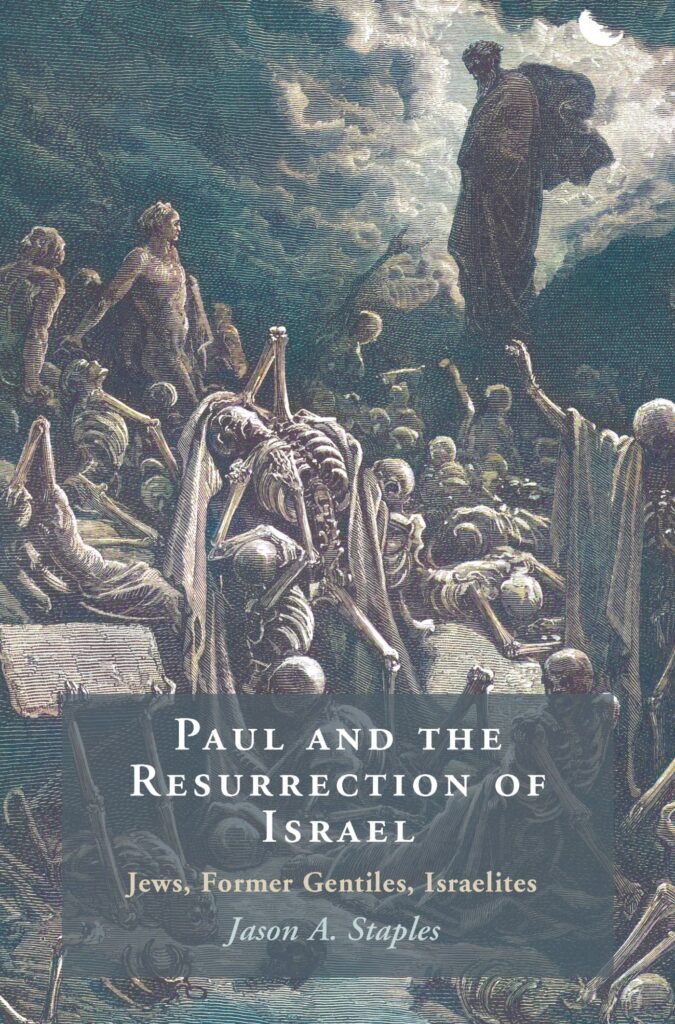
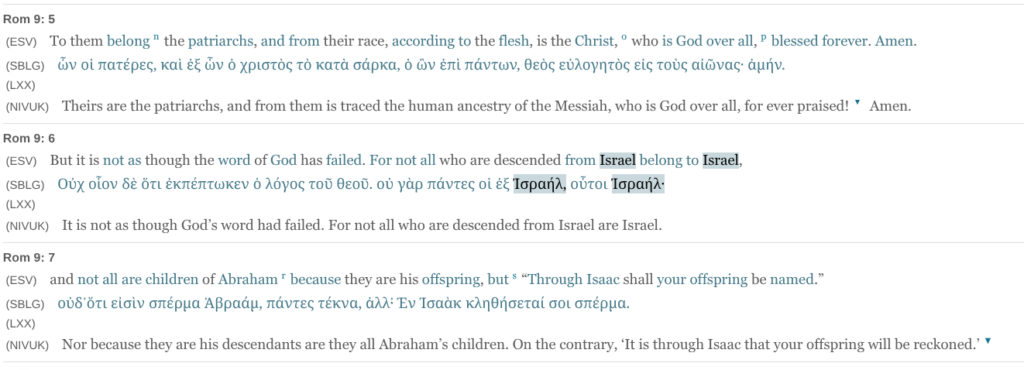
OK still working on all of this (Rom. 9-11) and why Paul uses the term ‘Jew’ in most of his writings but then seldom uses ‘Jew’ (but uses Israel) in those chapters in Romans… leaning heavily on Jason Staples’ writings and hopefully will get a pdf out before we leave Sicily. In popular understanding ‘Jew ‘ and ‘Israel’ are synonymous and used simply for variation… however it does seem to stack up in ‘second temple’ writings nor in the NT. (This is my little break in the days from concentrating on the land here…) A lot to cover yet but before I get too deep into it all two Scriptures are with me ‘Are you going to restore the kingdom to Israel‘ (not to us Jews) and then one of my ‘central’ verses from the Pauline writings,

Christ redeemed us from the curse of the law by becoming a curse for us—for it is written, “Cursed is everyone who hangs on a tree” in order that in Christ Jesus the blessing of Abraham might come to the gentiles, so that we might receive the promise of the Spirit through faith (Gal 3: 12,14).

I think Paul does not go to penal substitution at any point in his writings and also we have to work with a Jew / Gentile progression (so common in Romans ‘to the Jew first then the Greeks). In these verses in Gal. 3 he presents the cross as the answer to a Jewish problem (and I use ‘Jew’ here not ‘Israel’ as his language in the previous chapter has been Jew / Gentile and then he follows in this chapter with ‘neither Jew nor Greek’. This is not to suggest that the cross is not universal in scope – it certainly is and has also to be coupled to the resurrection. Greek / Gentile I do think are more or less synonymous – the Graeco-Roman empire. Outside of the Roman world are the Barbarians, Scythians and the like!).

The curse is the curse of the law so Paul is tightly focused on the Jewish problem – he became a curse for us (usually in his tight arguments ‘us’ is us ‘Jews’. The redeeming nation is under a curse. Far from being blessed as Abraham’s seed and hence a blessing to the nations, thus they are unable to fulfil being who they were called to be for the ‘world’ / nations. Hence no hope for the world until deliverance is brought to the ‘chosen’ nation. Jesus is Israel’s Messiah. Hence it follows if ‘in Messiah’ they are the descendants of Abraham. ‘All’ who are in Messiah! Jews are not alone at being descendants of Abraham – we have to think ‘Israel’ (12 tribes, not 1), hence the change of language in Rom. 9-11.

‘Redeemed us’ so that Abraham’s blessings might not be locked up but flow to the gentiles (language ‘us’ and ‘gentiles / nations’). And then comes something that I have missed in the past as it seems to be even more tightly put… so that we might receive the promise of the Spirit (through faith). The ‘we’ language is used again. I understood that to be an inclusive ‘we’ (= ‘all’) but am being pushed to understand that Paul has in mind the promised Holy Spirit who will write the torah on the heart (OT hope particularly in Jeremiah and Ezekiel, with new covenant language applied to both the house of Israel and the house of Judah). This is for all the ‘us’ – wider than Jews but defined by who are descendants of Israel. indeed to ‘us’ (those of the house of Israel). I think this is what is expanded in Rom. 9-11.

Galatians ch. 4 (written to Gentiles, or if not exclusively to them, for them) is where Paul pulls together who are the children / descendants of Abraham. Beginning with the last verse of ch. 3: And if you belong to Christ, then you are Abraham’s offspring, heirs according to the promise. He then continues in ch. 4,

And because you are children, God has sent the Spirit of his Son into our hearts, crying, “Abba! Father!” (Gal. 4:6).
Now you, my brothers and sisters, are children of the promise, like Isaac (Gal.4:28).

Remove the curse, the blessings can flow beyond any former boundary, for within that flow the promise to Israel can be fulfilled. There is a sequence: death in Jerusalem to unlock / break the curse open resulting in (Abrahamic) blessings to the nations and within that flow Israel also receives all that was promised – not because of ethnicity, but through faith. Far from there being some ‘end-time’ timetable, the cross is the end and the beginning, and thus (to jump to where I will eventually get to when I write) in that way all Israel will be saved. A process has been under way since that first Easter as the invitation has gone out to respond in faith to Messiah. For there is no other name under heaven by which salvation comes. No patriarch, no other god – covering both ‘to the Jew first, also to the Greek’.


I appreciate this has been a little tight with a lot of ‘what on earth do you mean by / what about this Scripture etc’… I am in process but wanted to get some of this perspective in this form ere too long.

Ethics

Well that is a title! An ethics course all sorted in one short post – thus proving that miracles are for today. Cessationism has ceased as of now (had to look up how to spell that word… I always have difficulty with such words… also Calvinism or Reformed – just don’t know why).

How we should behave. That is important as our faith runs much deeper than what we believe and although the books like to separate justification from sanctification that is bit like dissecting the frog to see how it functions, but afterwards the frog just does not work.

The ethics of the NT are relational, eschatological, and redemptive. Or so I think.

Relational:

[S]o we, who are many, are one body in Christ, and individually we are members one of another (Rom. 12:5).
[Gifts] for the common good (1 Cor. 12).
So then, putting away falsehood, let each of you speak the truth with your neighbor, for we are members of one another (Ephes. 4:25).

Strong words indeed. And the wording goes beyond ‘you are members of a body’ but ‘of one another’. This is not being added to an organisation and even goes beyond being added to a living fellowship where we have something in common. We are – whether we like it or not – intrinsically part of each other, and Paul suggests that we are Christ (clumsy language by the aforementioned apostle?). Well he is not at any level of confusion, no more than the one who spoke from heaven saying that Paul was persecuting him (he does not say why are you persecuting my followers). There is Jesus the resurrected Messiah but those who have responded are so ‘in Messiah’ that they are intrinsically connected to each other. This depth of relational bond is deep and seems to shape Paul’s ‘household code’ instructions. He does not resort to hierarchy (submit to the one above) but to mutual submission to one another ‘in the fear of Christ’ – a voluntary and reciprocal relationship to one another.

The ethics are eschatological: not based simply on a future event when we will be assessed but acknowledging that ‘new creation’ is here. It affects our sight of everyone, all former (‘fallen’ creation) categories are irrelevant and gone (2 Cor. 5:16). And the ‘new creation’ is one of openness, thus it is not a case of ‘not lying’ but of not leaving a falsehood (Eph. 4:25, as far as is possible, we cannot take responsibility for what a person hears but we can go a long way so as they receive a true picture).

The ethics of the kingdom do not bring things back to ‘neutral’ but go from the negative to the positive,

Those who steal must give up stealing; rather, let them labor, doing good work with their own hands, so as to have something to share with the needy (Ephes. 4:25).

To steal is to take what is not ours (the negative) and the response is to stop stealing (the neutral position) so as to give (giving what is theirs… thus a complete shift beyond the ‘stopping’ of an action.

Redemptive. There are times that ‘the lesser of two evils’ is used thus acknowledging that we live in a challenging world. I understand what that phrase means but I think we should reshape it to be ‘make the most redemptive choice possible’. I think God does this continually. When eggs are scrambled it is not possible to put them back in their shells and life can be like that. Messed up and no way to go ‘back’ to the pre-mess state. God is the God of the future… so where to from here. Redemptive choices are of that order. We find ourselves here, what can be done to move to a better place, acknowledging it is not going to be perfect place.

So there you have it my very inadequate ethics class!

A veritable company of saints

I saw a video clip yesterday of an apologist being asked about Matt. 27:51-53. ‘Do you believe that is literal?’ was the question.

At that moment the curtain of the temple was torn in two, from top to bottom. The earth shook, and the rocks were split. The tombs also were opened, and many bodies of the saints who had fallen asleep were raised. After his resurrection they came out of the tombs and entered the holy city and appeared to many.

He replied ‘maybe apocalyptic language, maybe literal – I don’t know’. He was then a bit on the back foot and was critiqued for having made an exhaustive enquiry and defence for the literal resurrection of Jesus, but claimed not to know what Matthew intended with these verses and the ‘resurrection’ of these saints. No problem with being agnostic over biblical texts – there are so many that I have not got a clue about!

The problem with the apocalyptic language answer is the context is not apocalyptic but the culmination of prophetic Scripture, with the list of ‘and… and…and’. If apocalyptic then maybe the crucifixion (not to mention the later resurrection) might also not be literal but simply a way of describing the impact of the life Jesus of Nazareth. So Matthew gives us a description of what literally took place – even though strange.

Back tracking for a moment. Between life as we experience it ending (living in the land of the dying) and the parousia the Scriptures can be read in different ways as to the ‘existence’ of those who have passed away. The consistent hope in Scripture is not that of ‘going to heaven when I die’ (very Platonic) but that at the ultimate great reversal those who have been judged righteous will be resurrected. Scripture does not answer our questions as it comes with a different world view. Belief in the resurrection of the dead becomes the prominent Jewish belief (not so for the Sadduccees) as it is the answer to the question about God’s faithfulness. If the renewal of all things is ‘here’ then those alive at that time would be rewarded… but a question remained: what about those not ‘here’ for they have died before that time? Answer – God will raise them up, and then the NT makes clear that those of us who are alive will not enter that time simply as we are but our bodies will be transformed. Resurrection and transformation then were the belief that answered the ‘problem’ of those who have died.

[It is hard to make out what is believed about the ‘interim state’ – Scriptures such as Paul’s ‘I am hard pressed between the two: my desire is to depart and be with Christ, for that is far better’ could simply be that or pulling on a Jewish tradition of the reward for the martyrs (comes through also in Revelation 20 and the resurrection of the martyrs). Bottom line is that those who die in Christ are in Christ and I strongly lean to a non-resurrected, but conscious existence with Christ’].

One aspect that is often overlooked in the strange (and unique) passage in Matthew is that of verse 53: ‘after his resurrection’. They are not resurrected prior to Jesus – their tombs are opened at the hour of crucifixion (presumably the effect of the earthquake) – but the resurrection is after Jesus comes forth. Not metaphorical, nor apocalyptic for we then have the same historical language used of Jesus – they appeared to many.

Resurrection ‘ahead’ of the time-line! The resurrection of Jesus is intensely physical; it is not only far beyond ‘he is alive’ to ‘you cannot find his body’… but the effects of the resurrection are physical to such a level that this creation will be renewed and it has left an impress on time so that there can be inbreakings of ‘end-time / eschatological’ events out of expected time sequence. This aligns post resurrection-time (the time we live in) with incarnational time – now there is a thought!

An update

Been a while since I wrote about what we are up to in Sicily. I have page of notes that come close to boring me so not about to blah on for ever. I did write a newsletter today – if you don’t receive it then here is a link:
https://mailchi.mp/543da0e94eaf/january-2026-update
It will hopefully give a feel to date. We continue in Avola for this month.

The rhyme we call history

History keeps repeating and we don’t learn or as Mark Twain said

History Doesn’t Repeat Itself, but It Often Rhymes.

We start another year – what does it hold? For us personally or big question ‘what does it hold globally?’ The book The Fourth Turning might have a focus on the USA and so its analysis of the rhyming of history might be looking at too short a period of time to rely on totally but it would indicate that we are overdue / coming to a time in the very near future when war will break out. Can we break the rhyme?

Occasionally Gayle has a dream where she meets a world leader and dialogues with them. This morning I was typing and she woke up with ‘I have just been with…’ In the dream she was advocating for another way and asked the leader ‘so when will war end’… ‘After this one there will be peace’. The leader was intent on being seen as a peacemaker but insisted that love is never the way and ‘this war’ will be necessary to bring peace.

OUCH!!!!

Jesus came at the fullness of time – not necessarily the most evil of times but at a time when the Greek / Gentile world has no hope and the nation that was called to be the redemptive nation was under its own curse. No hope for the world. And the Roman Empire was the archetype of, and for, all empires. As I have written before the Pax Romana was based on war. Building its temple to peace (Pax) on the field dedicated to the god of war (Mars). Peace for all who comply and have been conquered. And peace motivated to bring the resources of those territories conquered back to the centre (thank God we have the book of Revelation!!).

But can we see something different and the rhyme be broken?

We were in Augusta a military city in Sicily with a street that many cities have within them – a street called Via Garibaldi, but unlike the others we have seen it had a strap line: Eroe del Risorgimento: the hero! Does war bring peace? I appreciate that we live in a fallen world and there are horrendous choices that leaders have to make… maybe(???) war is a choice at times, but we have to measure everything against is it the most redemptive choice that can be made (my governing principle with regard to ethical choices).

Is there a hope? I am a big European advocate and am very grateful for the extensive time that John & Yvonne Pressdee spent praying over the numerous WWI & WWII battle field sites before the end of the previous century. Prayer and forgiveness can affect the rhyme.

Europe, a continent that many despair over. A continent that needs so much to turn within it… but maybe it can change the rhyme. Otherwise the new rising power will look to take its ‘rebellious island’ and the diminishing power that has inherited the Western imperial spirit (from Rome) will seek to take what it needs to take… but simply so as the resources will flow in the direction to the centre.

So I say ‘come on Europe… and little Sicily be a catalyst – you are in the centre of ‘middle earth’.

I wrote in a WhatsApp group a few days ago:

One aspect that we carry with us is a) we could be misled totally even coming to Sicily and b) our interpretation as we bumble along could be so far off… but hey ho!!!

So let’s push on with all the ‘hey ho’s’ that we can!!

Perspectives