In the valley

I have always veered on the side of ‘rebuke everything, don’t accept it, give it no room and be positive’. Jude (daughter) mocks me saying that as kids they were simply never allowed to be sick! I am glad for being that stubborn and equally glad that over the years literally many hundreds have found healing. One of the most unusual healings was a woman who kept looking at her hands. I was not sure what was causing her the amazement, then I found out that she was staring in amazement as she had for the first time finger prints. A remarkable sign, going beyond something physical – a restoration of identity.

As a convinced charismatic I am glad to push for healing and the intervention of heaven. There are many reasons for that – the Scriptures give an expectation for this; Paul – if his thorn in the flesh was some kind of physical impairment – pushed for intervention and a reversal UNTIL he heard God speak into the situation. That voice was so real he does not use a simple past tense but one that indicates what he heard is still audible when he wrote years later. He did not need to push forward to hear God say ‘pray for a reversal’. He went for the positive and only a word from heaven could cause him to let go of that. When there was a non-answer (twice) he pushed again. It was not ‘non-healing’ that stopped him praying, but a word from God. All the above helps me be ready to press for the intervention and not be put off when something does not shift as I wish.

However… and the however is not to cancel out the previous perspective but to add to it. In so pushing for the breakthrough we can miss out on the journey. God will be to us something during the process when there is no answer (as we wish) that he will not be when the answer (as we wish) comes. Here is the tension, if we so focus on the outcome we can miss out.

When we are through the situation God is our deliverer and thankfully there is a testimony. But when we are in it, we find a God who shows up in the midst of our inadequacy, who does not show up with the victorious ones, but alongside the conflicted, and sometimes despairing ones. We all handle those times of frustration differently. I know of those who will resort to sounding off with a good (or bad?) handful of expletives thrown in. For those people, they can discover a God who comes alongside – and this is not a theological perspective – and is happy not simply to listen to us but to swear alongside us too! The God we find in Jesus is REAL, and ‘moved into our neighbourhood’.

There is a testimony that we love to hear – the ‘God healed me, set me free’ kind of testimony. There is also the testimony that goes along the lines of ‘I am not through this, I am despairing, I am so frustrated, I don’t always feel good about myself… but I can tell you about an intimacy with the God who gets as frustrated as I do.’ A kind of paraphrase of Heb. 11, or a reflection of Psalm 23:

Even though I walk
through the darkest valley,
I will fear no evil,
for you are with me;
your rod and your staff,
they comfort me.

God present in the valley not simply showing up when we are out of it. To be out is wonderful, but to find God in is permanent and humbling. One might just leave us knowing the acts of God, the other goes so much deeper.

Luke 21 – the pestilence

Perhaps I should not have been surprised but I saw a number of articles on the web tying together Jesus’ words in Luke 21: 11 concerning pestilence and the coronavirus. But NO!!!

It would be such a stretch to get to the idea that Jesus was prophesying the virus and thus indicating that we are in the ‘end times’. I even saw one post that said these they had expected these events to be in the first 31/2 years of the 7 year period of tribulation, but were happening now. WOW… (Where do these people get the time from to think all of that… read a little, and only a little history to see where these ideas come from.)

Before having a quick look at Luke 21 here is what I consider is the framework we have to be looking at. The Jewish ‘one-horizon’ view shifts to multiple horizons in the New Testament. The Jewish one horizon view was simply that God will through the Messiah intervene, subduing all his (and therefore Israel’s enemies) causing the great reversal to take place. (Some views had two Messiahs, others saw the intervention without a Messiah – the ‘Jewish’ view is really the Jewish views.)

There were inevitable unforeseen events by those who shared that view. We see that reflected in the road to Emmaus discourse. ‘Did you not understand that first the Son of Man must suffer…?’ being Jesus rhetorical question to the married couple. Fresh horizons had appeared and others were yet to appear. The one horizon was proving inaccurate, multiple horizons needed to be seen.

We might separate out the immediate horizons of the Cross, Burial, Resurrection and Pentecost or we can put them together. Together they effectively make the first horizon. Jesus inaugurated a new day post-his forty days in the wilderness, opening up his earthly ministry, and post-cross another 40 day period of transition to the post-Pentecost ministry of the body of Christ. So the first unseen horizon was that of Easter / Pentecost. Not surprising as a common Jewish view was that when the great reversal took place it would be marked by the resurrection of the dead and an outpouring of the Spirit.

(A sidenote the 40 day periods and the 40 year period from Jesus predictions in Luke 21 to the fall of Jerusalem are tied to the Exodus period to the entry to the land. Jesus beginning his 40 days with his baptism, his death being an ‘exodus’ and all paving the way for the entry to the land / lands.)

The second horizon was that of the fall of Jerusalem within a generation, and Jesus clearly prophesied that. (I also consider that Paul in 2 Thessalonians 2 is referring to this event.) Such a dramatic and traumatic end of an era. The religious centre, the hope for the nations destroyed, and it marks a major cutting off between Jewish believers in Jesus and Jewish non-believers in Jesus. The followers of Christ abandoned Jerusalem understanding that was exactly what Jesus instructed them to do, leaving behind many residents to the brutal reprisals of Rome, which included many punished with crucifixion.

The third horizon I consider lies future. The parousia of Jesus, the time of the resurrection, final judgement and such events. For me only the book of Revelation is written post-the Fall of Jerusalem (AD70), and it is not obsessed with prophesying events to come but with unveiling the reality of our warfare, of what we are asking to change every time we pray ‘let your kingdom (basileia) come’. The book and that ongoing disciples’ prayer is set in the context of the Empire (basileia) of Rome.

So to Jesus and his words in Luke 21. The immediate context is of the Temple that Jesus said would be utterly destroyed resulting in the question of ‘when will these things take place?’ (21:7). The time frame was future for them, but past for us. Into that time frame – the next 40 years from the time of speaking – Jesus spoke of great traumas and of famines and pestilences. The decades that followed culminating in the brutal assault of Jerusalem (66-70AD) with mass crucifixions, cannibalism inside the city, the appearance of false Messiahs etc., were horrendous. Horrendous within Israel and with a sharp focus on Jerusalem but also deeply traumatic in the wider Imperial world. 68AD saw the year of the four emperors, as civil war broke out, and there seems to be some allusion to that in Revelation with the mortal wound to the head of the beast, but the wonder from the people that the beast survived. (Babylon’s cry, and the tell-tell sign that any institution is embracing Babylon’s values, are that ‘we will survive’ and at any cost, that ‘we will always have children’ but in the process eats the life of the children.)

In Luke 21 Jesus speaks to ‘you‘, speaks of being brought before synagogues, and decisively about Jerusalem being surrounded by armies, and that they will need to flee from the city and from Judea, and that the wrath will come on ‘these people’. Everything is geo-, ethnic- and temporal related. Josephus and other contemporary writers bear out the horrendous nature of those years.

In that context the sign will be visible that the Son of Man will come in the clouds – words spoken by Jesus already to the High Priest that he would personally see that event. This is not some far off future reference, but takes up the Daniel 7 imagery of one like a son of Man coming to the ancient of Days. The kingdom of God is in his hands. The hope for the future is not in a holy place, nor a holy land but in the hands of Jesus of Nazareth, the crucified one, is the resurrected vindicated One. To believe that is the continual challenge for us at all times as we now live in the period of time between the second and third horizon, and for us, as for every post-AD70 generation the Revelation 4, 5 challenge remain central, where Jesus came to the One seated on the throne as only the Lamb of God was able to open the seals (human destiny).

So I guess it is no surprise given the above approach that I do not see any reference to the coronavirus in Scripture. Scripture is ever so helpful in not giving us the future, but in giving us a future hope that cannot be shaken.

Is the coronavirus a sign of the end times? For sure. It is a sign that we have been in the end times ever since Jesus poured out from on high the Spirit, that this whole world is groaning waiting for liberation from its bondage to decay. So it is a sign in a very general sense, but not in a specific way. God might well speak through the current events, and I am sure he is. What is he saying? Our God is always speaking, we might hear different things but they must all focus on his love for us and for the world, that he has not abandoned us… and therefore the call is there to love and not to abandon others. Let your kingdom come.

Sacred space – where?

The ‘Holy Place’, the ‘Holy Land’. Well known phrases but ones that should not go unchallenged. There is an interesting early church servant called Stephen. Acts 6 says of him:

Now Stephen, a man full of God’s grace and power, performed great wonders and signs among the people. 

His wisdom did not go down to well with Jews of Cyrene, Alexandria, and those from the provinces of Cilicia and Asia (Acts 6:9) who arranged for false accusations to be made. I consider that one of the marks of jealousy (root: fear of losing one’s place) is to spread rumours and allow half-truths to remain unchallenged. The end result was that he was brought before the Sanhedrin.

His speech is most interesting. Faced with the accusation that he was claiming that Jesus would destroy the Temple and change the customs of Moses, he embarks on a history lesson. A story well recited by all present, but leading somewhere. Let me pull a few things out, before we get to the point being driven home that he was addressing a

stiff-necked people! Your hearts and ears are still uncircumcised. You are just like your ancestors: You always resist the Holy Spirit!

Throughout the speech there are geographical references, and they are references to where God was at work. We have

  • God appeared to Abraham while he was in Mesopotamia (7:2)
  • Later, though with the promise of the land, Abraham did not have even enough ground to put his foot on (7:5).
  • God was with Joseph in Egypt (7:9), paving the way for the people to live in Egypt.
  • Bodies were brought back to be buried (7:16), but to Shechem now located in the despised territory of the Samaritans!
  • Along comes Moses educated in all the wisdom of Egypt (7:22).
  • It was in Midian in the desert near Mount Sinai (7:30) that the burning bush took place. A place described by God as holy, yet an unknown place that could not be revisited as a shrine. A mobile location.
  • Moses led them out and “in Egypt, at the Red Sea and for forty years in the desert” (7:36) miraculous wonders were performed.

Startling references to where God was at work – outside Israel, outside the so-called holy land. Very reminiscent of Jesus’ reflections in his home town (Lk. 4) of where (outside Israel) and to whom (non-Jews) God was active! This backdrop sets Stephen up to push the point home. He goes for the Temple.

The Most High does not live in houses made by human hands (7:48).

By contrast the Tabernacle cut across ancient and modern views of sacred space. Shrines and temples are almost invariably built around a theophany, a space considered sacred, the Tabernacle though was mobile. The sacredness had to do with the “pattern he [Moses] had seen” (7.44) and the teaching value that resulted, not with its location.

The end result was two-fold: first the vision Stephen had of the Son of Man at the right of God, surely a clear reference to the Son of Man who came to the Ancient of Days on the clouds of heaven (Dan. 7; hence I do not read that as a reference to the ‘second coming’ of Jesus, and certainly not when Jesus spoke of the sign of the reality being visible to that generation.). The Son of Man (Jesus) was given the authority and the kingdom. Holy space is where there is an opening for Jesus, not a building designated as a sanctuary. The sanctuaries of God are to be planted throughout the earth.

The second ramification of Stephen’s speech was that Stephen was dragged out of the city and stoned.

The ongoing ramification? Cloaks were laid at the approving feet of Paul. But later the mantle of Stephen would rest on him. The persecutor of the ‘Stephens’ became the one who no longer built his security around his ethnic nor geographical identity, and became as radical as Stephen was. And for us? Defend sacred space or become vehicles that open up sacred space.

The Peter response

A couple of posts ago I mentioned that it is possible to fall into the ‘Peter trap’ once we have revelation. So maybe just a quick expansion on this. From Matthew 16 we get this inter-change:

Simon Peter answered, “You are the Messiah, the Son of the living God.”
Jesus replied, “Blessed are you, Simon son of Jonah, for this was not revealed to you by flesh and blood, but by my Father in heaven. And I tell you that you are Peter, and on this rock I will build my church, and the gates of Hades will not overcome it. I will give you the keys of the kingdom of heaven; whatever you bind on earth will be bound in heaven, and whatever you loose on earth will be loosed in heaven.” Then he ordered his disciples not to tell anyone that he was the Messiah.

From that time on Jesus began to explain to his disciples that he must go to Jerusalem and suffer many things at the hands of the elders, the chief priests and the teachers of the law, and that he must be killed and on the third day and be raised to life.

Peter took him aside and began to rebuke him. “Never, Lord!” he said. “This shall never happen to you!”

Jesus turned and said to Peter, “Get behind me, Satan!

Reasonably powerful!! We have some:

  • startling revelation
  • followed by Jesus explaining the path ahead
  • provoking Peter to ‘correct’ Jesus’ prediction
  • resulting in an (almost) name change for Peter!

The revelation was accurate, and Jesus proclaimed that it was not based on some human element but that it had come from heaven. Top marks Peter! Revelation comes from the future.

Jesus who is living, not to preserve his life, but to follow the path that is laid out explains where this will lead, but Peter takes exception to this explanation. I consider that on the basis of his revelation he knows he needs to correct Jesus. I don’t this was because of arrogance but because the revelation has brought to Peter an expectation. Jesus is the Messiah (revelation from the future) meets his understanding, his expectation that is shaped by his journey to date. Peter is seeking to keep Jesus on track! Expectation meets revelation and is informed by the journey thus far.

The general expectation was that the Messiah would deliver a people from oppression. The expectation was not of the death of the Messiah but of the overcoming of all opposition by the Messiah. (This is why I do not consider that Judas understood the betrayal as betrayal, but as having the two-fold benefit of personal financial reward and enabling the mission of Jesus to be truly successful.)

I am of the opinion that there is almost certainly a lot of prophetic revelation that proclaims a wonderful future and of the triumph of the Gospel, but that it is inevitably met by an expectation that will not be fulfilled. The path is always ‘first to suffer then glory’ as there are three words tied together in Scripture: suffer – time – glory.

If our expectation is the cross as symbol by which we conquer we will be shocked and disappointed by the path ahead.

We can easily fall, and normally do fall, into the Peter trap. That is the one where we verbalise it all, and it seems we (like Peter) look pretty stupid as the future unfolds. But at least in verbalising it we can be corrected. If we push it further and allow our own personal weakness to come strongly into the mix we might go beyond the Peter syndrome to the Judas one. Best avoided!

Demonic power accessing the cross

So the answer was ‘yes’!

Of that I am convinced, just not quite sure how to get there. However, I think that if we use a symbol such as a flag there might be power in what it is calling us to, but if we use the (false) cross there is another added dimension.

The demonic realm love to invade human space as that is the connecting point of heaven and earth. Humanity, made in the image of God is very key to the demonic strategy. Once that space is invaded a process of dehumanising can take place, so that as that increases in scope the connection between heaven and earth decreases. This is why I see sin primarily not as ‘law-breaking’ and subsequent guilt but as falling from the glory of being human.

The demonic then want to invade and pervert every access point between heaven and earth, and it is the cross that in time makes that access point eternal. It is no surprise then that the cross is a focal point for such an invasion, not the cross that becomes the pathway to life, but the cross that oppresses all enemies, the cross as symbol through which we conquer by power.

In all situations to change the meaning of something is key in nullifying the original meaning. This happens all the time organisationally. When a new challenging message comes, the institution seeks first to understand the new language, then the nature of institutional power is that the language gets converted to mean something different to what was the initial intended meaning.

I consider something similar happens with the change of meaning in the cross. (Maybe we could also consider the shift in Israel from a call to the nations as servant, to being superior to the nations demonising them in the process, but in reality just opening themselves up to the demonic!) By changing the meaning probably what takes places is an emptying of the symbol of the cross of its transforming power. It is not then that by pulling on the symbol of the cross that God is pulled in to serve evil, but by perverting the symbol of the cross, there is space for the advance of evil at a frightening level. In the same way that the power of sin (singular) dehumanises, so the perversion of the cross de-crosses the true cross.

Redemption re-humanises. But to do so there has to be a repentance. Maybe we too can re-cross the cross, but through the path of repentance. Confessing the wrong allegiance to power might be a start.

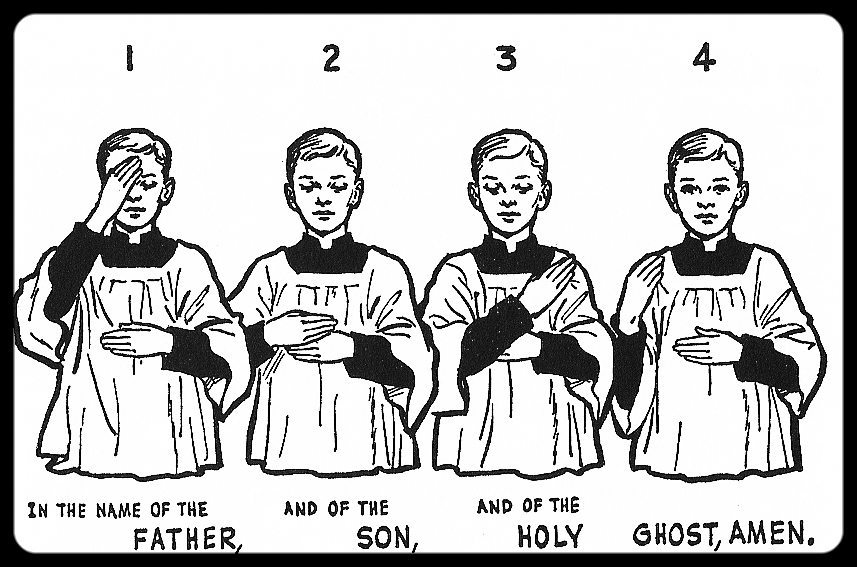
I often follow the Catholic (and early church) practice of crossing myself, but normally only when passing our local church of San Lorenzo. It is a reminder that Jesus asked that I carry the cross. I am happy to do so outside the building dedicated to the one who on August 10, 258 was burnt at the stake in Rome by command of the emperor. He seemed to be committed to the implications of picking up the cross and following Jesus.

There are two crosses. The false one is here to pervert and thus seriously remove the reality of the true cross being the bridge between heaven and earth. Reduce but can never obliterate. If we can recover the true cross, be marked by it, the ugliness of oppressive power will be revealed, the tie between religion and politics will be broken, so that the followers of Jesus can help hold space where a politics (simply meaning the shaping of society) of love can grow. There is a new world we are called to see as a result of the cross of Jesus, and as embrace the cross a new world that is to become ever increasingly visible.

The cross – accessing power

Religion and political power. Now there is a combination that is lethal. Jesus as a prophet went to Jerusalem to die, stating that no prophet can die outside of Jerusalem. Jerusalem should have been a (fallen) symbol of a location for the nations, but we read that the religious verdict from the centre was that it was better he died or the supra-national power of Rome would come and take away their religious privileges.

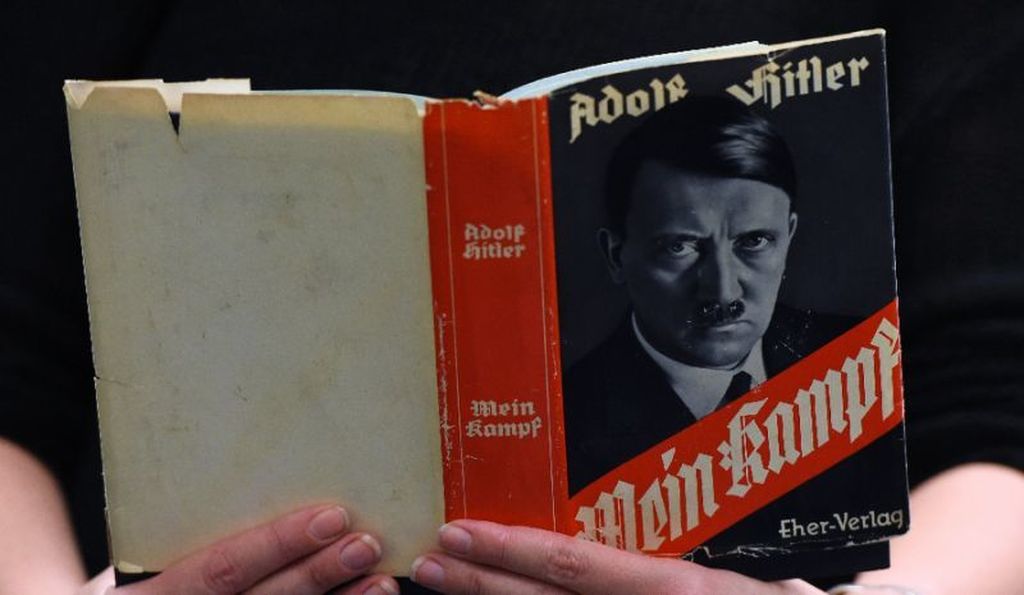
Religious privilege! How we love that, hence the party that espouses family values, can pull our vote even if on other issues such as a generous immigration policy they are vehemently opposed to. We are in dangerous times, not dangerous primarily because of terrorism, nor the coronavirus, but over the compromise of our faith. In Mein Kampf, Hitler wrote at one point:

Hence today I believe that I am acting in accordance with the will of the Almighty Creator.

Policies that were in line with God!

I do consider that we are at a very dangerous time of history. I am deeply grateful for the prophetic prayer that has opened space, but we can SOOOO easily fall into the Peter trap. We flow from revelation to rebuking Jesus for the path ahead that he saw. There will be no delivery into the hands of our enemies (the cross) but they will be delivered into our hands (the false cross).

Just as Jesus went to Jerusalem to end the journey of the prophets to that place of death, so Paul ends in Rome. No record of his death there, as it is not about his death, but about our death. Jesus goes to Jerusalem to break the alignment of politics and religion, so leaving Paul pronouncing the Gospel in Rome turning everything on its head.

Many are now beginning to use the cross – even in the former stronghold of atheism, Putin is pulling on religion and the cross. So to the question…

Is there a (demonic) power released when the (false) cross is pulled on.

And to the answer: YES.

End of post!

Questions about the cross

This post is not an acknowledgement that we will never fully fathom the cross, that I take for granted. I am musing concerning questions that have troubled me for a while. Questions such as ‘are there two crosses?’ and ‘by pulling on the cross is power released?’

I am sure there are two crosses. If we go back to the Roman culture the cross was an ugly reality. A public statement visible throughout the Imperial world. Reserved for rebels against the system it was a frightening reminder that peace had been established through violent force and would be maintained in the same way. Prior to his own crucifixion Jesus instructed his followers to pick up their cross and follow him. Pick up the instrument of torture and death to make the job of the enemy even easier! We use the phrase ‘this is my cross to bear’ but it no way comes close to doing justice to bearing our cross. The cross was not the symbol of victory over the enemy, but the pathway to a brutal death inflicted by the enemy.

Fast forward and we record the words of revelation given to Constantine – in this sign (of the cross) you will conquer. Of course by faith the cross is the sign by which we conquer, by faith we see that all powers were stripped and left naked and powerless through the cross of Jesus, but to attach the sign of the cross to military conquest? I can only conclude that to do so is to use the symbol in a way that is a perversion. There are indeed two crosses.

A while back our good friend Dani Mateo did a dance on the very place where we prayed for the removal of Franco’s body. At the ‘valle de los caidos’ he did a ‘baile de los caidos’ (‘b’ and ‘v’ have virtually the same sound in Spanish, so he did a crazy ‘dance of the valley of the fallen’). So many were incensed as it was deemed sacrilegious to do so in such a place, a place marked by the cross. A priest wrote an open letter in reply to the reaction and the ensuing court case that what was done was right as there are two crosses and the one over Franco’s tomb honouring the victor of the Civil War could not be seen as the cross of Jesus. He encouraged Dani to continue! (A little note here… we have never met Dani, he is no more a friend than the 5 million followers I have on FaceBook (as if!) but we laugh whenever he is on TV.)

So two crosses – that question I am happy with the conclusion that there are indeed two crosses, and have to acknowledge every time I have used my ‘faith’ to be above anyone else I am not aligning myself to the true cross, even when I claim truth is on my side.

The second question is a tougher one. When I use the (false) cross am I pulling on power that I do not access otherwise? That question I will post on tomorrow as it is a huge question.

Glory in the desert

Trinitarian theology. Even the creeds have not quite done it for me. Never been great at this aspect of theology… Maybe I am more of a tri-theist (heretic!) than I like to admit; maybe more of a let’s just simplify it all and Jesus is God, touches of the old ‘Oneness’ theology there. Ontological trinity, economic trinity… OK I am just about settled on the social trinitarian model.

The Trinity is important for the ‘unity amidst diversity’, the diversity being both difference / distinctiveness but certainly not separateness; and the unity not denying the distinctiveness. Anyway as I wrote at the start, never been too good at this aspect of theology.

So I need to move on as I am such an expert in almost every other realm – as if!! But moving on. The Trinity certainly somehow is a pattern for humanity, after all humanity is in the image of the Tri-une God. Unity and diversity.

The glory of God is not simply something other, but also relates to humanness – true humanness, that true humanness that to a large degree evades us all, that is tarnished because of sin, for ‘we have all fallen short of the glory of God’. I essentially understand this to mean that the essence of sin is to fail to be truly human, to fail to reflect and represent God. Hence only Jesus is truly human, the one in whose face was revealed the glory of God, full of grace and truth.

Jesus remarkably said that the glory he had received he had given to the disciples (I think therefore this maybe also includes us?). And he gave it so that:

The glory that you have given me I have given to them, that they may be one even as we are one (John 17: 22).

Glory is not a reward for being one, it is the essential means by which we will be one. We do not work on our unity and then God says ‘good people have some glory’… We need his glory to be one, and s/he has given that glory to us, whether we are one or not.

If we have the glory of God, even if that glory is veiled, what does that gift look like? And one more ‘if’ clause… if glory is tied to humanity, of being truly human, we have to know that more glory is revealed when I am truly myself, not in some individualistic self-attainment state, but in a fullness of relationship. Unity then is truly possible the more I am distinct.

A lot of unity is an expression of uniformity. We are already alike and so more or less get on. Glory releases difference, distinctiveness, and so glory can only be seen as difference becomes visible. To pull into a narrow base reduces the visibility of glory.

So back up to the Trinity. I veer toward Tri-theism and to Oneness. Tri-theism because Jesus is not the Father and not the Spirit (etc…) and Oneness because Jesus is the fullness of revelation of the Trinitarian God.

Now I really need to get back on track here or this post will be truly drifting off into the cyber world. Glory, humanity, social relationships. Yes the need is for diversity, for distinctiveness in the context of unity. Or to tie this down, we need a context in which unity is found. That context needs to be that of ‘the whole of creation’. In the beginning God – God is not creation – but the context in which s/he is described, discovered and appears is that of the whole of creation, for in the beginning God created the heavens and the earth.

The diversity of humanity is essential. No person, no group can be the revelation of God in the earth, but together there is so much potential. It is not simply ‘no size fits all’ when we look at church, it is that every aspect, of the ekklesia being the ekklesia that will reveal glory.

Unity, that they may be one, can only be possible in the context of a wholeistic desire and working toward transformation. Unity is not a religious framework but a political one, the tragedy being that if the followers of Jesus do not get this where can we go? The body of Christ should be at the forefront of promoting diversity within the context of a whole world creational perspective. From there unity is a possibility. Take away the context and uniformity and smallness is possible; glory defined in a religious way.

All the above can be summed up in:

The multiplicity of the small and
the richness of diversity.

God save us from the next ‘big thing’; save us from ‘humanity has to be created in my image’.

And save us so that we can become and in becoming open up possibilities that there will be multiple becomings all around us. In the desert place we look to see the glory of God arise. Hope in the desert – oh yes.

Leviticus… just read!

OK… so I don’t really enjoy reading Leviticus. Plain hard work and tedious, but that’s where I am at the mo. Laws, laws and more laws. Obscure laws – don’t plant two types of seed in the field; don’t wear clothing made of two types of material. Really?

OT law was essentially unitary. Previous attempts to divide them down into ‘moral’, ‘ceremonial’ and ‘judicial / civil’ might be semi-helpful, but in reality the law was one. Debate might be over, as Jesus was asked, what is the greatest commandment, but they were all commandments, and as such marked out the people from other peoples. They were the boundary lines that marked the people, and the contrast is not between law and grace, but between law and Spirit for the followers of Christ. ‘These are the children of God – the ones led by the Spirit’, was a Pauline perspective, in contrast to how one knew that the person was a practising Jew – they were the ones led by the law. (Anyway my simplistic take.)

In Leviticus there are some tough old laws that either seem to have no significance for us, or back up patriarchy (a woman is unclean for 7 days after the birth of a male, but 14 days after giving birth to a female child), or ownership of another (a man sleeping with a betrothed female slave has to make some reparations but basically gets away with the abuse).

There are however some crackers in there. How we move from OT to New on issues of law is pretty difficult. Neither the ‘all apply except for those rescinded’ or ‘none apply except for those re-worked’ both fall down the large gap inherent within either approach. Something like – ‘all have to be taken seriously, but none applied directly without coming through the cross’ seems the only way. So back to the crackers (if reading in a second language, ‘really good ones’!)

Do not maximise profits

I am certainly not a communist – the state is god!!! OH no. Neither am I a neo-liberal with the ‘invisible hand of the market’ being the controlling principality. There has to be scope for entrepreneurship and gifting but the controlling element cannot be that of maximising profits. Indeed this is expressly forbidden:

When you reap the harvest of your land, do not reap to the very edges of your field or gather the gleanings of your harvest. Do not go over your vineyard a second times or pick up the grapes that have fallen. Leave them for the poor and the foreigner. I am the Lord your God (Lev. 19: 9, 10).

So we have a field, but the context is of stewardship, not ownership. We love Paul’s words ‘owning nothing but possessing everything’. We, though have to think in reverse. Here Gayle and I own almost everything, so how do we live so that we own everything but possess nothing, or at least make it easy for others to possess what we own. (We do try and outwork this…)

A very generous immigration policy / commandment

A second cracking law I read this morning comes a few verses later:

When a foreigner resides among you in your land, do not mistreat them. The foreigner residing among you must be treated as your native-born. Love them as yourself, for you were foreigners in Egypt. I am the Lord your God (Lev. 19:33).

Maybe not easy to apply as a straight line into all immigration policies, but certainly does not allow us to suggest the godly thing to do is to go out of our way to have legislation that marginalises them. (I write of course with vested interest, being a first generation immigrant.)

Love them as yourself – ring any bells? A foreigner as our neighbour. Now that would make for an interesting immigration policy.

We were, probably pretty much all of us, foreigners at one time or another, and that is one of the points the law makes. Maybe our ancestors moved when it was easier to find space in the land they emigrated to, how much more then should there be a leaning toward generosity to those who are emigrating in a harsher climate today.

The ‘foreigner’ is expected to live in such a way that they make a contribution to the land – that comes through in other verses, but how easy is that in today’s climate? Opportunities for education, training, access of health care…

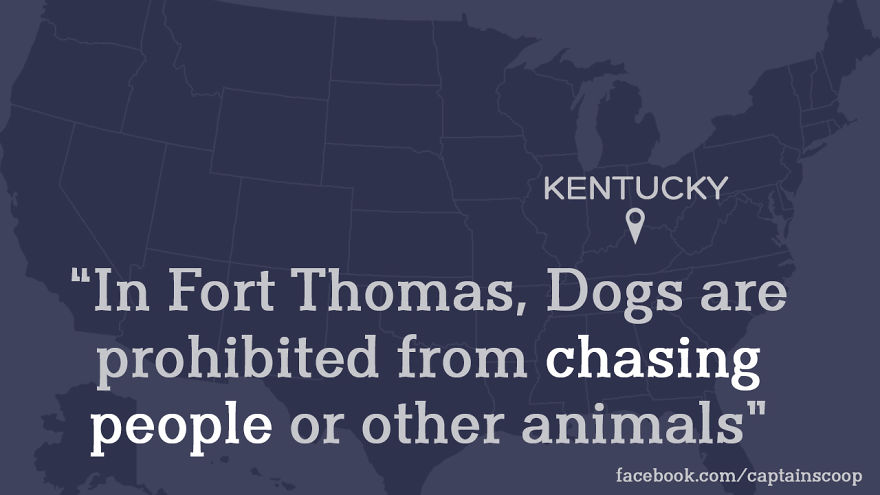
Maybe Leviticus is just a bit more of a resource than I thought. (Or if you would rather just have a little light entertainment check out these laws:

https://www.boredpanda.com/stupid-funny-laws-united-states-captain-scoop/?utm_source=google&utm_medium=organic&utm_campaign=organic

Be engaged

In considering that the apostolic gospel is political I consider that such a long-term vision challenges:

  • Party allegiance. We might be aligned to a particular party, but we cannot be bought. There is no party that is perfect, no party that is Christian. The critique of the Gospel is that we have all fallen short of the glory of God. All parties and all systems certainly have! In a given situation we might always put our vote somewhere specific, the guiding choice has to be how redemptive we consider the vote is, how beneficial to a healthy, relational and equitable society the direction that party would move us in.
  • The apostolic vision is one that looks long term, and resists simple short term action that is justified by the outcome. Although in a time of crisis short term responses are always necessary. If a house is on fire we need to get the people out rather than leave them there while debating the best building materials to employ.
  • It challenges strongly the belief that change can only take place from the top, indeed I suggest that the apostolic Gospel suggests it rarely takes place from the top.
  • Challenging the idea that we have to be in power to be effective, it raises an interesting issue. Maybe (if there was such a thing!!) a Christian party would be best placed not in power. That is a challenge to the voter – vote for us, we do not aim to be in power! However bizarre that might sound the apostolic vision is a challenge to the power dynamic, and to the hope that someone elected will do it for us. Servanthood and a denial of vested interest has to be promoted and the empowerment of the grass roots, rather than power and an unconnected representative body.

An apostolic vision also recognises that:

  • Almost certainly with any party that we vote for, there will be policies that they endorse that we do not agree with. There is necessary compromise along the way. If God ‘allows’ we most certainly cannot legislate. The compromises that God is pleased with are the redemptive ones, the ones that might not be perfect but move it to a better place.
  • We also have to consider what are personal values and what are public ones. I might have a personal value that comes from following Jesus, but do not believe such a value should be imposed on society.
  • That our hands are not clean. We are all implicated in the system of destruction. The issue is that we are not clean, but in not being clean we do not have to be dirty. Our choices, our life-style has to be set through redemptive, though compromised, decisions.
  • That God works not to give people a guilt complex so that they might find him, but gives them a shape, a set of boundaries, within which they can find him. We likewise should not look to off-load righteous legislation but create a shape where people can prosper. All legislation should be redemptively creating shapes where people can best develop who they are. Sin is to not be the person I can be: a person in my skin representing the character, persistence and love of God. Sin is not avoiding through legislation a set of predetermined evils.

There are troubled areas for believers that often swing their vote. But as we cannot legislate in an absolute fashion we come back to the dirty world and the compromises that are required.

Abortion is often the single issue politics that determines the ‘Christian’ vote. Yet the issue is multi-faceted and the factors that surround it are complex, certainly including education and economics. It also sits on a spectrum of pro-life issues. What our response is to the current and pressing crisis related to climate change and global warming. Every response to this issue is a pro-life choice, ultimately determining who will live or not. Abortion and abuse of the climate are connected to the future of the unborn, and to those already born.

We could add xenophobia (and nationalism) likewise as they sit on that same spectrum. They are all positions that reflect on who we wish to prosper / live. The death of Jesus as a privileged male and a compromised Jew was for all, regardless of faith, gender and national identity.

The vote for a believer is indeed a challenge. We cannot simply vote along party lines. Also we do not carry a vision of getting our person to the top (the word of God came to John in the wilderness). We can though be governmental and help create a shape that pushes back the powers that control so that those who are equipped can come through to occupy in a humble spirit positions that are there. I consider that we are here to create and hold a shape.

In creating a shape – lifestyle, relationships, prayer, action… there are also those who we will partner with. Theologically we cannot simply partner with those who profess faith. Paul had friends who had a lot to lose, as far as wealth and status was concerned, on the basis of his vision, but were committed to be with him and support him. They had not recognised Jesus in the sense of at the level of personal allegiance to him, but they were simply convinced that Paul carried a vision for the future of this world. That vision was not one that was compatible with the structures as they were currently defended in his imperial world.

Who do we partner with? On a spectrum we are at times tempted to place, for example, atheists at the opposite end to that of Christians. I suggest we need to think again. There are atheists who are anti-God and there are atheists who do not believe in god. I too do not believe in god. I share my non-belief with a number of ‘good’ atheists. We have that in common, even if they do not share my belief in God.

More often than not there are those who are believing in a false god who are at the other end of the spectrum of those we can work with. Some of those might use our language, but fill it with other meaning. ‘God’, ‘Jesus’, ‘the cross’ are words – the meaning we fill them with is what is important. There might be those who are ‘Christians’ that we cannot partner with, how they understand the cross (by this sign we conquer) might be in such a strong contrast to how we understand it (the instrument that we carry daily for our own death) that we cannot partner with them. Our connections might be those who do not believe in god.

Theologically we have hope and vision for this life… and beyond. And as eschatologically the age to come is shaped from this one we cannot not work in this age. Our political involvement at whatever level, whether fruit is seen now or not, is vital. It can produce fruit now, and even if it fail will become seed for the age to come. (Again I applaud where an atheist who has no belief in an age to come in which they will participate is committed to work for a better future. If they can how much more should I be willing to do so.)

Disruptiveness has to be part of the political involvement. Particularly given how privileged we are. Most of us do not have the context of the threat against our lives, and in that context Paul even gave a voice of caution. That is not our context so we have responsibility for those who are threatened. The current Extinction Rebellion is making a very real impact. People are willing to be arrested for their beliefs. Yet the resistance is overwhelmingly white. In our cultures a non-white person is rightly cautious about being arrested. This does not negate the movement, but we must be slow to pat ourselves on the back when our protest is a privileged one.

Practically drawing on the work of Roger Mitchell he suggests that from the life, teachings and example of Jesus there are 9 areas that should prioritise our energies and commitments. The notes below are mine, so I hope I do not misrepresent.

The making space for the feminine. Given that cultures, structures and societies have been formed by men and the masculine, holding space for a feminine voice and creative response is vital. The lock up in Cataluña is an example of this. The age old conflict is in lock up because of power. No one can back down. A person such as Ada Colau, the mayoress, is not weak, indeed has to have more strength than those who resort to power and endorse violence. She is also a good example of who we have to take care of by taking responsibility to hold back the powers that seek to ‘steal, kill and destroy’. There are those who can speak to this much more than I can. There are some males who probably can, but the best we (males) can normally do is to be silent but hold space so that the voice of the feminine woman is heard.

The prioritizing of children, to whom the kingdom belongs. To reduce the future for the unborn to the issue of abortion is simplistic and wrong. Jesus prioritised children. Health care and education are two aspects, for sure that come to the top of the list when making space for the future, as are the issues mentioned above when touching on abortion.

Advocating for the poor. This moves beyond the patronising of doing things for those less privileged, to doing it with them. We cannot be those who do things to the poor, sometimes we might only be able to do things for them as it can be hypocritical to assume we are ‘with’ those who find themselves economically marginalised. These issues hit home. We can demonise the top 1% and immediately baptise the next 4% as being OK simply because that is where we find ourselves.

Care for the creation. This is God’s world and it is our habitat, and the habitat of those who are yet to live. The original habitat was in order to create an environment where God could be at home. Planting trees could be our greatest contribution to the future. The tree biblically is what bridges the arts and practical sustenance – maybe this could be a factor in why humans are described as trees?

Freeing prisoners. Of course we spiritualise the words of Jesus who came to set the prisoner free. Yet there are prisoners at all levels in society, as all systems will imprison. There are no simple answers, but the level of imprisonment in certain Western world countries indicates something is desperately wrong. Restorative justice aligns to Scripture in a way that punitive justice does not.

Promoting health. Jesus healed and did good. Healing is multi-faceted, and each political response is a sign of who God is. I find it hard to see how health is a privilege that can only be offered to the wealthy, and not at some very real level a responsibility to provide for as many as possible. We live as aliens in Spain but have stood against private health insurance. Maybe in some situations that might be necessary, but our approach to health care is shaped by our beliefs in the Gospel.

Confronting the powers. This is one I like a lot! Confrontation is not simply to put something in its place but to give an opportunity for the person representing that power to act humanly.

Making peace. Blessed are… We live in a fractured society that has its divisions. Divides so often because a voice that comes from a different experience and perspective is so often not heard, other than in that particular circle. We can allow voices to be heard, that is the only way that we will hep people move forward without the felt need to shout, or the reaction through intimidation or inferiority to be silent. At a very small level Gayle and I had a good experience in having someone stay with us who took a different stance on the Brexit issue and a different take on money. We were enriched.

Publicizing the good news of peace. Politics and faith do mix! We can at al times be ready to give a reason for the hope that is within us. How and what we share has to be shaped by the love of Jesus. This too cannot be ‘top-down’.

Until he come (parousia) we work, relate, disrupt and proclaim (ekklesia). What we do now will, if done in line with the patient apostolic vision of lives laid down in love for the world, will come through the fire. Are we politically involved. For sure, with a small ‘p’ or a large one. Everything we do is about shaping the future, the future here and now and the future then. The small responses we make are so vital. They too are political.

Perspectives