We still dream

In looking at Pentecost and the background of the tower of Babel narrative there is the implicit message of a boundary being removed. God inserted a boundary at Babel so that there might not be a level of unity whereby ‘whatever they put their mind to they will accomplish’. He did this through the confusion of the languages. At Pentecost where everyone heard them speak in their language there is the gift of languages so that there might be a working, a planning together so that what was in their hearts might indeed be accomplished. Pentecost unlocks the imagination so that possibilities open up.

The imagination is so important. The ‘I have a dream’ speech of Martin Luther King resonates because there is something so strongly of God’s character in it. The dream is of a different future:

Go back to Mississippi, go back to Alabama, go back to Georgia, go back to Louisiana, go back to the slums and ghettos of our northern cities, knowing that somehow this situation can and will be changed. Let us not wallow in the valley of despair.
I say to you today, my friends, that in spite of the difficulties and frustrations of the moment, I still have a dream. It is a dream deeply rooted in the American dream.
I have a dream that one day this nation will rise up and live out the true meaning of its creed: “We hold these truths to be self-evident: that all men are created equal.”
I have a dream that one day on the red hills of Georgia the sons of former slaves and the sons of former slaveowners will be able to sit down together at a table of brotherhood.
I have a dream that one day even the state of Mississippi, a desert state, sweltering with the heat of injustice and oppression, will be transformed into an oasis of freedom and justice.
I have a dream that my four children will one day live in a nation where they will not be judged by the color of their skin but by the content of their character.
I have a dream today.

As believers this is what we bring to the table. Something not based in the Enlightenment ideal of progress, nor in the Marxist ideology of change through conflict, but based on faith in an ‘optimistic’ life-giving God who demonstrated this in Jesus. What we bring is more than a good idea, or simply an ‘imagine all the people’ that Lennon invited us to. We are to bring a faith that true imagination unlocks the activity of heaven. Paul put it like this:

Now to him who is able to do immeasurably more than all we ask or imagine, according to his power that is at work within us (Ephesians 3: 20).

God can do, but we have to do something too – it begins in the imagination, in the asking. What God does is in proportion not to his power, but in proportion to his power that is working among us. That power is not simply measured by how many miracles we can testify to (though that is important) but how much the power of God is transforming our lives from self-centredness to God- and world-centredness. As that takes place and there are imaginations fuelled by God’s loving, redemptive agenda so God shows up. I am convinced it was that intangible, yet very real presence of God that provoked non-believing, with a lot to lose, people, the Asiarchs, to connect to Paul in Ephesus.

If we can move beyond that of ‘saving souls to get them their ticket to heaven’ and see that God is in the business of rescuing people from life as it has been sold to them, to enabling them to engage with his dream and activities of aligning the world with a visible manifestation around us of heavenly values. This is what Luther King articulated.

There is now an incredible battle on for the soul of the world. Conformity, monochromeness that obliterates difference has incredibly become an agenda that wins votes. We were made for difference and it is fear that is the fodder that turns those votes. When the media is in the control of the elite it should not surprise us that it can quickly be labelled the ‘enemy of the people’. Any activity that challenges the status quo becomes sidelined and illegal.

There is something bigger at stake than Britain leaving the EU… the bigger is the reshaping of Europe regardless of levels of government. For any reshaping to be redemptive I consider that the wonderful body of Christ needs to dream again. The future context (and the one that is already here and has been for well over a decade) is so different to the one in which ‘Toronto’ occurred. But ‘Toronto’ prepared us for this. We have been prepared to go places we have never gone before, to no longer exercise in the playground at the set time, but to live with a soul bared, wind in face, looking the conflicts in the eye and proclaim – we still dream.

A while ago I declared a new media is here. It will come. It cannot be silenced, for God is a communicator. I declare today the dream is on. It cannot be stopped. A shift of time is literally now on the EU agenda. From the shift of time comes the setting of ‘true north’. The setting of direction for journey. People have been moving at an alarming and unprecedented rate these past years. The issue now is the setting of true north for people movements in Scripture indicate a great shift in time. There are political and economic decisions that will have to be made… but first has to come the unlocking of the imagination about a future that has not yet been shaped. For this we make room for the artists, the cartoonists, the graffiti-ists, the writers. They will both articulate and make room for the imagination.

The adverse winds are blowing… but I think the dream is still on.

SHARE ON:

Post PermaLink

If you build it?

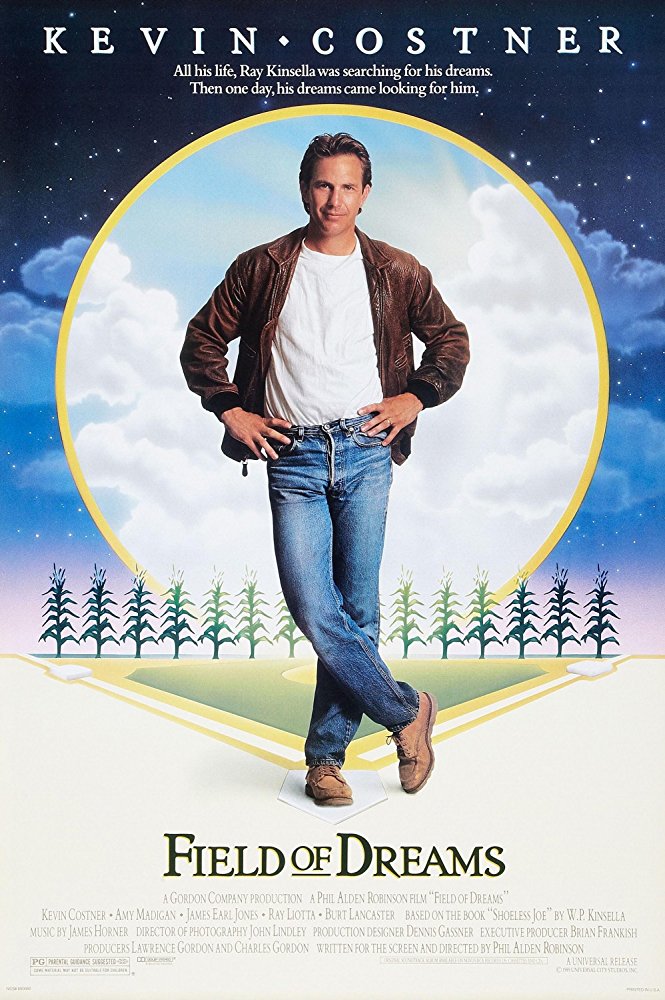
‘If you build it they will come’ (Field of Dreams, 1989) is a powerful inspirational strap line. Go do something, set it out and there will be a response; rather than try to get the result consider the context. A truly motivational directive. At some level this is what lay behind the flow of the OT hope where something will happen in Jerusalem and the nations will be drawn to it. In the days when there was no visible centre there (Temple) the hope was for its rebuilding and the nations would then come to that place where the glory of God was and acknowledge the One true God. Such a strong motivational and eschatological hope.

Cyrus was proclaimed the Lord’s anointed and in the (normally) last book of the Writings (2 Chronicles for us) we read that he instructed the people to go (re-)build a temple in Jerusalem:

This is what Cyrus king of Persia says:
‘The Lord, the God of heaven, has given me all the kingdoms of the earth and he has appointed me to build a temple for him at Jerusalem in Judah. Any of his people among you may go up, and may the Lord their God be with them.’ (2 Chron. 36: 23).

In Matthew’s Gospel with its focus on the fulfilment of Scripture we find such a clear echo of those words as that Gospel closes with the ‘Great Commission’:

Then Jesus came to them and said, “All authority in heaven and on earth has been given to me. Therefore go and make disciples of all nations, baptizing them in the name of the Father and of the Son and of the Holy Spirit, and teaching them to obey everything I have commanded you. And surely I am with you always, to the very end of the age.” (Matt. 28: 18-20).

The parallels are clear:

  • authority given
  • go
  • promised presence.

Fulfilments are not repeats but often transform the original hope. As inspirational as the ‘go build it’ was and a stretch to faith, the scope of the Jesus’ commission and the how to do it are in another league all together.

Build it somewhere becomes be everywhere; go to a place becomes go from a place; and the clear implication is that the Temple being built will not be with literal stones, nor confined to a specific geography but invisible and universal.

In Field of Dreams the challenge was to build something not knowing what the result will be. Build something and believe there will be a result was a clear challenge to faith. In the Jesus’ commission the challenge to faith is so much greater. Don’t even build something, but have a very clear focus, and something will be invisibly built. He also does not focus on ‘they will come’ but on ‘I will come’.

Everywhere can manifest somewhere: ‘where two or three are gathered together’; but the somewheres must never claim to be everywhere nor create borders that stop people going everywhere. (I hope that sentence makes sense!) Jerusalem is not the goal, the New Jerusalem is the goal, that image of the total transformation of the then known world, the presence of God being the light that fills everywhere. That presence can manifest in specific places at specific times, but when any wonderful expression of God is held on to it can eventually resist the very reason for the manifestation. This is why there is such a need for continued apostolic and prophetic ministry as new terrain is entered into. Any centres that are reproduced, in the big scheme of things, can only be temporary. The Revelation vision is not I saw a Temple, nor I saw many Temples, but I saw no Temple, the city without a Temple.

The Jesus’ commission is of the continual movement into new terrain by those imbibed by his Spirit, God building something where previously there was either rubble or nothing. At the core is a multiplication of ‘disciples’ (learners) and those who are walking in the light of the presence among them.

If we do not keep the big picture in front of us, the steps along the way will become the camp, the model to be reproduced. There is no model. There is only a journey and the step we take on that journey will depend on our context at that time. True north sets the direction; the Spirit calls for followers; followers are promised his presence.

SHARE ON:

Post PermaLink

Pentecost: wind and speech

There are so many resonances in Scripture to the opening verses of Genesis and Pentecost (Acts 2) is no exception. God is a Creator and there is a continual restoration and healing of creation and the gathering of the material for new creation. Here is a strong resonance:

In the beginning when God created the heavens and the earth, the earth was a formless void and darkness covered the face of the deep, while a wind from God swept over the face of the waters. Then God said… (Gen. 1: 1-3).

When the day of Pentecost had come, they were all together in one place. And suddenly from heaven there came a sound like the rush of a violent wind, and it filled the entire house where they were sitting. Divided tongues, as of fire, appeared among them, and a tongue rested on each of them. All of them were filled with the Holy Spirit and began to speak (Acts 2:1-4).

Wind and speech. Into the formless void came wind and God spoke. That speech brought creation step by step to birth through the process of shape and then fullness. When Pentecost came (in the beginning?) there came wind again from heaven. God is signalling that there is a new level of creation beginning that will both impact this creation and prepare the ‘materials’ for the new creation, when the truly human one, the one who is in the image of the invisible God will be revealed. He, and then the bride will be revealed at the parousia (= presence).

There is a strong resonance, but there is also a difference. In Genesis God spoke, in Acts they spoke. Peter does become the spokesperson as the day progresses but it begins, the foundation of the day, with that they all spoke. There was no recorded order, nor hierarchy, each of them were filled, each of them spoke. Pentecost releases a sound, a corporate sound. In Genesis God’s voice was into the formlessness and emptiness of what was present to him and a process was released. If the body of Christ is to be pentecostal I suggest something similar has to happen. There has to be a voice that speaks into creation, into what is present to the body of Christ. There has to be speech into the formlessness and emptiness of what is apparent.

So what is the body of Christ speaking into at this time? What is the voice that is going forth? There will always be spokespersons but there has to be a foundation that undergirds that of ‘they all spoke’ because they had all been immersed in the Spirit of God. Maybe the only voice being heard is that of the spokespersons and if so are those voices reflecting the diversity that needs to come forth?

God goes where we go (‘even if I make my bed in sheol you will be there’ states this so strongly) and we can so reduce what he wishes to say through the body. If there is a creational dynamic to pentecost then we need to discover the formlessness and emptiness into which we are to speak. The church has to rediscover her voice – the corporate voice that comes through the diversity of those uniquely touched by the Spirit.

I had two experiences in fairly quick succession. I was in a place where I heard the voices of angels communing together. I could not hear a specific word, the volume seemed to rise and fall. I strained my ear and sought to listen, but there was an elusiveness to the sound. Some weeks later I was in an international gathering and the entire gathered people read in their own language the Lord’s Prayer, all at the same time. The sound was identical to the one I had heard previously. The volume went up and down. I thought I could recognise a word, but it was gone as quick as it had come as another person with another language spoke both alongside and over them. I then knew what I had heard before and this time – it was ‘the sound of many waters’. I was hearing the constant flow of water pouring forth from multiple springs. When the angelic and the human speak there will be sounds we try and grasp, but we will never be able to fully hold on to them. The sound is too elusive, too big, too dynamic, too flowing to be harnessed for the source is too diverse, too widespread.

Time to speak. Let there be light, let there be the light of God that enlightens everyone (John 1). Thank God for prophecy, thank God for preaching… but now is the time for the sound of many waters as we speak for example ‘let there be light in the dark place of immigration’. For this we were touched by the Spirit.

SHARE ON:

Post PermaLink

Spirit & Power: religion set the rules

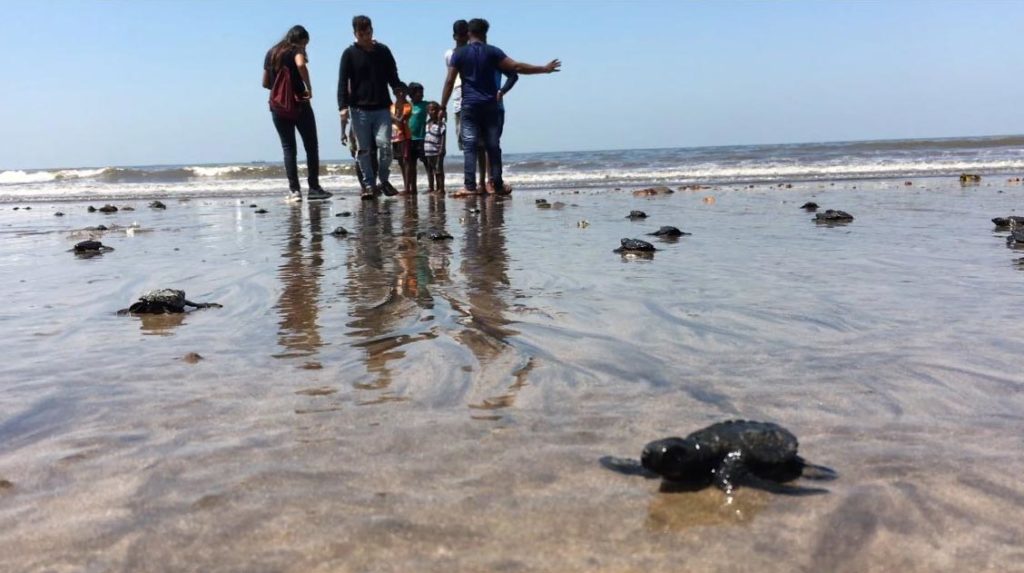
Glad I call this site ‘Perspectives’ as it gives me an opportunity to write from time to time some musings that enter my head. Today’s musing began when Gayle read me concerning a lawyer who used to play on his home beach in Mumbai as a child but when he returned as an older adult it was covered in trash. He began with one other person to try and clean it up and eventually engaged the wider community. It took over a year till they began to see the beach restored. When the beach had been in good condition all those years ago turtles had come and laid their eggs on it, but none had been seen in the previous 20 years. After cleaning it up the turtles returned. Although there is ‘no more sea’ in the new heavens and earth this surely is a theological statement concerning the imagery of the sea as the source of chaos and not a material statement about its non-existence. If what we do now is providing the building material for the age to come (our good works) maybe what this community is doing is making some sort of provision for that age. (Perspectives / musings!!)

The story did get me thinking about something that many religions have in common. They seem to elevate ‘spirit / spiritual existence’ above physical existence in a way that denigrates humanity. Thus embracing the ‘soma sema’ of Greek philosophy (the body is a tomb, the real me is inside this tomb… real life is non-physical, death is an escape, etc.). Or they embrace the exercise of power over as being the mark of righteousness. We see this with Paul as a ‘righteous’ Jew. Persecuting those who were renegade to the faith, viewing them as enemies and deserving of the expression of his zeal. The Crusades and some aspects of current terrorism are religiously motivated with the desire to impose what is ‘right’, and what is right takes precedence over the lives of others. In the realm of legislation we see this in a desire to express ‘sharia law’ over a society, and also the Christian variety of that where we wish legislation that imposes Christian values.

I, as do most believers, oppose abortion except for some very few cases. As far as I am aware this was also the personal position of Obama in the USA although his position on legislation was that it was a personal choice. Abortion is one of those very difficult areas for believers who are in public office. Personal beliefs and public legislation cannot always line up. The arguments are very far reaching, but the fact that the abortion rate was lower at the end of Obama’s time than before the famous Roe v. Wade ruling indicates the complexities involved.

Faith has a huge impact on the public life of a society and rightly so, but a religion, any religion that seeks to impose on the wider society often draws on the concept that righteousness is aligned to power over. Add to that the elevation of life that is a removal from society (spirit is superior) and maybe we can suggest that (most) religions have those two elements in common. The two elements result in a withdrawal from the wider society and an engagement that is an imposition of a change from above.

The Jesus way I think is different. Righteousness cannot be about expressing zeal against people. Paul concluded that what he formerly considered was an expression of righteousness he now saw as excrement and that he was indeed the chief of sinners. Righteousness has to be centred on enemy love. Zeal has to be a zealousness for the ways and character of God to infiltrate society: love permeating all relationships and actions. A spirituality that is life-affirming, that sees the (eternal) good in the actions of all around us.

Does such an approach compromise the message of the Gospel? Yes, if the Gospel is about power and the denigration of human existence. But if the Gospel calls all those who have heard the voice of Jesus to follow him and lay down their lives for others, and then ‘go’ with a focus on discipling all peoples there is no compromise, particularly when on that journey there is no elevation of self over others.

I end my musing with the question as to what contribution religion, in all its forms, has made to the world as we have it today when shaped by the twins of spirit above matter and power over others for righteousness’ sake. And what might happen if there was a genuine Jesus revolution by a new apostolic wave that was willing to work for the future with patience, knowing that the multiplicity of the small and the richness of diversity could yield a future so different to the one that will be ours if we continue on this current pathway.

SHARE ON:

Post PermaLink

That is a LOUD voice!

It is always very interesting to be reading through the Bible. I focus much more on the Old Testament earlier on in the year when I do this, and in some of those readings there are so many challenges. Patriarchy is not only taken for granted but it seems to be endorsed as a good order. Genocide in the name of God… all there. Challenging to one’s view of inspiration and of what we mean by the canon of Scripture. I would happily see some parts within the collection of 66 books be sidelined and to be excised! One book I would not be happy to see sidelined though would be the book of Revelation (the Apocalypse). Strange as that one does not make it into a number of the church canons, and even Luther who believed it should be included in the NT list of books also suggested it be segregated with other controversial books in a “disputed” section, of ‘antilegomena’.

I did not grow up reading novels, and until recently did not enjoy many films (neither of those categories being ‘real life’! As if I know what real life is….) However, employing genre so removed from real life, and written in a way that gives the likes of me few clues as to how to read it, I have loved the book of Revelation. (And definitely a much better read when the likes of Scofield, Darby, Lindsay, Left Behind are all kept way beyond arm’s length.)

Imagery using such terms as beasts was not a new term for ancient readers. Babylon was not a new idea for Jewish believers. And Revelation really goes to town with such imagery and historical allusions. The (sea) beast of Revelation 13 was ‘given a mouth’ to speak, speaking for 42 months. 42 months is not a short time, and feels like forever. It is certainly much longer than some 15,000 days, it represents the time of conflict, being one of those ‘rectangular’ numbers in Revelation where it is the result of one number multiplied by one bigger than the first (here 6×7). Those numbers represent the times of conflict, so they are not referring to a specific length of time. Hence the voice can be louder at times than at others.

I have been very exercised in these days about the mouth that Mammon has, the voice that in Revelation will declare ‘you cannot buy and sell’. We have heard that voice, we know many friends who have been spoken to by that intimidating voice, intimidating as there seems no way past it. The voice seems to speak and control a highway, that highway at times literally being the trade routes. I am also provoked as yesterday I had a Skype call with someone who engages with those who deal with money and can make huge differences to peoples’ lives with the stroke of a pen. This person has a vision for societal transformation, and in engaging with companies his pitch is for their involvement in communities, with a twofold outcome: they will pour something back in for the betterment of others, and yet it will not mean they ‘lose’ out financially. The central focus though is the community issue. Over and over again they get excited by the vision, they are on board… until they work out that their bottom line just might be affected. Already making more than they need, they must make yet more, so again and again the vision my friend has is turned down. Sounds like a discouraging voice… but it is more than that, it is the voice of Mammon.

The 42 month period, the time when there is a loud voice speaking.

Money is a strange thing… I am not even sure what it is. The instability in the stock market yet again shows this – huge gains and losses. Maybe it is simply a measure of confidence that some exhibit. That ‘some’ being a minority of the population. If money was simply a mark of the confidence that some exhibit and that was all it was that might be OK, but it goes beyond that. It controls the destiny of people, and at a daily level who can buy and sell. We watched last night a program on the homelessness in Spain since 2008. A good number of whom were university graduates, and employed in 2008, meanwhile in the same country 40billion of public money can be unaccounted for in one year (2017). Money, a real entity? A measure of confidence? Or something standing behind it all?

Juan Mata, Spanish footballer, has his feet on the ground. Earning as these ‘stars’ do a huge sum of money he is provoking his fellow soccer players to donate 1% of their income into a foundation that can help channel that money positively. 1% of huge salaries is a large sum of money and I applaud him for this. That 1% is way more than a 10% of other money. Those actions are to be applauded. But…

The system remains.

What if Revelation was holding out the tantalising hope that we are here to see the system change? What if the Gospel is the announcement that mountains will be made low and valleys raised up? What if the body of Christ is truly ‘elect in him’ to the pulling down of strongholds and releasing a new way of being?

42 months. Patience marking the new apostolic. Applauding where 1% is placed in a foundation. But with a long term vision. A beast without a voice is intimidating, but a beast with a voice, that is at a different level all together.

In 2009 as clear as an audible voice I heard a challenge from heaven, that if those with significant financial resources were not stewarding their finances how was I going to do that? I am still on the journey toward that – I have certainly not made it through 42 months, not even sure I have made 24 hours into that journey, but I cam off the Skype yesterday with a small piece of the puzzle in my hand. I said to Gayle, we start relationaly. We connect. Not to the rich and famous, but to the ones and twos who dream of societal change, some of whom are not afraid of money nor success but neither of those commodities are the bottom line for them. The journey ahead is, of course, a corporate one. There needs to be eyes, hands and feet. The eyes cannot say… the feet cannot say… The beast is not confronted by a yet stronger beast. 42 months… and as always there has to be a human ‘lamb’, a people who find each other where no one takes the spot light, no one becomes the new controller of the resources, as if replacing the bad with the ‘good person’ would ever be the way to bring about change. An old centre is not to be replaced by a new, but good one, but as is evidenced in the breaking of bread and in Pentecost, a huge dispersal marks the shift.

Patience. Long term. Should not be surprising that is needed. This journey did not begin a few years ago with 1994 being such a turning point for many. It did not begin with a new perspective on Paul and his gospel… It certainly had major starting point in Jerusalem when the hegemony of religion (and ‘good’ religion at that) was broken. Those 42 months seem to stretch back a long way. What a diversity of voices have spoken in those ‘months’ and at times the voice of the beast has seemed the loudest. However, I don’t think that s/he with the loudest voice wins!

SHARE ON:

Post PermaLink

Pure Speculation

There are beliefs that are pretty much clear in Scripture, though not without being challenged (what Scriptures / canon are we referring to and how do we interpret those Scriptures). There are others that are less easy to defend so allow me a speculation… though it is a ‘pure’ one so must be OK! Speculative in parts it may be but it actually reflects more than that for me – it is a belief, maybe not an absolute core one but a very important one that shapes a lot of my approach.

I have always been interested in eschatology. Brought up with an implicit secret rapture perspective, later adopting a restorationist viewpoint (five-fold ministry, church growing to a mature bride etc.) and now… Abandonned the unsustainable secret rapture viewpiont, along with a future antiChrist, literal millennium, but maybe still influenced by aspects of the Restorationist viewpoint which of course lends itself to progress (‘God is doing a new thing in our day’).

Most eschatologies have a deliberate or an implicit set of ‘untils’ involved. (Dispensationalist:) the world carries on until… until the scene is set with ‘wars and rumours of wars\’, Israel in her land, gog and magog poised, oh and don’t forget the EU! (Restorationist:) until the church reaches maturity for Christ is coming for a bride without spot or wrinkle. The weakness of the latter is it is hard to avoid the final mature generation being the bride, with the question remaining concerning the identity of the former generations of saints. I too have an ‘until’.

I have an until partly to try to find an answer to why the Lord has not returned. His promise is delayed as he wishes all to come to repentance not wishing any to perish (2 Pet. 3:9). Unless we hold to a universalist perspective the longer the delay the more who perish. The longer the ‘delay’ the more opportunity for repentance, but are there other factors?

I consider the work of Christ to be the finished work of Christ but it is not the finished work. ‘As the Father sent me, so I send you.’ ‘I make up what is lacking in the afflictions of Christ.’ ‘Of all that Jesus began to do and to teach…’ We cannot add to the work of Christ, but we can flow from it. We cannot lay another foundation, we cannot actually construct the building but we can (and must) contribute the materials for the project.

Matthew’s Gospel is one of fulfilments. He loves to quote Scriptures being fulfilled and it seems there is an overall framework to his Gospel from the opening lines with ‘the genesis of Jesus to the closing lines of the Great Commission that echo the words of Cyrus in 2 Chronicles 36 and his ‘great commission’ to send Jews back to Jerusalem to rebuild the Temple. The Great Commission is reasonably well known (Go, make disciples…) but Cyrus words less so. I will quote them below, and they are all the more remarkable as 2 Chronicles was normally the final ‘book’ of the Jewish ‘bible’. (Law, prophets and writings.) The opening words of Matthew’s Gospel echo the first book, the closing words the final book. Truly Matthew is writing to show that there are fulfilments of Scriptures and of Scripture. Here are Cyrus words:

This is what Cyrus king of Persia says:
The Lord, the God of heaven, has given me all the kingdoms of the earth and he has appointed me to build a temple for him at Jerusalem in Judah. Any of his people among you may go up, and may the Lord their God be with them.

All kingdoms… go up… with them… // All authority… go into… I will be with you – all seem to be deliberate parallels.

The Jews re-entering the land were commissioned to rebuild the Temple, ironically something that the radical Stephen said was never desired by God! Jesus sends his disciples out to get to work on the rebuilding of the Temple, not in Jerusalem but somehow of living stones, regardless of ethnic background across the planet. This is our task that as yet is unfinished.

So that is my ‘until’.

So when will this happen? Here is the little twist. The building does not come up visibly from the earth but comes down from heaven from the throne of God. God is the builder. The building is in heaven waiting a manifestation here. The materials though are provided from the earth, the ‘gold, silver and precious stones’ are mined and deposited in heaven as we work.

Christ came at the fullness of times – when Jew and Gentile alike had no hope. He took the curse of exile so that there might be an outpouring of the Spirit on both the Jew and ‘those afar off’. His return, parousia, will come at the fullness of times: when sufficient material has been mined.

Now a little more, cos all the above is straightforward for me, but I have been making a few more speculations these past weeks. What if the age to come (in the sense of the New Jerusalem) could be a little unfixed. It will be complete, but maybe there could have been more. If art is needed has enough real quality art been ‘mined’? What about the films in the age to come – do we have enough material so that…

Yes, now we are in the realms of speculation. But this is the sphere of hope. Love is primary, but faith and hope are vital.

Maybe I am going too far… However, there is a fundamental question about the continuity / discontinuity element of the age to come. How like this one? How radically different? If there is a very real element of continuity then we need art, politics, education, business that is so reflective of heaven’s values, otherwise we will continue waiting for the parousia, or we could have had an even better age to come.

SHARE ON:

Post PermaLink

No, not an advocate of Christendom!!

Had a few responses to the post ‘Toward the vacuum’ and also Steve Lowton re-posted it on his facebook page soliciting a few more comments. In the post I was both reflecting back on the dream from years back on the opening up of the façades, the response of a number of believers in the public sphere and the danger of the ‘familiar’ being our default response. In the post – now some 8 years on from the dream – I suppose there were a few paradigms that crept through that I am becoming increasingly aware of. So I thought I would outline what I think they might be below.

Surprisingly (!!) I am not an advocate of Christendom. I have been too heavily influenced by anabaptism, the new church movement and the like to be in that camp. I see Christendom as an aberration of the apostolic faith, not as some sort of fulfilment of eschatological hope. And given the nature of God (another paradigm here) this does not mean that God did not use Christendom… he works in all things for a purpose. His work ‘in’ does not mean his approval ‘of’.

Paradigm 1: the church is here for society

The primary role of the church is not to evangelise society (keep reading…), but to, as witness to God, create / fashion / hold a shape where something redemptive can fill it. It is our responsibility as royal priesthood to stand to mediate the presence of God to the world and to allow the world to grow up into a healthy space. This is not a) withdrawal to a spiritual realm (sorry to one stand of anabaptism there) nor b) to impose some kind of theonomy on the world (sorry to that strand of Calvinism, Reconstructionism, Kuyperism, 7 mountains etc.). The latter is ultra-Christendom. Not all come to faith, but there are those who will grasp the Jesus’ values and fill space in a Jesus-like way, even if some of those were to be atheists. (I see this in the reference to the Asiarchs in Acts, for example.) The former (a withdrawal) is to deny the intensely political nature of the Gospel. Not political in the sense of party politics, but carrying an all encompassing vision for society. The kind of vision we have been trying to capture with the word ‘convivencia’.

(Now don’t read ‘don’t evangelise’ into the above but do read ‘some evangelism is not a witness’.)

Paradigm 2: the world is not the church

My background of course left me very clear on that… however, the two realms are related. One has been redeemed, the other, not being evil but fallen, is there to be redeemed. The church that resorts to the familiar and does not connect with the era in which it is placed and participate with God’s redemption of the world might not be able to fully own the term ‘church’. Church is political (the ekklesia of Christ in every geography was a provocative term when the cities of the empire already had their ekklesia shaping the city and future). We have to somehow engage with the tension that not everything is in Christ but everything is in God. In him we move, live and have our being…

In Jeremiah 22: 16 Josiah is honoured because

He judged the cause of the poor and the needy; then it was well. Is not this to know me? says the Lord.

The chapter begins with a call to:

Act with justice and righteousness, and deliver from the hand of the oppressor anyone who has been robbed. And do no wrong to the alien, the orphan, and the widow, nor shed innocent blood in this place.

Jeremiah did not say that Josiah’s behaviour was indicative of someone on the way to knowing God, nor that someone who knows God will seek to behave in this way. His words are too strong for that. Someone behaving in that way is showing the evidence that they know God! (And Jesus promise was not that people who followed him would know God… but that they would know who this God was.)

Paradigm 3: God is not in control

A little strong maybe? But what on earth do we mean by ‘in control’. Love and partnership have to be the ways in which we understand God at work in the earth, not omnipotence. Love means he is at work. It means he will work in and through whatever he is given. But he does not act in isolation – we are partners with heaven.

In all the above I am not an advocate of Christendom, I do see a distinction between the church and the world. I am not looking to Christianise society, but to heavenify it. That kingdom that comes from heaven does mean that convivencia has to manifest. Space for those who are not believers in Jesus to express their gifts for the sake of others. It means any wall that is built is a sign of failure, that any bridgebuilding will mean we are trampled on from both sides.

SHARE ON:

Post PermaLink

Eschaton or ‘end’ (telos)

Just a short post exploring a possibility. The ‘eschaton’, with the concept of the ‘end’, the age to come etc., is the common word used to describe what is coming. Hence the events (many past) which will include Easter, Pentecost can be described as eschatological events. We then have in that wonderful chapter of 1 Cor. 15 such statements as ‘The last (eschatos) enemy to be destroyed is death’ and Jesus is describes as the ‘Last (eschatos) Adam’.

The word telos is also a word for end but more in terms of a goal to be attained to, so is there a significance that eschatos is used not telos?

Maybe it indicates that the eschatos is bringing all of creation not through to its ‘goal’ in the sense of final destination but to its place of fullness through which multiple ‘goals’ can be reached. Maturity might not be the finality but the removal of the potential to foul up the self-giving purposes of God, hence the list of ‘no mores’ when the ‘end’ (new beginning?) comes, and the burning up in the lake of fire of all that is oppressive.

Just a random thought.

SHARE ON:

Post PermaLink

Perspectives